Teaching Quran to Preschoolers
Your three-year-old climbs into your lap while you're reciting Qur'an after Fajr.
She doesn't ask what you're doing. She just settles in, listening. Her eyes follow your moving lips. Her small hand rests on your knee.
You finish the verse. She looks up.
"Again, Mama."
That moment — a toddler asking for the Qur'an without knowing what it is yet — is the beginning of everything. It's not a lesson. It's not a curriculum. It's the earliest possible planting of a seed.
Most parents miss this window, not because they don't care, but because they're waiting until their child is "old enough" for proper Qur'an instruction. They're looking for the right age to start.
The right answer: the Qur'an can be present from birth. What changes with age is not whether the Qur'an is in your child's life, but how it enters it.
This guide is everything you need to know about introducing the Qur'an to children between two and five — the approaches that work, the resources that help, the mistakes to avoid, and the realistic expectations that will keep you motivated through the inevitable slow stretches.
What Preschool-Age Children Can and Cannot Do
Understanding the Developmental Reality:
A four-year-old brain is not a small adult brain. It learns through different mechanisms, retains through different processes, and needs completely different conditions than a ten-year-old's brain.
What Preschoolers CAN do with the Qur'an:
They can absorb sound — the rhythm, melody, and phonology of Quranic Arabic can be absorbed at an extraordinarily deep level during these years, shaping the neural architecture that will serve them in formal Qur'an study later.
They can memorize through repetition — young children memorize through hearing the same things repeatedly in positive, emotionally warm contexts. They can memorize short surahs without formal instruction simply through regular exposure.
They can build emotional association — connecting the sounds of the Qur'an with safety, love, warmth, and the presence of people they trust creates the emotional foundation for a lifelong relationship with the text.
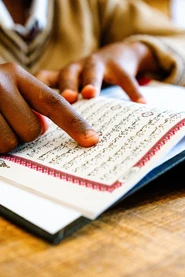
They can participate symbolically — holding a Mushaf, pointing to the page, "reading along" even before they can actually read — these participatory behaviors build early book awareness and reinforce the Qur'an's special status.
What Preschoolers CANNOT do:
They cannot sit still for extended formal lessons. They cannot memorize through deliberate drill in the way an older child can. They cannot understand grammatical instruction. They cannot reliably distinguish between correct and incorrect Arabic pronunciation.
The Implication:
Teaching the Qur'an to a preschooler doesn't look like a lesson. It looks like consistent presence, warm repetition, playful engagement, and a home where the Qur'an is woven into the texture of daily life.
There is no specific age to start teaching your child Quran. However, the best age to memorize Quran is the age of 6 years old. But you should know that this is not the definite age to memorize Quran. Some kids managed to memorize the Quran at the age of 3 or 4 years. Although, don't wait until your kid reaches 6 years old.
Don't wait. Start now. Start with what's appropriate for now.
Dr. Ahmed told me: "Parents who wait until age six to begin Qur'an with their children lose four years of the most powerful formative period in human development. Not four years of missed lessons — four years of missed immersion. The lessons can start at six. The immersion should start at birth."
The Three Pillars of Preschool Qur'an Introduction
Pillar 1: Audio Environment — Let Them Hear It Constantly
The Single Most Powerful Tool:
Introducing children to the Quran, the holy book of Islam, is a profound and meaningful endeavor for many parents and guardians. Instilling a love for the Quran and its teachings from a young age not only nurtures a strong spiritual foundation but also helps foster a sense of identity and values.
The first and most important thing you can do for a preschooler's Quranic formation doesn't involve a curriculum, a lesson plan, or even a book. It involves playing Quranic recitation in your home.
Not as background noise. As a valued presence.
Play it during breakfast. Play it during bath time. Play it during the drive to school. Play it during naps. Play it while cooking dinner.
The young brain soaks up sound patterns with extraordinary efficiency during these years. A child who has heard the Qur'an recited thousands of times before age five has a phonological familiarity with Quranic Arabic that literally changes how their brain processes those sounds. When formal instruction begins later, the sounds feel familiar — not foreign.
Choosing the Right Reciter:
For young children, recitation that is measured, clear, and not excessively melodically complex tends to work best. Sheikh Mishary Rashid Alafasy's recitation, with its clear articulation and moderate pace, is widely used for this purpose. Sheikh Abdul Basit Abdul Samad's measured recitation is another excellent choice.
The Sunnah Behind This Practice:
The first thing a Muslim child hears is the adhan in their right ear at birth — before any other word. This prophetic practice establishes from the very first moment of life that the sacred words of Islam belong in the child's sensory world. Quranic audio in the home extends and deepens this principle.
Fatima shared: "I played Quranic recitation every night as my daughter fell asleep from the day she came home from the hospital. At two, she could "recite" Al-Ikhlas — not perfectly, not formally, but she knew the sounds and the rhythm from sheer repetition. Her teacher at the masjid was surprised at her familiarity with Quranic sounds when formal instruction began at six. 'She already sounds like she's been studying,' the teacher said. She had been — for four years, through her ears."
Pillar 2: Modeled Recitation — Let Them See You Recite
Children Learn From What They Observe:
A child who sees their parent open a Mushaf with care, sit with focus, recite with reverence — that child learns something no lesson can teach: this is what adults who are important to me do. This is a thing worth doing.
Daily Visible Practice:
Recite your daily wird in a place your child can see and hear you. Not in a closed room. Not hurriedly before they wake up. Where they can observe.
Let them interrupt you sometimes. Let them ask "What are you reading, Baba?" Answer them simply: "I'm reading Allah's words. It's called the Qur'an." Let them touch the Mushaf gently. Let them sit next to you.
Salah as Observable Ritual:
Children who see their parents pray — who see the bowing, the prostration, the lips moving in Arabic — absorb something profound without any explanation. The ritual itself communicates: there is a reality that matters more than what's happening in this room right now. We orient ourselves to it five times every day.
This observation, accumulated over thousands of instances across childhood, shapes Islamic identity more powerfully than any formal instruction.
After Salah:
When you finish salah, sometimes recite a short surah aloud so the child can hear. Make Surah Al-Fatiha and the short surahs part of what the child hears regularly from your mouth, not just from a recording.
Ahmed told me: "My son memorized Surah Al-Fil at age four without a single formal lesson. He heard me recite it in salah. He heard it on recordings. He heard me recite it sometimes after. One day he recited it back to me correctly. He'd absorbed it through sheer exposure. That's how young children memorize — through love and repetition, not through drills."
Pillar 3: Short Surah Introduction — The Beginning of Formal Learning
When to Begin:
Start teaching them the short surahs first like surah Ikhlas, surah Fatiḥah, and surah Nas. Read each verse slowly to your children and make them repeat after you. With time they will memorize it and as they grow, they will love learning Quran.
By age three or four, most children have the verbal capacity for simple call-and-response memorization. This is when you can begin deliberately working on specific short surahs.
The Method — Slow, Simple, Warm:
Choose one surah. Start with Al-Ikhlas (three verses, the most concise declaration of tawheed in the Qur'an) or Al-Fatiha (the surah of every prayer).
Recite one line. Pause. Have the child repeat. Recite it again. Have them repeat again. That's the session. Two minutes. Always successful. Always ending with something the child got right.
Don't correct harshly. Don't express frustration. If the child mispronounces, simply say the correct version warmly and have them try again. Young children's mouths are still developing — perfect pronunciation is not the goal of this stage.
The Frequency:
Do this daily. Or close to daily. Consistency over intensity. Three minutes every day beats thirty minutes once a week by an enormous margin.
The Progression:
Al-Ikhlas → Al-Fatiha → Al-Kawthar (the shortest surah) → An-Nasr → Al-Asr → Al-Falaq → An-Nas
These seven surahs, memorized with warm repetition across preschool years, are the gift you're giving your child before formal instruction begins. When they walk into their first Qur'an class at six or seven already knowing these surahs — their teacher will notice. They will feel ahead rather than behind. That confidence is its own gift.
Connecting Surahs to Meaning:
Even for three-year-olds, simple meaning can be shared:
"Surah Al-Ikhlas is about who Allah is. It says He is One. He has no family like we do. There is nothing like Him."
One sentence. Age-appropriate. Enough for now.
The Resources That Actually Help
Quranic Audio Resources:
Playing Quranic audio, attending Islamic storytelling sessions, introducing kids to the Quran through interactive apps and websites, organizing group Quran recitation sessions for children, and using visual aids are some of the most effective ways to engage kids in Quranic recitation.
Madinah Media's digital Qur'an section includes audio editions designed for family use. Several also feature recordings paced specifically for children's learning — slower, clearer, with repetition built in.
Books for Visual Connection:
A child who can't yet read can still build positive association with Quranic text through beautifully illustrated Islamic books that feature Quranic verses alongside images.
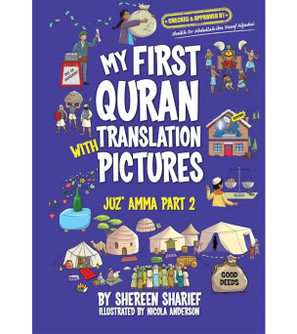
This is a children's Islamic book that translates the simple meanings of Quranic verses into engaging illustrations. Helping your child visualize the simple meanings of the verses couldn't get easier.
Books that pair Quranic verses with warm, engaging illustrations build the bridge between the sound of the Qur'an (heard through audio and parental recitation) and the visual form of the text (which formal reading instruction will later decode). Children who've seen Quranic text in beautiful picture books approach Arabic letters with familiarity rather than strangeness.
The Pre-Reading Preparation:
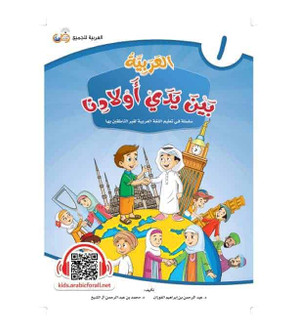
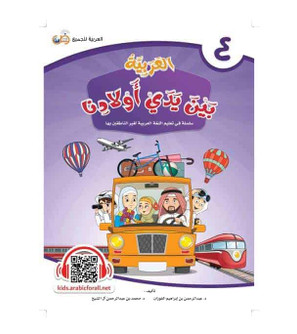
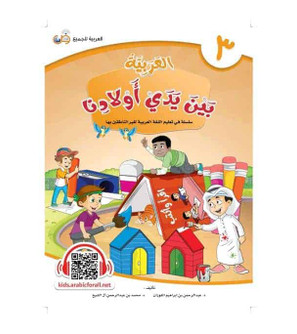
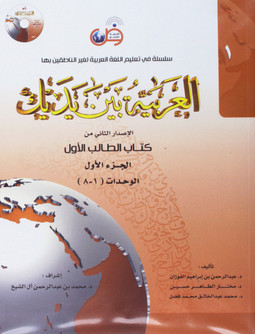
Being a perfect book for preschoolers, this book helps kids learn Arabic letters verbally and in written form. It enhances the reading and writing skills of children and provides a wide space.
The Alif-Baa-Taa alphabet book from Madinah Media is specifically designed for preschoolers — introducing Arabic letters in a developmentally appropriate, visual, hands-on format. This is the bridge between the audio world of Quranic exposure and the visual world of formal Arabic reading.
Using an Arabic alphabet book in the preschool years — not for formal reading instruction, but for letter familiarity and early writing exploration — gives children a head start when the Qaida begins at six.
The Noorania Qaida — for When Ready:
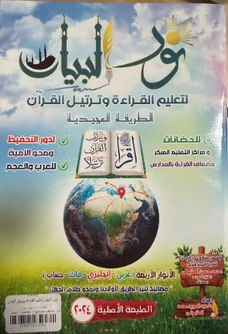
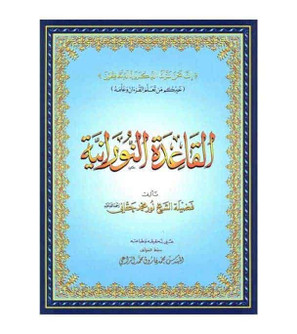
The book Al-Qaidah An-Noraniah by Sheikh Noor Mohammed Haqqani is an authentic method which teaches students how to read the Quran with tajweed in a beautiful and attractive way. If 4-year-old...
This book aims to teach Arabic language writing skills using the Noranian Rule. It is ideal for kindergarten students as the child is trained to hold the pen, introduced to Arabic letters as well as...
For children who are developmentally ready — typically five or six, though some are ready at four — the Noorania Qaida available through Madinah Media is the foundational formal reading resource. It's not designed for three-year-olds, but having it ready when the child's readiness signals appear is good planning.
The IQRA Preschool Curriculum:
IQRA' Preschool Curriculum teaches both Islamic values as well as knowledge of secular subjects like science, math, social studies and language arts. This is a comprehensive course which children...
For families wanting a more structured preschool Islamic studies program, Madinah Media carries the IQRA Preschool Curriculum — a comprehensive program that integrates Islamic values, Quranic studies, and foundational academic subjects in a format appropriate for young children.
Bedtime Stories From the Qur'an:
Each day, your child will discover a new story that imparts valuable lessons and timeless values, fostering character development and personal growth in young minds. From stories about the importance of honesty and integrity to those about the power of kindness and compassion, this book covers a wide range of themes.
The "30 Bedtime Stories for 30 Values From the Quran" from Madinah Media serves preschoolers through the most receptive part of their day — bedtime. Stories heard while falling asleep are processed deeply by the young brain. Quranic values delivered through narrative at bedtime are among the most effectively retained of all preschool-age Islamic formation.
Zaynab shared: "We did bedtime Quran stories every single night for two years with my son when he was three and four. Not formal lessons — stories. About the prophets, about values from the Quran, about kindness and patience and courage. By the time he started formal Islamic studies, he already knew all the main prophets' stories, he already had a feeling for what Islamic values were. The curriculum was easier for him because the stories had already built the context."
Building the Daily Qur'an Habit
The Preschool Daily Rhythm:
A preschooler's Quranic formation doesn't require scheduled lesson time. It requires a Qur'an-present home rhythm. Here's what that can look like:
Morning: Bismillah before breakfast. A line of an already-known surah recited together while getting dressed.
Daytime: Quranic audio playing during free play or creative time. Not constant — but present.
Car rides: Quranic audio in the car. One surah they know, played two or three times, pointing out when they recognize words.
Storytime: Islamic storybooks from Madinah Media at least three times per week — either read-aloud or audio versions.
Bedtime: A short surah recited together in bed. One verse from a surah they're working on. A brief dua. Sleep with the Qur'an's sounds still in their memory.
This rhythm requires approximately fifteen minutes of intentional Quranic engagement distributed through the day. It produces results that far exceed any equivalent amount of formal lesson time at this age.
The Parent's Role:
You can learn some of these stories from the Quran yourself and teach them to your...
Your presence is the curriculum. Not your expertise. Not your Arabic proficiency. Your presence, your love for the Qur'an made visible, your consistent engagement.
A parent who recites imperfectly but consistently produces better outcomes for a preschooler than a distant expert reciter heard only on recordings. The Qur'an needs to come from someone who loves the child. That's you.
The Common Mistakes to Avoid
Mistake 1: Waiting for "the right time"
Although, don't wait until your kid reaches 6 years old.
The right time was at birth. The second best time is now. Every month of the preschool years spent with Quranic immersion builds something no formal instruction can replicate later.
Mistake 2: Making it formal too early
Sitting a three-year-old at a table with a Qaida and demanding letter-by-letter drilling is developmentally wrong and relationship-damaging. The preschool years build love and familiarity. Formal instruction starts later.
Mistake 3: Correcting harshly
When a preschooler mispronounces Quranic Arabic — and they will, because their mouths are still developing — harsh correction creates negative association. A warm "let's try again together" followed immediately by moving on maintains the joy.
Mistake 4: Inconsistency
Three minutes daily is worth more than thirty minutes weekly at this age. The brain at this stage learns through regular repetition, not intensive sessions.
Mistake 5: Treating the Qur'an as only a subject
The Qur'an is not a school subject your preschooler is studying. It's a living presence in your home, in your salah, in your lips when you recite. The more it feels like a subject and less like the air your family breathes, the less it roots in the preschool heart.
What to Expect: Realistic Milestones
By Age Three:
Familiarity with the sound of Quranic recitation. Ability to "recite along" with familiar surahs (even imperfectly). Positive emotional association with Quranic sounds. Beginning recognition of Islamic phrases (Bismillah, Alhamdulillah, Allahu Akbar).
By Age Four:
Partial or complete memorization of 1-3 short surahs (Al-Ikhlas, An-Nasr, Al-Kawthar) through regular repetition. Beginning familiarity with Arabic letter shapes through alphabet books. Growing ability to sit for short (5-minute) focused Quranic engagement.
By Age Five:
Solid memorization of 3-5 short surahs. Growing Arabic letter recognition. Beginning readiness for Qaida instruction. Strong positive emotional association with Qur'an time. Participation in family salah routines.
These milestones don't require formal instruction. They require the consistent, warm, audio-rich preschool Quranic environment this article describes.
Conclusion: The Gift of Early Quranic Presence
The preschool years are not the years to teach your child the Qur'an the way a school teaches.
They're the years to make the Qur'an part of who your child is.
Through the sounds that fill your home. Through the recitation they hear from lips they love. Through the short surahs that become as familiar as nursery rhymes. Through the Islamic stories that make the prophets feel like friends. Through the daily rhythms that say: this Book matters. This God we speak to matters. This faith is not separate from our life — it is our life.
As-salamu alaikum, at Madinah Media, we're all about quality Islamic books and media — for kids, adults, and every learner in between. From Arabic books and Quranic studies to Prophet stories and full Islamic curricula, we carefully choose every title so your family gets the best.
Madinah Media's preschool section — audio resources, illustrated Islamic books, Arabic alphabet tools, Islamic storybooks, and foundational curricula — gives you the practical tools to build this environment.
But the most essential tool isn't available for purchase.
It's you. Reciting. Consistently. Lovingly. Where your child can hear you.
Start there.
Bismillah. Begin today.