Learn Quranic Arabic for Beginners
You recite Al-Fatiha seventeen times a day.
Seventeen. Every single day.
But if someone asked you to translate it word by word right now — could you?
Most Muslims cannot. They know what the surah means generally. But word by word? Phrase by phrase? The grammar behind each line?
That gap — between reciting and understanding — is what Quranic Arabic is designed to close.
I lived in that gap for twenty years.
I prayed. I recited. I went ahead and memorized parts of the Quran too. However, what I was reciting were sounds that I did not know the meanings of yet.
A scholar put forward to me a question which turned things around for me.
When you do sujood and recite Subhana Rabbiya al-A’la — what are you really saying to God?
Now I knew that the meaning of the phrase is Glory be to my Lord, the Most High.
Yet he asked me questions like: What does Subhana grammatically mean? Why is Rabbiya in the possessive case? And why is Al-A’la considered a superlative?
Silence.
"Remember, you are talking to the Creator of the Universe seventeen times a day. Don’t you want to know what you are saying?" This was the beginning of my journey of Quranic Arabic language.
This guide is everything I wish someone had given me at the beginning. The honest starting point. The right sequence. The realistic expectations.
Not a shortcut. A real path.
What Is Quranic Arabic — and How Is It Different?
It’s not Modern Arabic:
Classical Arabic, which is the language of the Qur'an and Hadith, refers to Arabic in 7th century Arabia.
MSA has uses in journalism, business, and travel, but Quranic Arabic is the Arabic language used specifically in the Qur'an, hadiths, and other classical literature.
Both languages are almost the same, however Quranic Arabic has its own vocabulary usage and grammar , kinda different.
Why learn Quranic Arabic specifically?
Because the Qur'an has about 77,430 words. But only 1,685 unique root words.
And the top 500 words appear 67,000 times — covering 87% of the entire Qur'an.
This means: if you learn 500 words and basic grammar, you can understand the vast majority of what you're reciting.
That's achievable. That's not learning an entire foreign language. That's a targeted, focused study.
The Prophet Said:
"The best of you are those who learn the Qur'an and teach it."
Knowledge of its language gives you knowledge of it.
As Dr. Ahmed said, "Students think that Quranic Arabic is the same as being fluent in the Arabic language. no not really, it is about comprehending the Qur'an in the language Allah selected for its revelation. This is a definite goal ,not a far-off dream of speaking Arabic fluently."
The Foundation First: What You Must Have Before Quranic Arabic
Prerequisite 1: The Arabic Alphabet
You must be able to read Arabic letters before anything else.
Not just recognize them. Read them fluently. Connect letters. Understand how they form words.
If you cannot read Arabic yet — this comes first. Everything else depends on it.
How Long Does This Take?
With daily practice: 2-4 weeks to recognize letters. 2-3 months to read smoothly.
Resources:
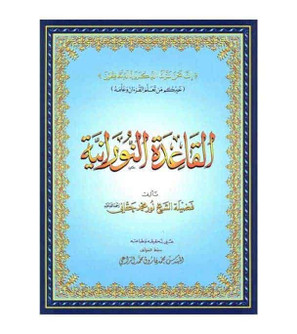
- Noorania Qaida (widely used, excellent for beginners)
- Qaida Baghdadiya (classical approach)
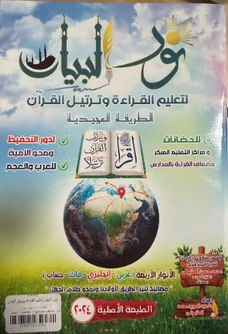
- Iqra' Primer Book 1 (popular in Islamic schools)
- YouTube channels: many excellent Arabic letter teachers
Prerequisite 2: Basic Tajweed
Once you can read, learn the basic rules of Quranic pronunciation (Tajweed).
Not advanced Tajweed. Just:
- Correct pronunciation of letters
- Basic elongation (madd) rules
- Noon sakinah and tanwin rules
- Sun and moon letters
Why now? Because you'll be reading Qur'an to practice. Correct pronunciation from the beginning prevents bad habits.
Prerequisite 3: A Clear Goal
Ask yourself: What do I want from Quranic Arabic?
- Understand what I recite in salah?
- Understand the Qur'an without full translation?
- Follow scholarly discussions about grammar?
- Read classical texts eventually?
Your goal shapes your path. Be honest about what you want.
Fatima shared: "I spent two years studying MSA (Modern Standard Arabic) thinking it would help me understand the Qur'an. It helped somewhat. But when I switched to specifically Quranic Arabic — focused vocabulary, Quranic grammar patterns — my understanding jumped dramatically in six months. Define your goal. Don't learn the wrong thing."
Stage 1: High-Frequency Quranic Vocabulary (Months 1-3)
The Single Biggest Return on Investment:
Vocabulary. High-frequency vocabulary specifically.
Before grammar. Before sentence structure. Vocabulary.
Why? This is because one cannot comprehend a sentence if one does not understand any of its words. However, even when one understands the words, sometimes meaning is grasped before comprehension of grammar.
The Numbers:
The 10 most common words in the Qur'an appear 30,000+ times. The top 100 words cover about 50% of the Qur'an. The top 300 words cover about 70%.
Start with those 300. Before anything else.
The Most Common Quranic Words (Sample):
|
Arabic |
Meaning |
Approximate Frequency |
|
الله |
Allah |
2,700+ |
|
من (min) |
from |
1,700+ |
|
في (fi) |
in |
1,600+ |
|
على (ala) |
on/upon |
1,400+ |
|
أن (an) |
that |
1,300+ |
|
ما (ma) |
what/that which |
1,200+ |
|
كان (kana) |
was/were |
1,100+ |
|
قال (qala) |
said/say |
1,600+ |
|
الذين (alladhina) |
those who |
900+ |
|
إن (inna) |
indeed/verily |
800+ |
How to Learn Vocabulary:
- Flashcards (physical or digital):
Anki app is excellent. Create decks of Quranic vocabulary with Arabic on one side, meaning on the other.
10-15 new words per day. Review previous words daily.
- The Word-a-Day Practice:
Pick one high-frequency Quranic word each day. Find it in three different Quranic verses. Write the verses. Understand them.
- Quranic Word Frequency Lists:
"Quranic Word Frequency Dictionary" by Nicholas Awde — excellent resource.
Arranged by frequency. Start with the most common, work down.
- Contextual Learning:
Don't just memorize isolated words. Find them in Quranic context.
"Allah" + "Samee'un" + "'Aleem" — learn them together as they appear, understand the phrase.
Ahmed told me: "I spent three months doing nothing but vocabulary. Ten words a day. Revisiting. Reviewing. I knew 300 words by the end. When I started grammar study after that, everything connected quickly. Words came first. Then grammar made them make sense. That sequence was crucial."
Stage 2: Core Grammar Concepts (Months 3-8)
The Three Categories:
Every Arabic word is a noun (ism), verb (fi'l), or particle (harf).
Learn to identify which category each word belongs to. This is the first grammar skill.
The Three Cases:
Nouns change endings based on grammatical role:
- Raf' (damma -u) = subject
- Nasb (fatha -a) = object or after certain words
- Jarr (kasra -i) = after prepositions
You don't need to master all the rules at once. But you need to recognize these endings.
The Two Sentence Types:
Nominal sentence (Jumlah Ismiyyah): Noun + Noun/Adjective. No verb. Expresses permanent states.
"Allahu Akbaru." — Allah IS the Greatest. Essential. Permanent.
Verbal sentence (Jumlah Fi'liyyah): Verb + Subject + Object. Expresses actions and events.
"Khalaqa Allahu as-samawati." — Allah created the heavens. An event.
Recognizing which type you're reading is fundamental.
The Verb System — Basics Only:
Focus first on:
- Past tense (madi): Kataba (he wrote), Qala (he said), Ja'a (he came)
- Present tense (mudari'): Yaktubu (he writes), Yaqulu (he says), Yaji'u (he comes)
- The root system: K-T-B gives you kitab, kataba, kaatib, maktuba
The root system is the most powerful tool in Quranic vocabulary. Once you know a root, you recognize its whole family.
Resources for Grammar:
Beginner:
- "Learning Arabic Language of the Quran" by Izzath Uroosa Umar (excellent beginner book)
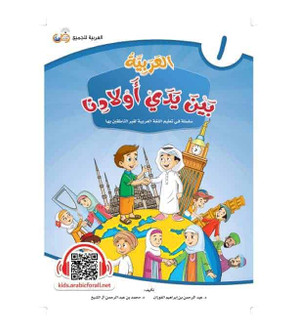
- "Gateway to Arabic" series
- Madinah Arabic Book 1 (rigorous but thorough)
Video-based:
- Bayyinah Institute's "Access" program — Nouman Ali Khan's Quranic Arabic. Highly recommended. Makes grammar connected to meaning.
- SeekersGuidance Arabic courses (structured, scholarly)
Key Grammar Topics in Priority Order:
- Three categories (ism/fi'l/harf) ← Start here
- Three cases (raf'/nasb/jarr)
- Nominal sentence structure
- Verbal sentence structure
- Prepositions and their effects
- Possessive construction (idafa)
- Adjective agreement
- The Inna family
- Verb conjugation basics
- Common verb patterns
Don't rush through these. Spend time on each until it's clear. Then move forward.
Zaynab shared: "I tried to learn all Arabic grammar at once. Overwhelming. Then my teacher said: 'Learn the three categories. Stop. Practice for two weeks. Then learn cases. Stop. Practice.' That staged approach — one concept, then practice, then next concept — made each rule solid before I added the next. No more feeling like I was drowning."
Stage 3: Apply to Quranic Text (Ongoing from Month 3)
Don't Wait to Finish Grammar:
The biggest mistake beginners make: "I'll study Arabic for two years then start applying it to Qur'an."
No. Apply as you go. From the first month.
Start with What You Already Know:
Al-Fatiha. You know it by heart. Now understand it word by word.
"Al-hamdu" — Al + hamdu = praise (raf') — subject of nominal sentence "Lillahi" — li (to/for) + Allah-i (Allah in Jarr case, after the preposition) = "to/for Allah" "Rabbi al-'alamina" — Rabb in Jarr + al-'alamin in Jarr case (idafa structure)
Spend a full week on Al-Fatiha alone. By the end, you should be able to explain every word grammatically.
Then Move to Short Surahs:
Surah Al-Ikhlas. Surah Al-Kawthar. Surah An-Nasr. Surah Al-Falaq. Surah An-Nas.
Short. Often memorized. Easy to apply new knowledge to.
The Quranic Study Method:
- Pick one verse
- Write it out in Arabic
- Identify every word category (ism/fi'l/harf)
- Identify the grammatical case of each noun
- Find the mubtada'/khabar or verb/fa'il/maf'ul
- Translate literally
- Compare with a trusted tafsir
The Word-by-Word Qur'an:
Quran.com has word-by-word translation and grammar breakdown for every verse.
An incredibly useful tool for beginners checking their analysis.
The Tafsir Habit:
As you study vocabulary and grammar, read a brief tafsir (explanation) for the verses you’re analyzing. Don’t just do one thing. Tafsir Al-Baghawi or Ibn Kathir can help for context, kinda like a companion while you read.
Grammar + meaning together gives the fullest understanding, in a way that surprises you. And Ibrahim told me: “I started applying Arabic to the Qur’an from day one. Even with just ten vocabulary words, I’d still find those words in Al-Fatiha or Al-Baqarah. I’d get all worked up, like “I know this word!””
Stage 4: Build Your Quranic Vocabulary Systematically (Months 6-18)
The Word Families Approach:
Arabic roots give you word families. Learn one root, understand many words.
Key Roots for Quranic Arabic:
R-H-M (رحم) — Mercy:
- Rahman (Most Merciful), Rahim (Merciful), Rahma (mercy), Arham (wombs)
'L-M (علم) — Knowledge:
- 'Ilm (knowledge), 'Alim (knowledgeable), Ya'lamu (he knows), Ma'lum (known)
K-T-B (كتب) — Writing:
- Kataba (wrote), Kitab (book), Kutiba (was written), Maktub (written)
H-K-M (حكم) — Judgment/Wisdom:
- Hakama (judged), Hukm (judgment), Hikma (wisdom), Hakim (wise)
S-B-H (سبح) — Glorification:
- Subhana (glory), Yusabbihu (glorifies), Tasbih (glorification)
The Frequency-Based Vocabulary List:
After the top 300 words, continue to the top 500, then 750, then 1,000.
At 1,000 Quranic words, you'll understand roughly 80% of the Qur'an.
Review System:
Use spaced repetition. Anki automatically schedules reviews based on how well you know each word.
Don't just add words. Remove them from active review when truly mastered.
Realistic Expectations: The Timeline
Months 1–2: Alphabet & Basic Reading (if not yet known) Months 3–5: Vocabulary (300) & Three Categories + Basic Cases Months 6–8: Building up grammar + Apply to Al-Fatiha & short surahs Months 9-12: Increase vocabulary to 500 + More grammar + Longer portions of the Qur'an Year 2: Vocabulary (750) & full grammar + Longer portions of the Qur'an Year 3: Vocabulary (1,000) & Readings in Classical Arabic with Dictionary
The Honest Truth:
This takes years. Not months. Not weeks.
Anyone who tells you "learn Quranic Arabic in 30 days" is not being honest.
But here's what's also true: you start benefiting immediately.
After month one of vocabulary study, you'll recognize words in Qur'an you didn't before.
After month three of grammar, your salah will begin to have meaning.
After year one, you'll read Al-Fatiha with understanding. Every word.
The journey is long. But every step changes your relationship with the Qur'an.
Omar told me: "I've been studying Quranic Arabic for four years. I'm not fluent. I can't read classical texts independently yet. But my salah has been transformed. When the imam recites in tarawih, I follow. I understand. I hear ayahs I know. Ayahs I've studied. And in that moment — between the Arabic I hear and the meaning I understand — I feel connected to Allah in a way I never did before. That's worth four years. That's worth forty."
Common Mistakes to Avoid
Mistake 1: Studying grammar without vocabulary
Grammar with no vocabulary is like learning traffic rules with no car.
Build vocabulary first. Alongside grammar. Always.
Mistake 2: Skipping prerequisites
Can't read Arabic fluently? Don't jump to grammar.
Mistake 3: Inconsistency
15 minutes daily beats 2 hours on Saturdays only.
The forgetting curve is brutal. Consistent daily review is essential.
Mistake 4: Only studying English explanations
Spend time with the Arabic itself. Read Arabic sentences. Write Arabic words.
You can't learn to swim by reading about swimming.
Mistake 5: Perfectionism
"I'll start when I have a better book / more time / a local class."
Start now. With what you have. Imperfect progress beats perfect paralysis.
Mistake 6: No teacher or community
Self-study has limits. Find a teacher — online or in-person. Find a study group.
Accountability and correction are invaluable.
Your Starter Weekly Schedule
Daily (15-20 minutes):
- 10 new vocabulary words (or review previous words)
- Read 2-3 Quranic verses in Arabic
- Identify one grammar concept in those verses
Three times per week (30 minutes):
- Study one grammar concept from your resource
- Apply it to 5 Quranic verses
- Write out the analysis
Weekly (1 hour):
- Review all vocabulary from the week
- Do a full analysis of one short surah
- Read tafsir for whatever you studied this week
Monthly:
- Pick one surah you know by heart
- Translate it word by word from memory
- Check yourself against the actual meaning
- Note what you knew and what you still need to learn
Conclusion: The Conversation You're Already Having
You're already in conversation with Allah. Seventeen times a day minimum.
You're saying "Allahu Akbar." "Al-Fatiha." "Subhana Rabbiyal-A'la." "Allahu Akbar" again.
Quranic Arabic doesn't start that conversation. It makes you aware of what you're already saying.
It transforms sound into meaning. Recitation into conversation. Prayer into presence.
Your First Three Steps Starting Today:
Step 1: If you can't read Arabic yet, start there. Get a Noorania Qaida or Iqra' Primer. Find a teacher.
Step 2: If you can read, start your first vocabulary list. Write ten high-frequency Quranic words. Memorize them today.
Step 3: Open Al-Fatiha. Find any word you know. Any one word. That's the beginning of reading with understanding.
The Timeline:
Years. But every single day, you'll understand more than the day before.
Every word you learn, you'll hear in salah. In Qur'an recitation. In khutbah.
And each time you recognize a word — each time meaning meets sound — you're experiencing what millions of Muslims before you experienced when Arabic was their mother tongue.
The Qur'an as it was meant to be encountered. Understood. Lived.
"Afala ya'qilun?" — Will they not reason? (2:44)
Will you not understand what you recite?
Bismillah. Start today.
The Qur'an is waiting to be understood in the language it was revealed.
And you are capable of understanding it.
One word. One rule. One verse at a time.