
Quranic studies vs Quranic memorization
A mother sat in my office last year, looking properly confused.
Her ten-year-old had memorized all of Juz’ Amma. She was proud of him, and she had every right to be. Then he told her, completely sincere, that Surah Al-Asr was “the one about the afternoon prayer.”
“He’s recited that surah hundreds of times,” she said. “How does he not know what it means?”
That question is what this article is about.
Memorizing and understanding are two different skills. Both matter, and both belong in a complete Quranic education. But plenty of families assume one automatically produces the other, and it doesn’t. A child can memorize perfectly and understand nothing. Another can understand deeply and struggle to memorize. You want both, and to build both you need to know what each one actually is.
What Quranic Memorization Actually Is
Hifz means committing the Arabic text of the Qur’an to memory so you can recite it accurately, with correct tajweed, without looking at a page.
It takes more than people expect. Every letter has to come from its proper point of articulation. Every word has to be in the right order. The tajweed rules have to be applied the same way each time. And the whole thing needs constant review, because memorized text fades if you leave it.
What you get is extraordinary. The Prophet ﷺ said: “It will be said to the companion of the Quran: Recite and ascend, and recite as you used to recite in the world, for your position will be at the last verse you recite.” (Abu Dawud, Al-Tirmidhi)
The huffaz (plural of hafiz, someone who has memorized the whole Qur’an) are honored in our tradition for good reason. They carry the speech of Allah in their hearts. Because of them, the Qur’an exists in living memory and not only on paper, exactly as it has since the time of the Prophet ﷺ.
What hifz doesn’t automatically give you is meaning. It doesn’t tell you what the words say, why a verse was revealed, or what it asks of you on a Tuesday afternoon. Someone can be a hafiz of the entire Qur’an and still need a translation to know what they just recited. That isn’t a flaw in hifz. It’s a different skill.
Dr. Ahmed has taught memorization for fifteen years, and he put it to me plainly: “My best students can recite thirty juz without a single error. Some of them, especially the ones who memorized young, don’t understand much of what they recite. That doesn’t make their hifz less valuable. Hifz is the foundation. Understanding is a separate building that stands on it. But you have to build both. One doesn’t grow out of the other on its own.”
What Quranic studies actually is
This is the wider field: tafsir (interpretation and commentary), Quranic Arabic, the sciences of the Qur’an (asbab al-nuzul, nasikh wa mansukh, Makki and Madani), and applying all of it to daily life.
At the simplest level, you need either some Arabic or access to a reliable translation and tafsir. Mostly you need a habit: sitting with a verse and asking what it means, why it was revealed, and what it asks of you. Go deeper and you’re into the classical tafsir literature and the links between Quranic guidance, Islamic law, and ethics.
A person who does this can understand what they recite. They connect verses to the decisions in front of them. They see the themes and the story the Qur’an tells from beginning to end. The Prophet ﷺ pointed at this when he said: “The best of you are those who learn the Qur’an and teach it.” (Sahih Bukhari) Learning the Qur’an, in that sense, includes its meanings and living by its guidance, not only its words.
But studying doesn’t automatically give you perfect recitation. It won’t give you the familiarity that comes from reciting a surah thousands of times, or the ability to recite without a mushaf, or the particular relationship with the text that comes from carrying it with you.
Fatima told me about this gap, and she didn’t dress it up: “In my twenties I focused entirely on studying the Qur’an. I read tafsir regularly. I knew the stories behind the revelations. But I couldn’t recite Surah Al-Baqarah from memory, and in prayer I was stuck with the short surahs I’d learned as a child. Then I’d stand in long tarawih prayers and couldn’t follow the imam with my heart, because the words weren’t in me the way they were in the huffaz standing around me. I felt it painfully.”
The Prophetic Model: Both, not either
The classical tradition never split these two. Students memorized and studied meaning at the same time, and as their memorization grew, so did their understanding. It was one project.
It’s reported that the companions, Ibn Mas’ud among them, learned the Qur’an from the Prophet ﷺ ten verses at a time. They didn’t move on until they understood those verses and were acting on them.
Ten verses. Memorized, understood, acted on. Then ten more.
That wasn’t memorizing sounds. It was close engagement with a living text, and it’s the standard we’re pointing at.
Somewhere along the way, modern Quranic education pulled the two apart. Many hifz programs focus almost entirely on memorization, with little time for meaning. Many general Islamic programs teach meaning through translation and barely touch the Arabic text. So we get Muslims who can recite without understanding, and Muslims who understand without being able to recite. Neither is the full relationship with the Qur’an that the tradition describes.
Dr. Ahmed again: “The scholars of the past would have found it strange to separate these. Memorization was the beginning, not the end. You memorized so you could carry the text everywhere and keep studying it. And the studying deepened the memorizing, because you weren’t memorizing sounds. You were memorizing meaning wrapped in sounds.”
Where families actually are today
The hifz path. Lots of families enroll their children in dedicated hifz programs, whether full-time schools, weekend classes, or a home schedule. These usually put memorization and tajweed first. That’s not wrong. Carrying the Qur’an in memory is a serious gift, the Prophet’s ﷺ promises about the huffaz and their families are real, and the discipline hifz demands is worth respecting. But a family that does only hifz has built half a house.
The Islamic studies path. Other families put meaning first, through tafsir, Arabic, and discussion. These children understand what they say in salah and can connect verses to their values. Understanding changes salah, and it makes the Qur’an feel personal. But a family that does only this misses what hifz gives. Memorized text goes wherever you go. It needs no book, and you can recall it in the dark, when you’re sick, or when you’re scared.
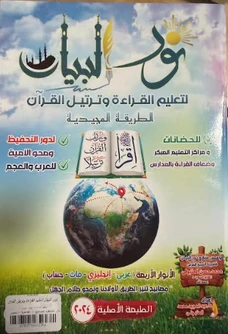
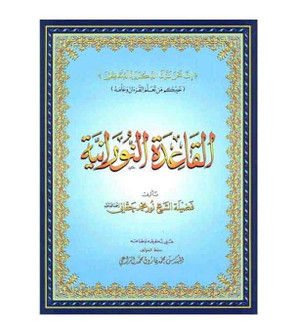
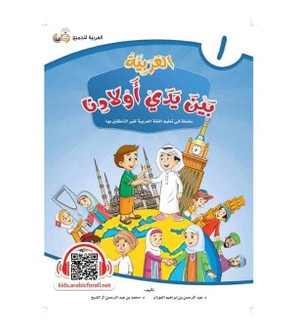
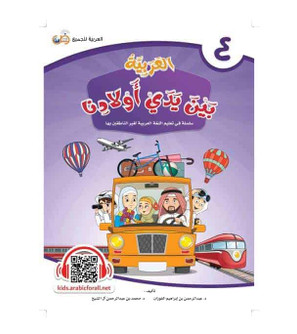
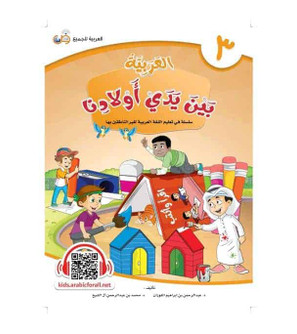
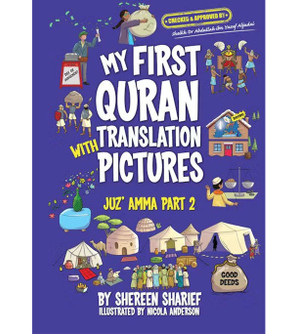
The combined path. Madinah Media builds its range around the idea that a child needs both. For memorization, there are color-coded tajweed mushafs, Noorani Qaida editions, structured workbooks, and audio with qualified reciters modeling correct pronunciation. For understanding, there are word-by-word Quranic references, tafsir at several levels, Quranic Arabic resources, and children’s books that tie Quranic themes to stories. And for putting the two together, there’s the Noor Al-Quran series from Manarah Publishing, available through Madinah Media. It builds memorization and meaning side by side from the very first level, with audio models, vocabulary explanations, and values built into every unit.
What parents can do
Start with both from day one. Don’t make a child pick. At four or five, it looks like this: your child hears Al-Ikhlas over and over and starts memorizing it through repetition. Meanwhile you say something simple, like “This surah says Allah is One. He’s always been here and always will be. Nothing is like Him.” That’s understanding at a four-year-old’s level. The meaning gives the memorized words something to hold on to.
Keep meaning moving alongside memorization. A child memorizing Surah Yasin should know what Yasin is about, at a level that suits their age. A child working through Al-Baqarah should know it covers fasting, the direction of prayer, marriage law, and the stories of the Children of Israel. The meaning doesn’t need to be scholarly or exhaustive. It needs to be there and keep growing.
A simple habit: every time your child finishes memorizing a surah, spend one session on its themes. Read a short tafsir summary, pick out two or three lessons, and connect one of them to something happening in your child’s life right now. Fifteen minutes of this changes the quality of the hifz.
Bring in Quranic Arabic. This is where the two meet most closely. Take a child who has memorized “Inna lillahi wa inna ilayhi raji’un.” If they also know that “inna” means “indeed,” “lillahi” means “to Allah,” “wa” means “and,” and “raji’un” means “those who return,” they have a very different relationship with that phrase than a child who only knows how it sounds.
Arabic doesn’t have to come first. It can grow alongside hifz. New vocabulary attaches to text the child already knows, and the memorized text gives context to new words. Madinah Media’s word-by-word resources, Quranic Arabic textbooks, and vocabulary tools are built for exactly this bridge.
Match the tafsir to the child. Under ten, tafsir means story and theme. What is this surah about? What does it ask of us? What’s the lesson? Between ten and fourteen, you can add some context: why was this verse revealed, and what did the companions understand from it? For teenagers and adults, the classical works are within reach, at least Ibn Kathir, Al-Sa’di, or Tafsir Al-Jalalayn. Don’t jump a child straight to the heaviest commentary on the shelf. Madinah Media carries tafsir at several levels, so you can pick the one that fits.
Zaynab told me about her daughter: “She memorized Surah Al-Kahf at eleven. It took four weeks. Then we spent four more weeks reading the main themes together from a simple tafsir summary. The people of the cave, the man with the two gardens, Musa and Khidr, Dhul-Qarnayn. When she recited Al-Kahf after that, she wasn’t reciting Arabic sounds anymore. She was reciting stories she knew and loved. She told me it felt different from the inside. That’s what meaning does to memorization.”
The questions I get asked most
“Should we prioritize hifz or understanding?”
Neither on its own. Both, together, at every stage.
If you really have to pick an order, the classical answer was to memorize first, understand alongside, and deepen the understanding later. A verse you’ve memorized and then study meets a mind that already has the Arabic embedded, so the study lands on something already there. But “memorize first” never meant “memorize with no meaning.” It meant memorize with basic meaning, then study the meaning more deeply.
“Our child is in a full-time hifz school. How do we add understanding?”
Keep it small. Five to ten minutes a day: take one verse from what they memorized this week, read the translation together, and share one lesson. Once a week, spend fifteen or twenty minutes on the themes of the surah they’re working on, with no pressure. At bedtime, read a story book about a prophet or a surah. None of this competes with hifz. It deepens it.
“Our child studies the meaning but isn’t memorizing much. What now?”
Add a small memorization target. Two verses a week, kept up, comes to over a hundred verses a year. Over ten years, that’s a real hifz, built next to real understanding. Steady beats fast here. A little every week for years does more than a sprint followed by months of nothing.
Carry it and know it
The Qur’an was revealed to be recited and understood, memorized and applied, carried in the heart and lived out in the world.
Memorizing without understanding leaves you holding something precious you can’t fully open. Understanding without memorizing leaves you knowing something deeply that you can’t carry with you.
What we’re hoping for is the hafiz who understands, the scholar who can recite from memory, and the parent who stands in salah and knows, word by word, what they’re saying to Allah. That’s what the classical tradition aimed for, and what the companions lived. Any Muslim family can work toward it, one surah and one word at a time.
So start from where your child is now. Add whatever’s missing, and keep both moving.
Bismillah. Build both.