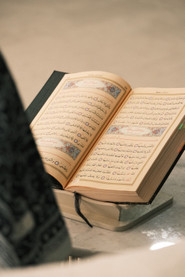
Quranic Studies Books: A Guide for Every Muslim Learner
Last Ramadan you pulled a Quranic studies book off the shelf. Fajr was done, the house was quiet, the tea was still hot. You opened to page one and felt good about yourself.
By page six you were lost. Maybe it was too dense, maybe too simple, maybe it just assumed you knew things you’d never been taught. So you closed it. It sat on the table for eleven days and then crept over to the corner of the shelf where the guilty books live.
If that’s you, you’re in good company. I’d bet most Muslims who’ve tried to study the Quran seriously have a book like that somewhere. And it’s almost never about effort or time. It’s a mismatch. The right book at the wrong stage does about as much for you as no book at all, while the right one at the right stage can crack the Quran wide open.
So this is about matching. What Quranic studies actually covers, which books do which job, and how to put together a reading path you’ll finish.
What Quranic Studies Actually Includes
Most people hear the phrase and think tafseer. Fair enough, tafseer is the big one. But it’s only one piece, and mixing the pieces up is exactly how people end up buying the wrong book.
- Tafseer is explanation of meaning, verse by verse: what the ayat say, the context they came down in, how the first generations understood them, what it means for belief and practice.
- Uloom al-Quran, the sciences of the Quran, looks at the Quran as a text with a history. How it was revealed and written down, how it was preserved, the different modes of recitation, abrogation, reasons for revelation, and a lot more. It answers the question of how this book got into our hands.
- Tajweed is the rules of recitation. Pronunciation, elongation, letter characteristics, where to stop. It’s a separate skill from understanding meaning and has its own shelf.
- Hifz is memorization, and the books in this area cover revision, technique, and programs for different ages. Quranic Arabic is the language of the Quran itself, its vocabulary and grammar and most common words. And qisas al-anbiya covers the stories of the Prophets and earlier peoples, built on authentic hadith and the classical scholars.
Whatever book you’re holding is doing one or more of these. Work out which one you need and half the shelf drops out of the running.
Why people start in the wrong place
“I want to understand the Quran.” Lovely goal. Also vague, because it can mean about six different things depending on where you are.
Can’t read the Arabic script yet? Then it means learning the letters. Read but make big pronunciation mistakes? Tajweed comes before tafseer. Recite well but without comprehension? You want Quranic Arabic vocabulary and grammar. Have some Arabic? Structured tafseer, beginning with Juz Amma. Already know tafseer and want to understand preservation and context? That’s uloom al-Quran.
The way it usually goes wrong is simple. You’re at stage two and you grab a stage-four book, read a few pages, feel stupid, and decide this must be for scholars. It isn’t. It’s for everyone. But there’s an order to it, and skipping steps doesn’t save you time. It costs you time.
Ustadha Maryam teaches adults at a community center, and she sees it all the time. “I get students who have been reading tafseer for years without knowing the basic rules of tajweed. Their understanding of meaning has grown but their recitation is full of errors they don’t even hear anymore. And I get students who recite beautifully but have never sat with a tafseer book in their lives. Both groups are partially formed. The full picture requires all of it, built in the right order.”
Starting from zero
If you or your child can’t read Arabic script yet, this is your starting point. Skip it and everything after is built on air.
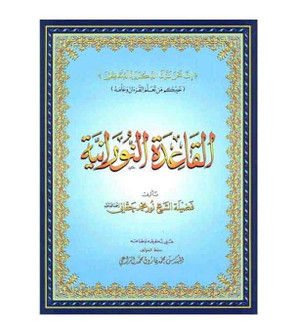
- Al-Qaidah An-Noraniah by Sheikh Noor Mohammed Haqqani has been teaching letters to children and adults for generations, all over the world. Letters, sounds, how they join, basic reading with attention to pronunciation. Madinah Media has several editions, including children’s formats and ones bundled with Juz Amma. It never hurries you. Each step leans on the one before, and it assumes you know nothing, which is why plenty of parents learn right next to their kids.
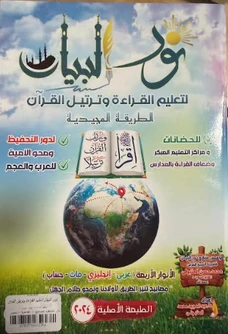
- Nour Al-Bayan by Tariq Al-Saeed is similar in spirit: gradual, clear, and quick to connect letter sounds to real Quranic words. Schools and home learners both use it a lot.
- Then there’s the Safar Learn to Read series by Hasan Ali, written for students in English-speaking homes, and the Complete Qaidah in Madinah Script. That second one has a clear sequence, manageable pacing, and a teacher’s guide so a parent who isn’t an Arabic scholar can still teach from it.
These aren’t exciting books. Nobody’s quoting them on social media. But you can’t read the Quran without them, and no amount of tafseer replaces being able to sit down with the Mushaf and recite. Do this first.
Tajweed
Once you can read the script, the next thing isn’t meaning. It’s reciting correctly.
Sunni scholarship has always pushed this hard. The Prophet, peace be upon him, recited in a particular way, and that way was heard, memorized, and handed from teacher to student in a chain that runs unbroken to today. Tajweed rules aren’t fussy extras. They’re a description of that recitation. And the Quran says it directly: “And recite the Quran with measured, beautiful recitation.” (73:4) The scholars took that as an obligation on anyone who recites, at whatever level they can manage.
So yes, tajweed books matter. They’re not a polish you add at the end.
For kids, you want something that works the way children learn: no dense lists of rules, but physical descriptions, games, phrases that stick, and practice in actual ayat right away. Madinah Media’s Tajweed for Kids collection includes color-coded materials with each rule highlighted in its own color in the Quran text itself. A lot of visual learners take to this at once, because instead of memorizing an abstract rule they see it marked every time it comes up.
Ustadha Hanan has taught children’s Quran for over fifteen years. “Color-coded mushafs do half the teaching for me,” she says. “The child opens the book and the tajweed rules are already visible. The colors ask the question before I do. Children start noticing: ‘Why is this word green?’ And that question is the beginning of learning.”
Adults tend to want more precision, and they want the why. Tajweed Rules of the Qur’an by Kareema Czerepinski is among the most respected English manuals. It covers makharij al-huruf, sifat al-huruf, noon sakinah and meem sakinah, madd, and waqf, in language clear enough for self-study and organized enough for a class. Madinah Media’s Tajweed for Adults section carries it, plus related titles for English-speaking learners who want their recitation to go from approximate to correct.
Whatever book you pick, listen to a qualified reciter, a lot. Tajweed rules describe sounds, and they stay abstract until you’ve heard those sounds over and over.
Tafseer
Recite reasonably well? Then meaning is next, and this is where it gets exciting for most people. The Quran stops being something you recite and starts talking to you. The catch is that tafseer books run from beginner to brutal, and the wrong level is how books end up in that corner of the shelf.
- Start with Juz Amma. It’s the thirtieth juz, full of the short surahs from salah, and most of us already know at least some of it by heart. That’s the whole trick. You’re learning the meaning of words you already carry, so the new stuff has somewhere to land.
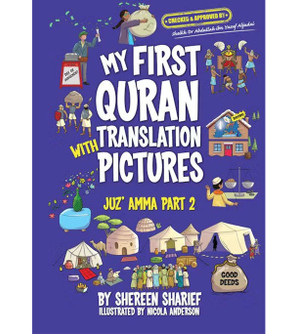
- For little ones, My First Quran with Pictures: Juz Amma (two parts, available through Madinah Media) uses age-appropriate illustrations to get meaning across. It’s not scholarly tafseer and doesn’t pretend to be. It gives a small child a first feel for what the Quran is saying. And a kid who grows up pairing pictures with Quranic meanings doesn’t hit a wall when serious tafseer shows up later. They already know these words were talking to them.
- For adults who want something serious but readable in English, two names come up most. In the Shade of the Qur’an by Sayyid Qutb is literary and spiritual more than technical. He writes about the Quran as something alive, and his take on what each surah is doing, its mood, its argument, its imagery, moves a lot of readers. It suits you if you want the spirit of the Quran along with the meaning.
Tafseer Ibn Katheer is the one cited most in the Sunni tradition, and it’s available in English in abridged and unabridged editions. Ibn Katheer explains verses through other verses, authenticated hadith, and what the Companions understood. It’s the standard reference. It’s dense. It’s worth the effort.
A father in our community put it better than I can: “I tried to read Ibn Katheer from the beginning like a novel and gave up by Surah Al-Baqarah. Then a teacher said: don’t read it like a book. Use it like a dictionary. When a verse comes up that you want to understand more deeply, open Ibn Katheer to that verse. That changed everything. I’ve been using it for four years this way.”
For most adult learners, that’s the way in.
New Muslims often need tafseer that explains basic Islamic concepts as it goes, without assuming a background they haven’t had time to build. Madinah Media’s New Muslims section is picked with that reader in mind. The Quran isn’t a hard book. It has layers, and a beginner’s tafseer plus an open heart will get a new Muslim a long way into them.
The sciences of the quran
Most Muslims never get here, which is a pity, because this might be the most rewarding level of all.
Tafseer asks what something means. Uloom al-Quran asks how it got here. Why was this revealed when it was? How was it preserved? How has it been recited through authenticated chains? These questions are practical, too. They’re what answers the doubts that float around on social media, in universities, and in interfaith conversations. If you know uloom al-Quran, someone challenging the Quran’s preservation doesn’t rattle you. You’ve got the answer.
The usual starting point in English is An Introduction to the Sciences of the Quran by Abu Ammaar Yasir Qadhi. It covers revelation, preservation, the compilation under Uthman, the seven ahruf and ten qira’at, abrogation, and plenty more. It’s rigorous but doesn’t bury you, and it doesn’t assume any academic background.
It changes how you hold the Mushaf. Not with less reverence, with more. Once you know how the Quran was preserved, by which generations and with what care, you don’t feel shaken. You feel steadier.
Ustadha Layla teaches Islamic studies at a weekend school and has seen what happens to students who read it. “They walk into class differently afterward,” she says. “They have answers to questions they were embarrassed to ask. When a classmate challenges them about the Quran’s authenticity, they aren’t defensive anymore. They’re informed. That shift in posture comes from knowledge, not just from faith.”
Quranic arabic
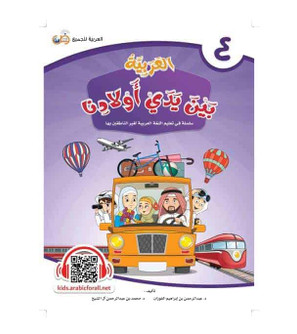
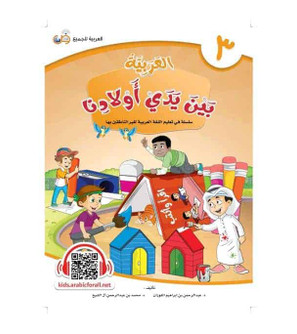
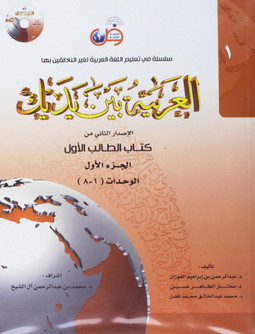
This is the gap nobody fills well for English-speaking Muslims. We learn to recite. Far fewer of us learn to read the Quran with even basic understanding, and most curricula quietly skip over it.
Quranic Arabic isn’t the same as Modern Standard Arabic. The vocabulary differs, some of the grammar differs, and so does the register. You can speak Arabic and still not follow the Quran. But if you study it directly, focusing on the roughly 400 roots that make up most of its vocabulary, one to two years of steady work can give you real comprehension.
Madinah Media’s Quranic Arabic Textbooks section has resources for this, including the Madinah Arabic Reader series, which builds understanding through graded exposure to actual Quranic text.
It doesn’t replace tafseer. It makes tafseer hit harder. When you can read a verse and catch even part of the Arabic, the commentary you read afterward lights up something you’ve already started to see. That beats tafseer in translation alone by a wide margin.
Abdullah is a father of three who started Quranic Arabic at forty-two. “The first time I recited Surah Al-Mulk and understood most of the words without checking the translation, I wept,” he says. “I had been reciting it in Tahajjud for fifteen years. Suddenly it was speaking directly to me. That experience alone was worth the two years of study.”
Books for children
How a Muslim relates to the Quran as an adult is mostly decided early. Kids who meet it through good stories, familiar sounds, and a bit of joy come to it differently than kids who only ever knew it as a duty or something to memorize under pressure. I think that’s one of the most consistent patterns in Islamic education.
Which means children’s books matter, and I mean the right ones, the ones that open the Quran’s world with warmth and accuracy.
Quran Stories for Little Hearts and Quran Stories for Young Readers, both through Madinah Media, cover the Quranic narratives at two reading levels. They aren’t watered-down retellings. They stay faithful to the Quranic account, draw on authentic sources, and use language a child can handle, with illustrations that keep little eyes on the page.
The stories of the Prophets fill a big chunk of the Quran. A child who can picture Yunus, alayhi salam, in the belly of the whale, who knows why Musa, alayhi salam, went back to his people with the tablets, who can imagine Maryam, alayha salam, alone under the palm tree, is already inside the Quran. They have a home there.
Teacher Fatima has worked with children aged five to twelve for over a decade. “Children who come from homes where Quranic stories were read aloud, regularly, with expression and love, arrive in my class already oriented toward the Quran,” she says. “They don’t need to be convinced it’s interesting. They already know it is. My job is just to deepen what their parents already started.”
Madinah Media’s Kids Quran editions, including simplified translations and color-coded beginner editions, help children go from hearing about the Quran to holding it and reading it themselves. The day a child first reads from their own Quran, with their name written inside the cover, tends to stay with them for good.
Putting together your reading path
Here’s a rough map. Find yourself on it.
If you can’t read Arabic yet, start with Al-Qaidah An-Noraniah or Nour Al-Bayan and listen to recitation daily. It’s boring. Do it anyway.
If you can read but make big errors, begin a tajweed program next to your regular reading. Get a color-coded mushaf, listen to a qualified reciter every day with the Mushaf open, and take one rule at a time from a structured text.
If you recite reasonably well, start tafseer with Juz Amma. Read meaning-focused texts next to your daily recitation, and use a translation you trust when you prepare for salah so the surahs you pray start to mean something.
If you recite regularly and know a little tafseer, add Quranic Arabic. Start with the high-frequency roots, keep a Quranic dictionary close, and work through a structured textbook. You’ll start noticing comprehension creeping into your own daily recitation.
If you’re an established learner after depth, read An Introduction to the Sciences of the Quran. Pick a complete tafseer and stay with particular surahs for a long while. If your Arabic is strong enough, try Ibn Katheer in the original. Otherwise the English translation is fine for long study.
And there’s no finish line. The Companions studied the Quran their entire lives, and so did the scholars after them. The goal isn’t to finish. It’s to keep going deeper.
How to tell a good book from a bad one
Not everything with the label is worth your time. What I’d look for:
It’s rooted in the classical tradition. It draws on the Companions and their students, the major classical mufassirun, and authenticated hadith, and it doesn’t hand you the author’s own speculation dressed up as interpretation. The Sunni method is clear on this: explain the Quran by the Quran first, then by the authentic sunnah, then by the understanding of the Companions.
It simplifies honestly. Making a book easier is fine. Bending the meaning of an ayah to do it isn’t.
It knows what it’s for. A tajweed manual shouldn’t wander into philosophy, and a tafseer shouldn’t turn into a grammar lesson. The clearest books usually end up the most useful.
And there’s a chain of knowledge behind it, especially for advanced works. The best ones come from scholars who themselves sit in a line of transmission, teacher to student, back to the Companions who received the Quran from the Prophet, peace be upon him.
Madinah Media says its principle is quality over quantity, and that its Quranic studies inventory is curated rather than just whatever sells. If you’re building a reading path, that matters. You want to trust what you pick up.
About that book on your shelf
Go back to the one you put down last Ramadan.
Maybe it was the wrong stage. Maybe the level was off, or the topic was right and the format wrong. Maybe you needed tajweed before tafseer and nobody mentioned it. None of that means you can’t do this. It means you hadn’t found your entry point yet.
There is one. It’s not above your level and it’s not beyond your time. It’s waiting right where you are now, whether that’s the letters or advanced tafseer in Arabic.
The Prophet, peace be upon him, described the Quran as a rope, one end in Allah’s hand and the other in yours. These books aren’t the rope. They teach you how to hold it better, how it feels, what it’s asking of you.
So pick the one that fits where you are today. And start tonight. Not after Ramadan, not when life calms down. Tonight. Bismillah.