Best Quran Books for Kids
You want your child to love the Qur'an.
Not just know it. Not just recite it. Love it — the way you hope they'll love it — as a living presence, a companion, a source of meaning that stays with them when you're not in the room.
But standing in the Islamic bookstore (or scrolling through an online catalog), you face a wall of options that all claim to do exactly that. Colorful covers. Cheerful fonts. "Perfect for ages 4-8!" on every single one.
You've bought three already. One was too simple and your child was bored after a week. One was too advanced and the vocabulary was the same as a college textbook. One had beautiful pictures and almost no actual Quranic content.
Sound familiar?
The problem isn't that you're choosing badly. The problem is that "Quran books for kids" covers an enormous range — from board books for toddlers to structured memorization workbooks for teenagers — and the same phrase gets applied to all of them regardless of whether they actually serve your child's current age, level, and learning style.
This article cuts through that. Specific books. Specific ages. Honest descriptions of what each one does and who it's actually for. Every recommendation grounded in what's available through Madinah Media's carefully curated children's catalog.
Before Choosing Any Book: Three Questions to Ask
Question 1: Is this for recitation or for meaning?
Some Qur'an books for children focus on learning to read and recite Arabic correctly. Others focus on understanding what the Qur'an says. Both are valuable. They're different books. A child who needs reading instruction needs a Qaida or structured recitation resource. A child who can already recite but doesn't understand needs a meaning-focused resource. Don't confuse them.
Question 2: What is my child's current level — honestly?
A five-year-old who has been hearing Quranic recitation at home since birth is different from a five-year-old encountering Arabic letters for the first time. An eight-year-old who has memorized fifteen surahs is different from an eight-year-old who has memorized three. The "right age" on a book cover is a starting point, not a guarantee of fit.
Question 3: What format does my child actually engage with?
Some children absorb information through read-aloud narrative. Others need hands-on activity. Others engage best through beautiful visuals. Others need structured, systematic drill. Matching the book's format to your child's actual learning style determines whether the book gets used or sits on the shelf.
Dr. Ahmed told me: "Parents choose books for what they wish their child was ready for rather than what the child is actually ready for. I've seen parents buy 300-page Quranic tafsir books for seven-year-olds. The book is excellent — for a twelve-year-old. For the seven-year-old, it's a source of overwhelm and discouragement. Matching the book to the actual child, not the ideal child, is the first skill of Islamic parenting."
Category 1: Recitation Foundation Books (Ages 4-8)
What These Books Do:
Build the reading mechanics that make independent Quranic recitation possible. Letters. Vowels. Connected text. Tajweed rules introduced at a basic level. The bridge between hearing the Qur'an and being able to read it.
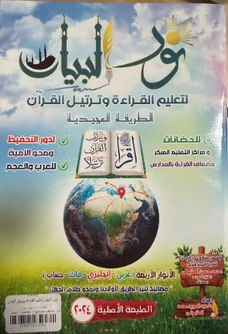
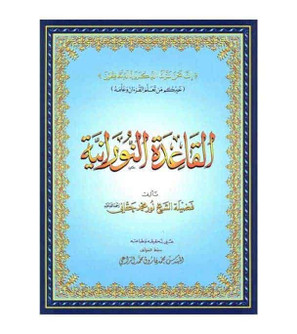
Al-Qaidah An-Nooraniyyah (Noorani Qaida)
The book Al-Qaidah An-Noraniah by Sheikh Noor Mohammed Haqqani is an authentic method which teaches students how to read the Quran with tajweed in a beautiful and attractive way.
What It Is:
The most widely used Quranic reading primer in the world. Organized and sequenced to take a child from letter recognition through connected Quranic text reading, with basic tajweed integrated throughout.
Why It Works:
Its sequencing has been tested across generations and millions of students globally. The progression is proven — letters first, then vowels, then combinations, then connected text, then actual Quranic passages.
Who It's For:
Children ages four to seven who are beginning formal Quranic reading instruction. Children who can recognize some Arabic letters but can't yet read connected text fluently.
Important Note:
This book is designed to be taught, not self-studied. A parent or teacher recites each lesson; the child repeats. The audio model — whether a parent, a teacher, or a recording — is essential. Without correct sound input, children absorb errors that become habitual.
Juz' Amma With Color-Coded Tajweed (Noorania Method)
Juz' Amma with Color-Coded Tajweed, meticulously designed following the trusted Noorania method. This edition brings clarity and ease to Quranic recitation.
What It Is:
A Mushaf of Juz' Amma — the thirtieth juz', containing the short surahs most commonly memorized by children — with tajweed rules color-coded throughout the text.
Why It Works:
Color-coding removes the need to consciously apply rules while reading. The visual cue — "green means ghunnah, orange means this madd type" — does the cognitive work of rule application until the rules become automatic. Children who use color-coded Mushafs consistently absorb tajweed through visual pattern recognition rather than memorized rule application.
Who It's For:
Children ages six to twelve who can read Arabic and are working on consistent tajweed application. Particularly effective for visual learners who struggle to remember which rule applies where.
Fatima shared: "My daughter's tajweed improved more in two months with the color-coded Mushaf than in a year of standard lessons. She stopped having to think 'what rule applies here?' — the color showed her. After six months, she'd internalized the patterns and didn't need the colors anymore. But the colors built the habit that her own automatic application eventually replaced."
Category 2: Memorization Support Books (Ages 5-12)
What These Books Do:
Support the process of moving surahs from heard-and-familiar to deeply memorized — with review systems, comprehension bridges, and meaning connection.
Noor Al-Quran Series (Manarah Publishing)
The Noor Al-Quran series includes three units: Surat Al-Ikhlas, Surat Al-Kawthar, and Surat An-Nasr at the Pre-KG level. Each unit has been carefully designed to integrate Quran memorization with understanding and values.
What It Is:
Manarah Publishing's structured Quranic curriculum for children — each book covering specific surahs through an integrated approach: presentation, audio model (Shaykh Abdul Basit Abdul Samad), vocabulary explanation, values connection, letter-reading practice, and review activities.
Why It Works:
The integration is the key. Memorization alone produces sounds. Memorization + vocabulary + values + reading practice + review produces genuine Quranic knowledge. The child doesn't just know the surah — they know what it means, what it teaches, and how to read it from the page.
The Level Structure:
Pre-KG: Al-Ikhlas, Al-Kawthar, An-Nasr
KG-1: Al-Asr, Al-Falaq, An-Nas
KG-2: At-Tin, Quraysh, Al-Fil, Al-Fatiha
Grade 1 and beyond: Further surahs with deepening engagement
Who It's For:
Children ages four and up, working through the series level by level. Ideal for homeschool families and Islamic school programs using Manarah's integrated curriculum approach.
Surah Story Books (Various Publishers, Available at Madinah Media)
What They Are:
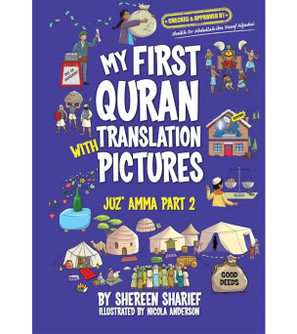
Picture books that tell the story or message of a specific Quranic surah through engaging narrative and illustration — connecting the Arabic text a child is memorizing to the meaning and context behind it.
Why They Work:
Memorization is most durable when connected to meaning and story. A child who memorizes Surah Al-Fil while hearing the story of Abraha's elephant army and Allah's miraculous birds is memorizing something that feels real — connected to events, people, consequences. The story is the memory anchor.
Who They're For:
Children ages four to ten, used alongside memorization practice to add the meaning layer.
Ahmed told me: "I've tested this repeatedly with children in memorization programs. Children who hear the story of a surah before memorizing it retain it at twice the rate of children who memorize without the story context. The brain stores stories differently from isolated sound sequences. Use the story books before and during memorization — not as a replacement for drilling, but as the context that makes drilling stick."
Category 3: Understanding Books — Meaning and Comprehension (Ages 6-12)
What These Books Do:
Bridge the gap between reciting Quranic Arabic and understanding what's being recited. Vocabulary-focused, meaning-focused, comprehension-focused resources that make the Qur'an's message personally accessible.
Word-by-Word Qur'an Resources
What They Are:
Editions of the Qur'an — or portions of it — that place individual word translations beneath or alongside each Arabic word, rather than giving only a flowing English sentence translation.
Why They Work for Children:
A child who has memorized "Wa la taqrabu al-zina" can look at a word-by-word edition and understand: "Wa" = and, "la" = not, "taqrabu" = come near, "al-zina" = adultery/fornication. They now know what they're reciting — specifically, word by word.
This word-level understanding is more durable and personally meaningful than a general translation memory. The child reads the Arabic word and immediately retrieves its meaning — building genuine Quranic vocabulary.
Who It's For:
Children ages eight and above who can read Arabic fluently and are ready to connect Arabic text directly to meaning.
Goodnight Stories From the Qur'an
What It Is:
A collection of Islamic bedtime stories drawn from Quranic narratives — prophets' stories, moral tales, Quranic wisdom — presented in age-appropriate, emotionally engaging storytelling.
Why It Works:
Bedtime is the highest-retention learning moment for children. Material heard while falling asleep is processed deeply and retained well. Stories heard repeatedly at bedtime become part of the child's inner narrative world — the prophets feel like people the child knows, Quranic values feel like natural principles, Islamic identity feels woven into who the child is.
Who It's For:
Children ages three to ten. Parents read to children nightly. No reading skill required from the child.
Zaynab shared: "We did goodnight Quranic stories every single night for three years. My son, at seven, could tell me the stories of Musa, Ibrahim, Yusuf, and Isa in detail — with their emotions, their challenges, their faith. He'd never studied these formally. He'd heard them at bedtime, repeatedly, with my voice and my presence. When those stories appeared in his Islamic studies class, he was the child who already knew them. Bedtime stories were the most effective Islamic education tool we used."
Category 4: Interactive and Activity-Based Qur'an Books (Ages 4-10)
What These Books Do:
Make Quranic engagement hands-on — through coloring, tracing, puzzles, matching activities, and other formats that allow children to engage with Quranic content through physical activity rather than passive reception.
30 Bedtime Stories for 30 Values From the Quran
What It Is:
A thematic collection of stories drawn from Quranic teachings, each centered on a specific moral value — patience, honesty, generosity, gratitude, courage — with the Quranic basis of each value identified.
Why It Works:
Character formation through story is the most effective method for children under ten. A child who hears a story about patience that ends with a Quranic reference to patience builds both character and Quranic connection simultaneously.
Who It's For:
Children ages four to ten. Both for read-aloud and for independent reading by older children in this range.
Arabic Letter and Quranic Vocabulary Activity Books
What They Are:
Workbooks that combine Arabic letter tracing, basic vocabulary from the Qur'an, and simple activity formats — matching, coloring, fill-in-the-blank — appropriate for children beginning their Quranic Arabic journey.
Why They Work:
Fine motor engagement (tracing letters) combined with visual-spatial recognition (matching activities) and brief meaning exposure (vocabulary labels) creates multi-modal learning that builds stronger retention than any single-mode activity.
Who They're For:
Children ages four to seven. Used as supplements to formal reading instruction, not as replacements for it.
Ibrahim told me: "My daughter spent twenty minutes every afternoon on her Arabic activity workbook — completely voluntarily. She found it fun. At the end of the year, she'd traced every Arabic letter hundreds of times. Her letter recognition was effortless. Her teacher said her reading foundation was the strongest in the class. Twenty voluntary minutes a day, accumulated over a year, beats an hour of reluctant formal instruction every time."
Category 5: The Curriculum That Ties Everything Together — Noor Series
For Families Who Want Coherence:
The Noor Series — Noor Al-Arabiyyah, Noor Al-Islam, and Noor Al-Quran, from Manarah Publishing, available through Madinah Media — was built to answer all four of those questions at once.
Rather than choosing individual books from multiple publishers and hoping they work together, families who adopt the full Noor Series get:
Noor Al-Quran for recitation and memorization (with integrated audio, vocabulary, values, and review)
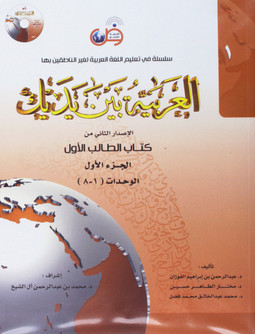
Noor Al-Arabiyyah for Arabic reading and language development
Noor Al-Islam for Islamic studies including aqeedah, fiqh, seerah, and character
All three built by the same publisher, at matching grade levels, with overlapping vocabulary and content that reinforces across subjects.
The Practical Difference:
When the vocabulary in Noor Al-Arabiyyah appears in Noor Al-Islam, and the surah being memorized in Noor Al-Quran connects to the Islamic concept being studied in Noor Al-Islam — the child's Islamic education coheres rather than sitting in disconnected silos.
That coherence is worth more than any individual excellent book.
A Simple Selection Guide by Age
Ages 2-4:
Goodnight Stories from the Qur'an (read-aloud)
Any illustrated Islamic board books connecting children to Quranic phrases
Ages 4-6:
Noorani Qaida (formal reading introduction)
Noor Al-Quran Pre-KG and KG-1 (integrated memorization system)
Arabic letter and Quranic vocabulary activity workbooks
Ages 6-9:
Color-coded Juz' Amma Mushaf (tajweed practice in actual Quranic text)
Noor Al-Quran KG-2 through Grade 2 (continuing integrated system)
Surah story books (meaning connection to memorized surahs)
30 Bedtime Stories for 30 Values From the Quran
Ages 9-12:
Word-by-word Quranic vocabulary resources (direct meaning access)
Noor Al-Quran Grade 3 and above (deepening integrated engagement)
Introductory tafsir resources for children
The Overarching Priority:
Whatever books you choose — whatever combination of resources — the most important factor is consistent daily use. The best Quranic resource used inconsistently produces less than a mediocre resource used daily.
Madinah Media's Curation: Why It Matters
Find the Best Islamic Books, Arabic Writing Books, Children's Muslim Books, Hadith and Tajweed, Arabic Story Books, and more!
The Islamic children's book market includes resources of wildly varying quality — some theologically sound and age-appropriate, some containing errors or inappropriate content, some simply too shallow to produce lasting benefit.
Madinah Media's curation process specifically addresses this. Their children's Qur'an section has been selected for theological reliability, age-appropriateness, and genuine educational quality — eliminating the need for parents to individually evaluate every option in an overwhelming market.
When you order a children's Quranic resource from Madinah Media, you're benefiting from selection that has already done significant vetting on your behalf.
Conclusion: Start With One. Use It Daily.
The parent who buys ten excellent books and uses none of them consistently gives their child less than the parent who buys one good book and opens it every day.
Pick one book that matches your child's current level. Open it tomorrow. Use it for a month before adding anything else.
The Qur'an enters a child's heart through repetition, through warmth, through consistent presence — not through the comprehensiveness of your library.
What matters is what gets opened.
Open something today.
Bismillah. Begin.