
Role of Nahw in the Study of Tafsir
Zaynab was in her tafsir class when her teacher stopped mid-sentence.
“Look at this word,” he said. “It’s in nasb. So it doesn’t mean what most people assume.”
Everyone nodded. Zaynab wrote it down. She had no idea what it meant.
She’d been reading Ibn Kathir in English for years and loved him. She knew the stories, the hadith, the lessons. But that day it hit her that whenever the teacher talked about endings and cases, she wasn’t following. She was copying.
Afterward she found me and asked, “Is grammar really that important for tafsir? Or is that just for experts?”
Honestly? It’s not just for experts. Grammar is one of the main keys to the Qur’an, and you can start using it sooner than you’d think.
This article is about the role of nahw (Arabic syntax) in tafsir: how endings and word order shape meaning, where grammar sits in the Sunni method, and how to start building the skill yourself. I’m writing from the mainstream Sunni perspective, and I’ve pointed to grammar books you can find at Madinah Media.
Why the scholars insisted on Arabic
Allah says: “Indeed, We have sent it down as an Arabic Qur’an so that you may understand.” (Yusuf 12:2)
The Qur’an came in Arabic, so explaining it means knowing the language. The scholars never softened this. A statement attributed to Mujahid, the great student of Ibn Abbas, says no believer should speak about Allah’s Book unless he knows Arabic. Al-Suyuti quotes it in Al-Itqan, and in the same book he lists the sciences a mufassir needs. Nahw is on that list.
Why nahw in particular? Because in Arabic, the ending of a word usually tells you what job it is doing in the sentence. And the job decides the meaning.
There’s also the warning in Al-Isra 17:36: “Do not pursue that of which you have no knowledge.” Anyone who studies tafsir should feel the weight of that. Speaking about the Qur’an is a trust.
Dr. Ahmed put it to me this way: “Nahw doesn’t replace the other tools of tafsir. It serves them. But without it, you’re reading the Qur’an through someone else’s eyes. With it, you start to see for yourself, under the guidance of the scholars.”
Where nahw fits in the Sunni method
The order matters, so let me spell it out. Sunni tafsir starts with transmitted sources. The Qur’an explains the Qur’an. Then the Sunnah. Then the understanding of the Companions, then the Tabi’un. Language and reasoning come after that, to clarify and apply.
Nahw lives in that last group. It’s a servant, not a master.
This is not a minor point. A single grammar rule can often allow two or three parsings, and the transmitted evidence and the context are what decide between them. Grammar gives you no license to build a new meaning that cuts against the Sunnah or the Salaf.
So a good student holds two things at once: respect for the tradition, and a precise grammatical understanding of what the tradition is explaining.
How endings shape meaning
Some examples show this better than any explanation.
Who was tested?
“Wa idh ibtala Ibrahima rabbuhu bi-kalimatin.” (Al-Baqarah 2:124)
Look at the order. Ibrahima comes first and rabbuhu second, and a reader might assume the first noun is the one doing the action. The endings say otherwise. Ibrahima ends in fatha, so he is the object. Rabbuhu ends in damma, so He is the doer. His Lord tested Ibrahim with words.
Without the endings you could easily get it backwards. With them there’s no doubt.
Who fears whom?
“Innama yakhsha Allaha min ‘ibadihi al-‘ulama’u.” (Fatir 35:28)
Allaha is in nasb and al-‘ulama’u is in raf’. So the scholars are the ones who fear, and Allah is the One feared. Those with knowledge are the ones who truly fear Him. Swap the endings and the meaning flips completely. That’s a lot for one vowel to carry.
A particle that restricts
“Wa ma khalaqtu al-jinna wa al-insa illa li-ya’budun.” (Adh-Dhariyat 51:56)
A negation followed by illa creates a restriction. The purpose of creation is stated as worship, and nothing else. Ahl al-Sunnah lean on this pattern when they explain tawhid and the purpose of life. If you don’t know how ma and illa work together, you might read the verse as a gentle suggestion. The grammar shows it’s a clear restriction.
A state clause
“La taqrabu al-salata wa antum sukara.” (An-Nisa 4:43)
Wa antum sukara is a state clause. It tells you when the prohibition applies: don’t approach prayer while intoxicated. The verse belongs to the gradual stages by which alcohol was prohibited, and seeing the state clause helps you see exactly how far this particular command reaches.
Where to stop
“Dhalika al-kitabu la rayba fihi hudan lil-muttaqin.” (Al-Baqarah 2:2)
Scholars discuss two places to pause here. You can stop after la rayba and then read fihi hudan, or you can stop after fihi and read hudan lil-muttaqin as a new unit. Each choice carries its own shade of meaning, and both are recognized by the scholars of waqf. Nahw is what explains why each pause is possible.
Fatima told me, “When I first saw that a pause could change a verse, I was amazed and a little scared. Then my teacher said, ‘This is why we study. The Qur’an rewards the careful reader.’ I’ve never forgotten that.”
When grammar gives more than one answer
Sometimes the grammar allows several valid parsings.
Take “Qul huwa Allahu ahad.” Scholars note more than one way to parse the words after huwa. These are technical differences, and the meaning doesn’t change: Allah is One.
Other times the parsings do lead to different shades of meaning. Then the mufassir has to weigh them against the context, the hadith, the words of the Companions, and the rest of the Qur’an.
That’s why classical tafsirs so often list several views. The authors aren’t confused. They’re being careful.
For a beginner, the useful lesson is that not every grammatical difference changes the meaning, and part of getting skilled is learning which ones do.
The books where grammar and tafsir meet
The scholars wrote a great deal on the grammar of the Qur’an. Al-Farra’ and Al-Zajjaj produced early works on its meanings and parsing. Later came dedicated books on i’rab by Al-Nahhas, Makki ibn Abi Talib, and Al-Samin al-Halabi. Abu Hayyan’s tafsir Al-Bahr al-Muhit is known for its heavy grammatical analysis, and Ibn Hisham’s Mughni al-Labib is the classic reference on particles. Major tafsirs like Al-Tabari’s also stop to explain the grammar wherever it matters.
One caution. Some scholars famous for their language work held theological views that differ from Ahl al-Sunnah. Al-Zamakhshari’s Al-Kashshaf is the well-known example. Sunni scholars benefited from its linguistic insight while also writing critiques of its theology. This is exactly why a beginner shouldn’t wander into every book alone. Start with trusted works and a teacher.
Nahw doesn’t work alone
Nahw is one tool among several, and the scholars used them together.
Sarf shows how a word is built. Knowing a verb’s pattern tells you whether it means doing something, causing something, or seeking something.
Balaghah explains why the Qur’an chose one word order over another. When a word is moved forward or dropped, nahw tells you what happened and balaghah tells you why.
Qira’at remind us that some words have more than one authenticated reading, and nahw shows how each reading fits the sentence. The wudu verse is the famous case. The word for “your feet” can be read with fatha or with kasra, and scholars analyzed both. The Prophet ﷺ washed his feet, and for the majority that settled the ruling.
Ibrahim said, “I used to treat grammar as its own separate subject. Then I started seeing how it connects to everything else in tafsir. It was like finding the thread that holds the whole cloth together.”
Students who learn these tools together read with far more depth than those who learn them one at a time in isolation.
How much nahw do you actually need?
Think of it in three levels.
Level 1: core literacy. You can spot nouns, verbs, and particles. You know the three cases and can tell a nominal sentence from a verbal one. That’s enough to follow the basic grammar notes in a tafsir.
Level 2: working skill. You understand the main categories (doer, object, state, specification, followers, and what kana and inna do). You can parse a verse and check your work against a reference.
Level 3: advanced skill. You can read the grammar discussions in classical tafsir and i’rab books comfortably, and weigh competing views.
Most students should aim for Level 2 within a few years and treat Level 3 as a long-term goal.
Books at Madinah Media that build the skill
The Arabic Grammar section at Madinah Media has something for each level.
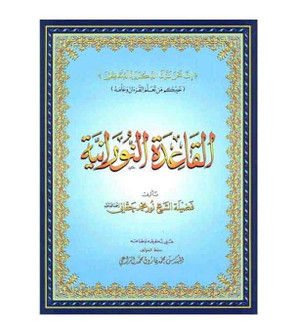
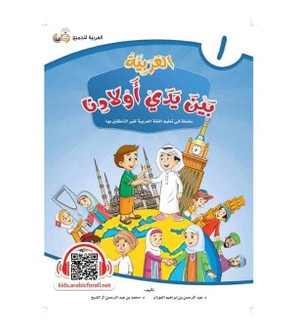
Level 1: Grammar Step by Step, a series with exercise booklets. Also Clear Grammar for the Elementary Stage, the classic An-Nahw Al-Wadih, and Arabic Reading Lessons for practice.
The primer: The Text of Al-Ajrumiyyah, the short classical matn. Pair it with a commentary or a teacher.
Level 2: An explanation of Qatr al-Nada wa Ball al-Sada by Ibn Hisham al-Ansari, which Madinah Media describes as a classic intermediate textbook on grammar and morphology.
Level 3: Ibn Malik’s Alfiyyah on grammar and morphology.
For review: Atlas for Arabic Grammar, which gives you a map of the whole subject.
For application: Madinah Media also has a dedicated Tafseer section. Browse it for works that match your level, and read them with a teacher where you can. Their recommended translation, The Clear Quran, is described as drawing on classical and modern tafsir works, which makes it a handy companion for beginners.
You don’t need to buy everything. Move up one rung at a time, and try each rung out on a surah.
A simple method: parse before you read
This works at any level, and it only takes about twenty minutes a day.
Pick one verse and read it aloud in Arabic.
Parse it yourself. For each word, ask whether it’s a noun, verb, or particle. For each noun, what’s its ending, and what caused that ending?
Write down your question marks, the things you couldn’t work out.
Now read the tafsir. Look for grammar notes and compare them with your own parsing.
Write one sentence in your own words about what you learned.
Start with a short surah. Al-Fatiha first, then Al-Ikhlas, then a few verses from a longer one. After a few months you’ll start catching grammar in tafsir that used to slide right past you.
Ahmed told me, “I started with five minutes of parsing before I opened Ibn Kathir. At first I was slow and usually wrong. Three months in, I noticed passages I used to skim were making me stop and think. The grammar had opened a door.”
Common mistakes
Using grammar to defend a personal opinion. Grammar serves the evidence. It doesn’t replace it.
Ignoring the transmitted tafsir. Start with the Qur’an, the Sunnah, and the Salaf.
Skipping the teacher. Grammar is a skill, and skills improve with correction.
Rushing to advanced books. Climb in order.
Parsing without a Mushaf. Always work from the Arabic text in front of you.
Reading only translations. Every translation carries the translator’s choices. Grammar lets you see what was chosen.
Giving up early. Everyone feels slow at the start. Stay with it.
Seeing the verse with your own eyes
Zaynab started with Al-Fatiha. She parsed it slowly and made mistakes, and her teacher corrected her kindly.
A few months later she sat down in tafsir class and heard the same kind of sentence she’d heard before. “This word is in nasb.”
This time she didn’t copy it down. She understood it.
“I could see why the meaning changed,” she told me. “I wasn’t just trusting him anymore. I was following him.”
That’s what nahw does for tafsir. It won’t make you a mufassir overnight. It makes you a more careful reader of the Book of Allah, helps you follow the scholars with understanding, and keeps you from careless guesses. It also brings you a little closer to the words themselves.
So begin where you are. Build one level at a time, parse a verse a day, read with a teacher, and keep the transmitted tradition at the center.
The Qur’an rewards the careful reader.
Bismillah. Parse your first verse today.