
Step-by-Step Study Plan for Al-Ajrumiyyah
Zaynab bought a copy of Al-Ajrumiyyah with a commentary and opened it on a Sunday night.
She was excited. She read the first page twice. She read the second page once. By Wednesday she had reached the section on the signs of i'rab, and her excitement turned into worry.
By the following Sunday, the book was closed.
"I thought it was a small book," she told me. "It is small. "Why then did I feel so lost?"
This is so because although a short book is not necessarily an easy book. Al-Ajrumiyyah is a short book; each verse is loaded with information. Without proper planning, even the most motivated learner will face problems right from the start.
This paper presents you with a plan on how to learn the book. The plan takes twelve weeks to be fully executed. It will suit one willing to study the book in depth. This plan is based on the Sunni understanding whereby the rules of Arabic grammar uphold the Quran and the Sunnah. And it fits in the Arabic grammar books available at Madinah Media.
What Al-Ajrumiyyah Is
Al-Ajrumiyyah is a short classical text on Arabic grammar. The complete title of the book is Al-Muqaddimah Al-Ajurrumiyyah fi Mabadi' 'Ilm Al-'Arabiyyah meaning an introduction to the basics of Arabic.
The author of the book is Ibn Ajurrum who lived in Fez in Muslim West in the year 723 AH (1323 CE). students.
Scholars across the Muslim world have used it for centuries as a first grammar text. Many students memorize it. This is possible since it is written in simple language and only touches on what is essential.
What does it contain? First, speech and its parts. Next comes i'rab or change in word endings, followed by the signs of every ending. After that come nouns and verbs that have special behavior, then the words that have raf' ending, nasb ending, and khafd ending.
Most of the Quranic sentences can be analyzed using the above information. This is the importance of the book.
Dr. Ahmed said, "Al-Ajrumiyyah does not give you all the knowledge but gives you the frame. Once you get the frame right, all the other texts that follow like Qatr al-Nada or the Alfiyyah have something to hang on."
The Text of Al-Ajrumiyyah
Madinah Media have The Text of Al-Ajrumiyyah (متن الاجرومية).
Look closely at the title. It says "The Text." This is the matn itself, not a commentary. That is exactly what you need for the memorization step in this plan. Keep it open on your desk. Recite from it every day.
But the matn alone is not enough for a beginner. It is short because it expects a teacher or a commentary to unpack it. So pair it with one of these.
A teacher. This is the traditional way. You read the text aloud. The teacher corrects you and explains.
A published commentary. Well-known options include At-Tuhfah As-Saniyyah by Muhammad Muhyi al-Din Abd al-Hamid and the explanation by Shaykh Ibn al-Uthaymeen. Madinah Media's page is for the text, so you will need to find a commentary separately. You can also ask Madinah Media through their Request Books or Products page.
Madinah Media suggests bundling it with The Children's Masterpiece and the Al-Jazariyah Masterpiece, two classic tajweed texts, also known as Tuhfat al-Atfal and Al-Jazariyyah. That fits the classical method well. Students in the tradition often memorize short texts for tajweed and for grammar side by side. If your plate is full, add the tajweed texts after the twelve weeks, not during them.
Do not start with a bare text and no explanation. Matn plus commentary, or matn plus teacher, is the winning pair.
Before Week One: What You Need
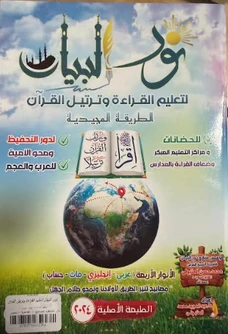
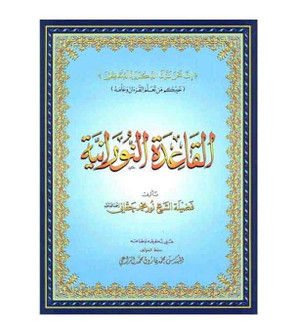
- Reading ability. You must be able to read vowelled Arabic slowly and independently. If not, build this first. Madinah Media includes the books Al-Qaidah An-Noraniah and Learn to Read Arabic Letters.
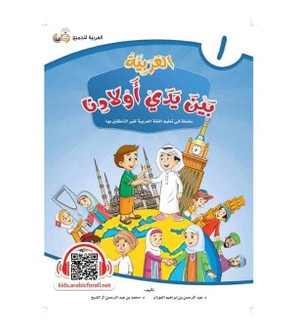
- Soft Base, If Needed. In case you feel that the book Ajrumiyyah is too difficult for you, then begin with some graded beginner's book. Books on grammar are Grammar Step by Step Series, Grammar Level One to Three, Clear Grammar for the Elementary Stage and Madinah Arabic Reader Series.
- Your text and commentary. One matn. One commentary. Do not collect five. Commitment to one explanation avoids confusion.
- A notebook. You will write definitions, examples, and mistakes.
- A Mushaf. Every grammar point should meet the Qur'an by the same week.
- A teacher or study partner. The traditional method is to read the text aloud to a teacher, who corrects and explains. If you have no teacher, find a partner and recite to each other.
- Helpers. Madinah Media also lists Atlas for Arabic Grammar, which gives a whole-map view of the subject and works well for review. Arabic Reading Lessons gives practice reading. And they carry Arabic dictionaries and picture dictionaries.
The Weekly Study Cycle
Use the same five steps each week. Thirty minutes a day, five days a week, plus twenty minutes of review on the weekend.
Step 1: Read. Read the week's section of the matn slowly, aloud.
Step 2: Understand. Read the commentary on that section. Write the key points in your own words.
Step 3: Memorize. Memorize the short matn passage. The text was designed to be memorized. Memory makes the rules available while you read.
Step 4: Apply. Find the rule in the Qur'an. Mark it in your Mushaf.
Step 5: Review. Test yourself on this week and last week.
Fatima shared: "I used to read the commentary and feel I understood. Then I closed the book and could not explain a thing. Once I added the memorization and the Qur'an step, the rules stayed with me. Reading is not the same as owning."
The 12-Week Plan
Most editions follow this order. If yours differs slightly, follow your edition's order and adjust the weeks.
Week 1: Speech and Its Parts
Learn: What counts as speech. The three parts: ism (noun), fi'l (verb), harf (particle). The signs that identify each.
Memorize: The definition and the three parts.
Apply: In "Al-hamdu lillahi," al-hamdu is an ism, li is a harf, Allahi is an ism. In "Iyyaka na'budu," na'budu is a fi'l.
Check: Sort the words of Surah Al-Ikhlas into noun, verb, and particle.
Week 2: I'rab and Its Four Types
Learn: What i'rab means. The four types: raf', nasb, khafd, and jazm. Nouns take raf', nasb, and khafd. Verbs take raf', nasb, and jazm.
Memorize: The statement of which types belong to which.
Apply: In "Alhamdu lillahi Rabbi al-'alamin," al-hamdu is in raf'. Lillahi and Rabbi are in khafd.
Check: Say aloud which types a verb can take and which it cannot.
Week 3: The Main Signs of I'rab
Learn: Each type has a main sign. Damma for raf'. Fatha for nasb. Kasra for khafd. Sukun for jazm. Meet the substitute signs by name only.
Memorize: The four main signs.
Apply: "Lam yalid wa lam yulad" in Surah Al-Ikhlas shows jazm with sukun.
Check: Mark the ending of ten words in Al-Fatiha.
Week 4: Substitutes for Nouns, Part One
Learn: The five nouns, the dual, and the sound masculine plural, and how they take different signs.
Memorize: The list of the five nouns and the signs they take.
Apply: "Wa kana abuhuma salihan" shows abu with a waw in raf'. "Qala rajulani" shows the dual with an alif. "Qad aflaha al-mu'minun" shows a waw in the plural. "Inna al-muslimina" shows a ya in nasb.
Check: Give the sign for each in raf', nasb, and khafd.
Week 5: Substitutes, Part Two
Learn: The sound feminine plural. The nouns that do not take full tanwin (the diptotes). The five verbs. Verbs with a weak final letter.
Memorize: The rule for each, in short form.
Apply: "Fa in lam taf'alu wa lan taf'alu" shows the five verbs dropping the nun. "Ila Ibrahima" shows a diptote with fatha in khafd. "Amanu wa 'amilu al-salihati" shows the feminine plural with kasra in nasb.
Check: This is a hard week. Do extra review and recite the whole matn so far.
Week 6: The Verb
Learn: Past, present, and imperative. The particles that put the present verb in nasb and in jazm.
Memorize: The nasb particles and the jazm particles.
Apply: "Lan tanalu al-birra" shows nasb after lan. "Lam yalid" shows jazm after lam.
Check: Make five sentences using lam and lan.
Week 7: The Doer and the Passive Doer
Learn: The fa'il (doer) and the naib al-fa'il (the one who takes the doer's place in a passive sentence). Both are in raf'.
Memorize: The definition of each.
Apply: "Wa idh qala Musa li-qawmihi" has Musa as the doer. "Wa khuliqa al-insanu da'ifan" has al-insanu as the passive doer.
Check: Identify the doer in five verses.
Week 8: Subject, Predicate, and Their Sisters
Learn: Mubtada' and khabar. Then kana and its sisters, inna and its sisters, and zanna and its sisters, and how they change the endings.
Memorize: The lists of sisters.
Apply: "Al-hamdu lillahi" is a simple nominal sentence. "Inna Allaha ghafurun rahim" shows the noun after inna in nasb and the predicate in raf'. "Wa kana Allahu 'aliman hakima" shows the noun after kana in raf' and its predicate in nasb.
Check: Rewrite a simple sentence with kana and then with inna.
Week 9: The Followers
Learn: The four followers: na't (adjective), 'atf (conjunction), tawkid (emphasis), and badal (substitute). A follower copies the ending of the word before it.
Memorize: The definition of each.
Apply: "Al-sirata al-mustaqima" has an adjective following its noun. "Wa atu al-zakata" shows 'atf. "Fa-sajada al-mala'ikatu kulluhum ajma'un" shows tawkid. "Ihdina al-sirata al-mustaqima, sirata alladhina an'amta 'alayhim" shows a badal.
Check: Find one follower in each of four surahs you know.
Week 10: The Accusative Words, Part One
Learn: Maf'ul bihi (the direct object), the masdar used for emphasis, the adverbs of time and place, and the hal (the state).
Memorize: The definitions.
Apply: "Wa kallama Allahu Musa taklima" has taklima as a masdar. "Subhana alladhi asra bi-'abdihi laylan" has laylan as an adverb of time. "Fa-kharaja minha khaifan" has khaifan as a hal.
Check: Identify one of each type in a short passage.
Week 11: The Accusative Words, Part Two
Learn: Tamyiz (specification), istithna (exception), the noun after la that negates a whole class, munada (the one called), maf'ul li-ajlih (reason), and maf'ul ma'ah (accompaniment).
Memorize: The definitions.
Apply: "Ishtaala al-ra'su shayban" has shayban as tamyiz. "Fa-sajadu illa Iblisa" has an exception. "La rayba fihi" has the noun after la. "Ya Ibrahimu" has a munada. "Hadhara al-mawt" has a reason. A few of these are rare in the Qur'an, so also use your textbook examples.
Check: Write one sentence for each.
Week 12: The Khafd Words and Final Review
Learn: What takes khafd: a noun after a preposition, a noun in an idafa (possession), and a follower of a khafd word.
Memorize: The statement on the three causes of khafd.
Apply: "Bismi Allahi" has bismi and Allahi both in khafd. "Rabbi al-'alamin" shows an idafa.
Conclusion: Recite the entire matn by heart. Parse the entire Surah Al-Fatiha.
Final Exam
After week twelve, take on three challenges.
- Recite: Recite the entire matn, or as much of it as you have memorized, in front of your tutor or study partner.
- Parse: Choose a short surah. For every word, identify whether it is a noun, verb, or particle. For every noun, identify the ending and its reason.
- Explain: Teach another person a grammar point. If you can teach it, you know it.
Don’t be concerned if you fail. Note the weak weeks and go back over them.
Where to Go From Here
Al-Ajrumiyyah is a portal, not a final destination.
The next classic step is Qatr al-Nada wa Ball al-Sada by Ibn Hisham al-Ansari. Madinah Media carries an explanation of it and describes it as a classic intermediate-level text on grammar and morphology.
After that comes Ibn Malik's Alfiyyah, which Madinah Media also lists. Approach it with a teacher and a commentary.
If you want more practice at the beginner level, return to the Grammar Step by Step series or the reading passages in Arabic Reading Lessons.
Common Mistakes
- Skipping the memorization. The matn is short so that you can carry it.
- Skipping the Qur'an step. Without application, the rules stay abstract.
- Rushing Week 5. It is the heaviest week. Take extra days if you need them.
- Using too many commentaries. One is enough.
- Studying alone forever. A teacher saves months.
- Quitting after a hard week. Every student hits one.
Ibrahim told me: "I almost quit in week five. My teacher said, 'This is the week everyone struggles. Stay one more week.' I stayed. The next week felt easy. That one sentence saved my study."
Conclusion: Open the Small Book
Zaynab did not fail. She started without a map.
We sat down and built a plan like this one. She gave it thirty minutes a day. She recited to a friend on Fridays. She found each rule in a verse.
Twelve weeks later, she parsed Al-Fatiha from start to finish. She was quiet for a moment. Then she said, "I can see it now. I can see how the sentence works."
That is the reward of Al-Ajrumiyyah. It teaches you to see the structure under the words of the Qur'an.
Choose your edition. Pick your commentary. Set your thirty minutes. Begin with week one.
Bismillah. Open the small book today.