Homeschool vs Weekend School for Islamic Education
A mother sat across from me at a parent information evening.
She had three children. The oldest was eight. She had enrolled them in the weekend Islamic school eighteen months ago. Saturday mornings, two hours, Islamic studies, Quran practice, some Arabic.
She was grateful for the school. She was also frustrated.
Her eight-year-old was bored. The class moved at a pace suited to the slowest learner in the group. The content was thin. Her son would come home, she said, having reviewed the same three facts about the pillars of Islam that he had reviewed three weeks ago.
But she was working full-time. She had no idea how she would teach him herself. She was not a scholar. She was not even confident about her own Arabic.
"Is there a middle ground?" she asked me. "Or do I have to choose between what he's getting , which isn't enough , and taking on something I don't feel qualified for?"
That question — the practical, honest, slightly desperate question of a parent trying to do right by her children — is what this article answers.
Not by declaring one approach superior. By being honest about what each approach actually provides, who it is designed for, where it succeeds, and where it falls short. And by showing that the choice between homeschool and weekend school is less a binary and more a spectrum — with real resources available to support whichever position you choose, or the combination of both.
What Weekend School Actually Provides
Let's start with what weekend school does well — because the format deserves a fair assessment before any comparison is made.
A weekend Islamic school provides structure, community, and accountability. These are not trivial benefits.
Structure means a fixed schedule. Saturday morning at ten, your child is in an Islamic studies class. The lesson is planned by someone else. The curriculum was chosen by someone else. The teaching is done by a trained or at least experienced teacher. A parent who is overwhelmed by the idea of planning and delivering Islamic education themselves gains something real from outsourcing the delivery to a structured institution.
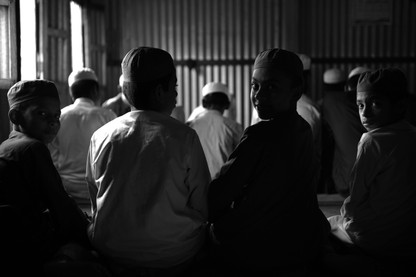
Community means that your child is learning Islam alongside other Muslim children. They see that they are not alone in this practice. They make friendships grounded in a shared identity. They develop the social experience of being Muslim in a group setting — which is its own kind of education, separate from the content being taught.
Accountability means that progress is externally measured. A teacher assesses what your child knows. There are expectations. There are evaluations. For children who work better with external accountability than with parent-directed learning, this matters.
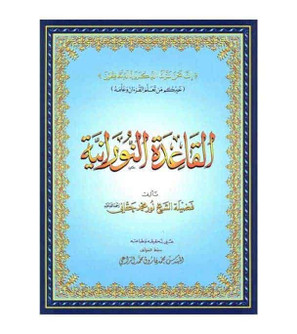
The Weekend Learning Islamic Studies series from Madinah Media is built specifically for this context. It is based on a comprehensive 12-year curriculum — Level 1 through Level 12 — with topics laid out systematically to suit the teaching needs of a weekend Islamic school. Teachers and school directors find continuity in the curriculum as it unfolds year to year.
That continuity is real and valuable. A child who enters the Weekend Learning program at age five and works through it consistently through high school has engaged twelve years of structured Islamic education. That is not nothing. That is, in fact, more systematic Islamic learning than most Muslim adults in Western countries received.
Weekend Learning Level 1 covers 28 lessons on Allah, the Quran, Islam, the Prophet ﷺ, hadith and Sunnah, and the five pillars of Islam. The attention span of children is small — so short paragraphs introduce two or three concepts at a time, followed by in-class review sections that allow for a short break and reinforce learning.
The design recognizes the reality of the context: these are children coming to a classroom for two hours on a weekend. They are not at peak alertness. They need a pace and format that respects that.
Where Weekend School Falls Short
The mother sitting across from me was not wrong. Weekend school has real limitations — and being honest about them is more useful than defending an institution out of loyalty.
Two hours a week is not enough for serious learning. Fourteen weeks of school at two hours each is twenty-eight hours per term. Over twelve years, that is at most five hundred hours of formal Islamic education — in an ideal world where attendance is consistent, the school is well-resourced, and the teaching is effective. Five hundred hours sounds like a lot. It is less than one semester of university study. It is not enough time to produce genuine Quranic fluency, functional Arabic, solid aqeedah, and meaningful Seerah knowledge in a child.
Weekend school can produce familiarity. It rarely produces depth.
The pace is constrained by the group. A teacher with fifteen children of varying levels, backgrounds, and attention spans cannot move faster than the group allows. A bright child who has been reviewing the same material for three weeks is not just bored — they are losing time that could have been used for genuine advancement.
Community pressures can dilute content. Weekend school programs exist within communities that have varying levels of scholarly commitment and theological grounding. A school that is trying to serve everyone in the community may avoid topics that generate controversy even when those topics are essential. The aqeedah can become vague. The harder historical questions can be skipped. The theological precision that a Sunni family wants their child to develop can be sacrificed to the lowest common denominator of community comfort.
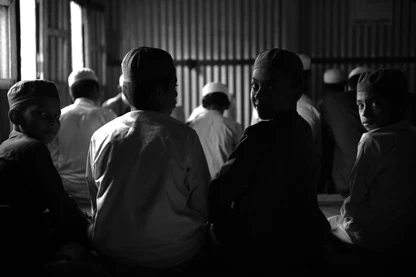
Omar, who attended weekend Islamic school from ages six through fourteen and is now in his late twenties, described his experience plainly: "I left with a general sense of what Islam required. I left without the ability to read Arabic, without any real Quranic depth, and with a set of Islamic facts that dissolved under the first intelligent challenge I encountered at university. The school gave me enough to feel Muslim. Not enough to be Muslim with knowledge."
What Homeschool Islamic Education Actually Requires
The mother who was working full-time and feeling unqualified was not misreading the situation. Islamic homeschooling is genuinely demanding. A parent who takes it on needs to understand what they are committing to.
Time is the primary cost. Consistent, daily Islamic education at home , Quran, Arabic, Islamic studies — requires a real daily time commitment. Not hours. But consistent minutes, daily, over years. A parent who cannot make that commitment consistently should not pretend otherwise. Inconsistency in homeschool Islamic education produces worse outcomes than a consistent weekend school.
The parent does not need to be a scholar. This needs to be said clearly to every parent who self-selects out of homeschool Islamic education because they feel unqualified. The parent's job is not to teach from their own knowledge. The parent's job is to be the organizer, the daily presence, and the motivator. The curriculum teaches. The parent maintains the habit.
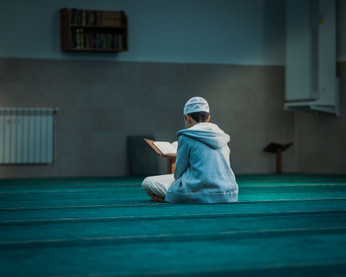
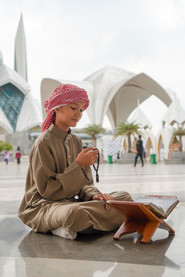
A parent who opens the Noor Al-Islam book with their child every evening, follows the lesson plan, uses the audio model for Quran, and asks the questions the book suggests — that parent is delivering effective Islamic education regardless of their personal level of Arabic or Islamic studies.
The right curriculum removes the planning burden. Most parents who feel unqualified for homeschool Islamic education are imagining that they have to plan everything themselves. They do not.
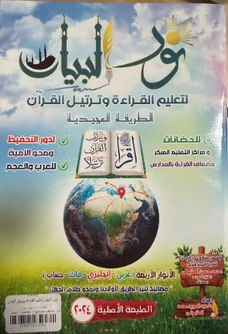
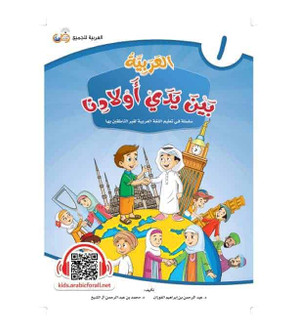
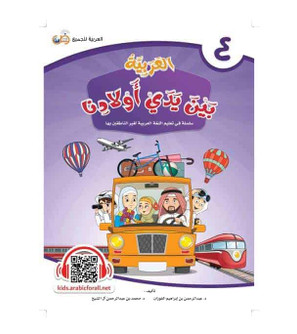
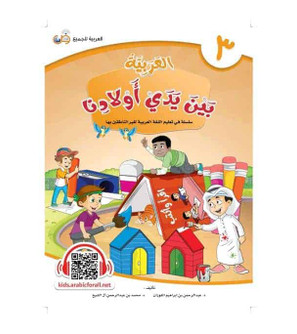
The Noor Series from Madinah Media — Noor Al-Arabiyyah, Noor Al-Islam, and Noor Al-Quran — is designed specifically for homeschool families who want coherence without having to stitch together five different sources. It provides one structured pathway from KG through the upper grades. The KG and early grade levels are intentionally gentle — giving both parent and child time to build the habit before the depth increases.
The Noor Series gives a homeschooling parent three things that remove the major barriers to success: a clear sequence (so the parent always knows what comes next), age-appropriate content (so the child is never overwhelmed), and an integrated system (so Arabic, Quran, and Islamic studies reinforce each other rather than sitting in disconnected silos).
Fatima, who began homeschooling her two children for Islamic studies two years ago after withdrawing them from weekend school, described what the transition taught her: "The biggest surprise was how little expert knowledge I needed. The curriculum tells me what to teach. I just show up every evening. We do thirty minutes. Sometimes less. My daughter has learned more in eighteen months of consistent home sessions than she did in three years of weekend school. The difference is daily contact. Not my knowledge level."
The Specific Situations Where Weekend School Is the Right Choice
After an honest assessment of both approaches, it is possible to name the specific situations where weekend school is genuinely the better option.
When consistency is the primary challenge. A single parent, a parent working multiple jobs, a parent managing a health situation, a parent whose own Islamic education is thin enough that they feel unable to maintain the structure — these parents will produce more Islamic learning through a structured external institution, even an imperfect one, than through a home program they cannot sustain consistently.
When community is the primary need. Some children — introverted children who need structured social contexts, children who are isolated in their Muslim identity and need Muslim peers — need the community dimension that weekend school provides. The Islamic learning may be thin. The belonging may be essential.
When the child needs external accountability. Some children do not work well with parent-directed learning. They test the parent's authority in the educational context. They resist what a parent teaches while accepting the same content from a teacher at school. These children may learn more effectively in a structured external environment even if they learn less per hour.
The Weekend Learning Islamic Studies series is specifically designed to suit these contexts — with its systematic 12-year structure, age-appropriate grade levels from Level 1 through Level 12, and workbooks that provide additional practice and reinforcement for school settings.
The Specific Situations Where Homeschool Islamic Education Is the Right Choice
When depth matters more than breadth. A family that wants their child to have genuine Quranic reading fluency, functional Arabic comprehension, and solid aqeedah grounded in Sunni scholarship cannot achieve this in two weekend hours. These goals require daily contact, individualized pacing, and a curriculum that goes deeper than a group classroom setting allows.
When the pace needs to match the child. A bright, curious, rapidly-developing child will be held back by a group-paced weekend school. A struggling child will be overwhelmed and fall further behind. Both situations call for individualized pacing that only a home setting provides.
When theological precision matters. A family that is committed to Sunni aqeedah — that wants their child's understanding of Allah's Names and Attributes, of the companions, of the Seerah, to reflect authentic Sunni scholarship — can choose their curriculum with that precision in mind. In a weekend school, curriculum choices are made by institutions serving many families, and precision is frequently traded for inclusivity.
The Noor Al-Islam curriculum addresses this directly. It is the Islamic studies curriculum specifically designed for English-speaking kids and families — covering aqeedah basics appropriate for each age, the pillars of Islam and Iman, stories of the prophets, character and akhlaq, and foundational fiqh — all in a structured, grade-appropriate textbook format that builds year over year.
The Combination That Most Families Should Consider
Here is what the research, the experience of practitioners, and the honest assessment of both approaches points to: most Muslim families in Western countries would benefit from combining both approaches rather than choosing between them.
Weekend school for the community, the external accountability, and the structured Islamic social environment. Homeschool Islamic education for the depth, the consistency, and the individualized pace.
This is not an unusual arrangement. Many homeschool families supplement their home program with external classes. Many weekend school families supplement the school curriculum with home reading and practice. The question is not which approach to use exclusively — it is how to structure the combination intelligently.
A family using the Noor Series at home for daily Quran, Arabic, and Islamic studies — and also attending weekend school for the community and external structure — is giving their child more Islamic education than either approach alone would provide. The home program provides depth. The school program provides context. Together they approach something closer to what a full Islamic education actually requires.
Ustadha Hiba, who has taught at weekend Islamic schools for seven years and also home-educates her own children for Islamic studies, described the gap she sees most clearly: "Every family I know whose children have genuinely strong Islamic foundations uses both. They send their children to the weekend school for the community. They do the serious academic Islamic work at home. The families who rely on weekend school alone almost always tell me in their children's teenage years that they wish they had done more at home. The families who do both rarely say they wish they had done less."
The Question That Actually Matters
The mother who asked me whether there was a middle ground was asking the right question. The answer is yes — and the middle ground is a combination.
Use the weekend school for what it does well. Use home resources for what only home resources can provide. Choose the right materials for each context.
Madinah Media's catalog serves both contexts intentionally. The Weekend Learning Islamic Studies series gives schools and families a structured, 12-year curriculum that works in the group classroom setting. The Noor Series gives homeschooling families a coherent, daily-use pathway that builds depth across subjects.
Neither approach is superior in the abstract. Both are tools. The question is whether you are using the right tool for the right purpose.
The children of Muslim families in Western countries need both depth and community. Weekend school alone gives community without sufficient depth. Homeschool alone gives depth but can create isolation. Together, used intentionally, they give children what they actually need.
Start with an honest assessment of your situation. Then build accordingly.
Bismillah. Start with what you can sustain. Add what you can. Trust that consistent small effort, over years, produces something real.