Recommendations for the Muslim Home
A guest once described walking into a Muslim home as feeling different from walking into any other home she had visited.
She was not Muslim herself. She had been invited to dinner by a colleague. She sat in the living room while her host finished preparing the food in the kitchen.
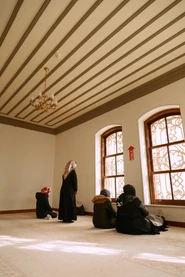
She told me about it afterward. "There was no television on," she said. "There was Quran playing quietly from somewhere. There were books on the shelves that looked like they had been read, not displayed. The children came in and said something I didn't understand but it sounded like a greeting. And when my host came from the kitchen, she apologized and said she had been finishing her prayer."
She was quiet for a moment. Then she said: "The house felt like it had a purpose. Like it was organized around something I couldn't see but could feel."
That description of a home organized around something you cannot see but can feel is perhaps the best description of a Muslim home doing its job.
The Islamic home is not defined in terms of its décor and its size. The Islamic home is defined in terms of what it produces and the practice that it supports, the environment that it creates, the values that it manifests on a daily basis and the individuals that it shapes. A beautiful home with an expensive kitchen and a well-kept garden can be devoid of any Islamic value. A simple home can produce children and adults with some form of value in their hearts.
The difference is almost never about what the home contains materially. It is about what the home practices consistently.
The Home as an Islamic Institution
Sheikh Muhammad Salih Al-Munajjid opens his foundational work on the Muslim home with a statement that reframes everything that follows.
Home is the place where you and your family spend most of your time together. Therefore, a Muslim home should be a decent and comfortable residence which nurtures the Muslim family. In order to be so, your home life must be based on intimacy, love, sincerity, truthfulness, honesty, and the like. All these concepts and others are just applications of the Islamic principles.
Applications of the Islamic principles. Not supplements to Islamic life. Not optional additions. The way you live at home is the way you practice Islam. The private hours of the household are the arena in which Islamic character is either built or abandoned.
The Prophet ﷺ said: "The best of you are those who are best to their families, and I am the best of you toward my family." (Al-Tirmidhi, authenticated) The standard of Islamic excellence is domestic. The first place a Muslim demonstrates their character is in the home.
"The Muslim Home: 40 Recommendations in the Light of the Qur’an and Sunnah," by Sheikh Muhammad Salih Al-Munajjid, can be accessed on the Madinah Media website. This work is based precisely on such an approach and offers 40 practical recommendations based on the Qur’an and Sunnah for turning the Muslim home into a place where Islam is practiced in all its aspects.
These forty recommendations are not aspirational generalities. They are specific. They address how the home is designed, what sounds fill it, what guests are invited into it, how children are raised within it, how spouses treat each other in it, and what books, what knowledge, and what practices sustain the Islamic atmosphere of it.
Recommendation One: Begin With Who Is in the Home
The first recommendation in Al-Munajjid's work concerns formation rather than practice. Before any specific Islamic practice can be established in a home, the home must be built on the right foundation: a spouse chosen for their commitment to Islam.
The Prophet ﷺ said: "A woman is married for four things: for her wealth, for her family status, for her beauty, and for her religion. Choose the one who is religious, and you will prosper." (Agreed upon) The same principle applies to both parties in the marriage. The spouse chosen for their taqwa brings a specific quality to the home that no other characteristic produces.
This is not a secondary consideration. It is the first recommendation because everything else rests on it. A home where both spouses are genuinely committed to Islam, and where they hold each other accountable with mercy and encouragement rather than criticism and competition, is a home from which everything else flows naturally.
For couples who are already married, this recommendation is not about regret. It is about renewal. Committing together to making the home an Islamic home, setting that intention explicitly, reading about it together, praying about it together. The foundation can be strengthened at any stage.
Ustadh Hisham, who leads a family tarbiyah program for Muslim couples and has done so for over a decade, described what he has watched happen when couples make this explicit commitment together: "Something shifts when a husband and wife sit together and say: we want to build an Islamic home. Not just practice Islam individually. Build something together that will outlast us. The conversation that follows that intention is different from any other conversation about household management. It is a spiritual project, not a domestic one. And projects with spiritual intention have a different energy."
Recommendation Two: Fill the Home With the Sound of the Quran
One of the most consistent recommendations across all Islamic scholarship on the Muslim home is specific: let the Quran be heard in the home regularly.
The Prophet ﷺ said: "Do not make your houses like graves. Indeed, the shaytan flees from the house in which Surah Al-Baqarah is recited." (Sahih Muslim) A home where the Quran is not heard is described with a specific image: like a grave. Silent. Without the specific kind of life that Quranic recitation produces.
This is not about background noise. It is about deliberate, regular presence of the Quran in the home's atmosphere. A parent who recites Quran after Fajr, in the living room, at an audible volume, is doing more for the Islamic atmosphere of their home than they may realize. Children who grow up hearing the Quran as a normal part of the house's sound absorb something that cannot be produced through a single lesson.
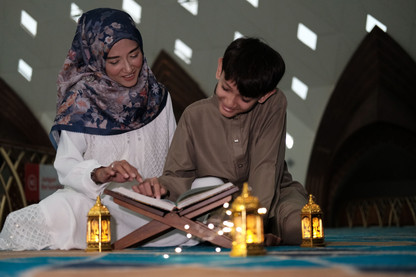
The recommendation also extends to gathering the family for Quran. Setting a time, even briefly, when the family reads or listens together. When a parent reads to younger children from a Quran they understand. When an older child is heard reciting and the family listens.
The sound of the Quran in a home is not decorative. It is functional. It shapes what the home feels like. It signals to every person in the home what this place is organized around.
Recommendation Three: Establish the Prayers in Their Times
The most specific practice that distinguishes an Islamic home from a Muslim household is the presence of salah in its actual times.
Not prayers eventually prayed, at some point during the day, whenever the schedule permits. Prayers prayed when they are due, with the household organizing around them rather than around other commitments.
A home where the adhan is heard and the household pauses is a home that is structurally different from one where the adhan is a background event that changes nothing. The former is a home organized around Allah. The latter is a home organized around the day's other agenda that occasionally includes Islam.
The Prophet ﷺ prayed in congregation with his household. He prayed Qiyam al-Layl in the night. He prayed the sunnah prayers at home specifically, reserving the masjid for the fard congregation. He made the home a place of worship alongside the masjid.
For a family that has not yet established this, beginning with one prayer prayed together, consistently, every day, is a beginning that is worth more than any elaborate program of Islamic home improvement. The one prayer prayed consistently, as a household, at its proper time, for a full year, will change the home more than any number of Islamic decorations.
Recommendation Four: Build the Islamic Library
Al-Munajjid's recommendations specifically include establishing an Islamic library in the home. Not a shelf of displayed volumes. An actual library of Islamic books that are read, discussed, and grown over time.
This recommendation is both practical and symbolic. The physical presence of Islamic books communicates what the household values. A child who grows up in a home with an Islamic library treats Islamic knowledge as something that is available and normal, not as something exotic or specialized.
The functional content of the library matters. It should contain the Quran in translation. It should contain a Seerah of the Prophet ﷺ. It should contain hadith resources accessible to the adults in the home. It should contain Islamic studies materials for the children at their various ages. And it should grow over time as the family grows and its needs develop.
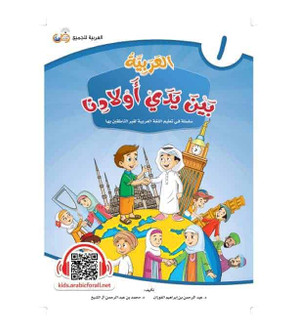
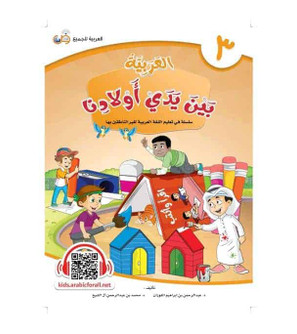
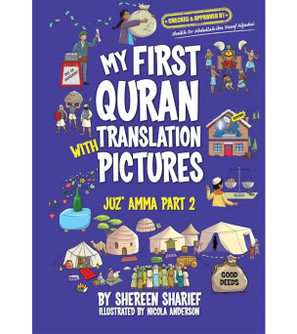
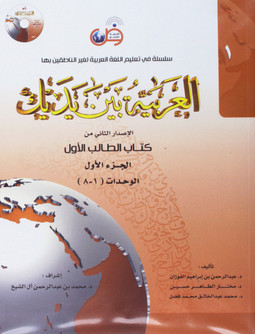
Madinah Media's full catalog serves exactly this purpose. It is an independent Islamic publishing company committed to offering high-quality Islamic books and media for both children and adults. Their catalog is specifically organized to help families build an Islamic library that serves every member at every stage, from preschool coloring books to scholarly hadith commentaries.
Recommendation Five: Be Intentional About What Enters the Home
The home has a threshold. What crosses that threshold shapes what the home becomes.
Al-Munajjid's recommendations include protecting the home from content and influences that undermine the Islamic atmosphere being built. This is not about paranoia. It is about intentionality.
The specific contemporary challenges are well known. Screens without limits expose children to content that directly contradicts Islamic values. Social media introduces voices into the home that have not been vetted for their influence. Entertainment without thought can normalize what Islam teaches against. The threshold that once regulated what entered the home physically now requires active management of what enters it digitally.
The Prophet ﷺ said: "Every one of you is a shepherd and every one of you is responsible for their flock." (Agreed upon) The home is the flock. What enters it, what sounds fill it, what images it displays, what values it normalizes in ordinary daily life, all of this is the shepherd's responsibility.
This recommendation does not produce a joyless, restricted home. It produces an intentional one. There is a difference between restricting a child from all entertainment and being thoughtful about which entertainment enters the home. There is a difference between banning screens and deciding what the screens show. The goal is a home where the atmosphere is Islamic, which means the decisions about what enters it are made with that goal in mind.
Recommendation Six: Make Du'a and Dhikr Regular
The home that regularly practices du'a and dhikr is a home with a specific sound pattern.
Bismillah before eating. Alhamdulillah after completing something. Assalamu Alaykum when entering. The morning and evening adhkar made in a way the children can hear. A brief du'a before significant events. The name of Allah mentioned in the ordinary flow of daily conversation.
These are not formal religious exercises. They are the warp threads of the Islamic life, the structures that run through everything else and hold it together. A home where the name of Allah is regularly on the tongues of its inhabitants is a home that feels different. That difference is not aesthetic. It is the actual presence of what the Islamic tradition describes as barakah, blessing that multiplies what it touches.
The Prophet ﷺ said: "Mention of Allah blesses the home." The mechanism of that blessing is not miraculous intervention in every daily inconvenience. It is the long-term formation of the people who live in that home, shaped by years of consistent divine remembrance into people who carry that remembrance with them when they leave.
Recommendation Seven: Invite Righteous Guests
Al-Munajjid includes among his recommendations something that a purely individualist approach to Islamic home-building misses: the home should be open to righteous people.
The Prophet ﷺ said: "A person is on the religion of their closest companions." (Abu Dawud, authenticated) The companions who pass through the home, who sit at its table, who are heard in its conversations, who interact with its children, bring their influence with them.
A home that regularly welcomes people of knowledge, people of strong Islamic character, people who speak well of Allah and the Prophet ﷺ and the deen, is a home that is shaped by those visits. Children who grow up meeting scholars, righteous neighbors, family members who are visibly practicing Muslims, absorb those encounters. The atmosphere of the home is not only what the permanent residents create. It is also what the guests bring.
This recommendation works in the opposite direction as well. The home that is careful about who is invited in, whose influence reaches the children, who is normalized as a presence in the household, is a home whose atmosphere is being intentionally maintained.
"Family Life in Islam" available at Madinah Media addresses the home's relationship with the broader community, exploring how the Muslim family participates in the Islamic social fabric while maintaining the integrity of its own household environment.
Building Toward Something
The forty recommendations of Al-Munajjid do not need to be implemented simultaneously. They are a vision and a standard, not a checklist for overnight transformation.
A family that chooses three recommendations this month and works on them consistently until they are normal, then adds three more, is building something real. A family that reads the full forty and attempts to implement them all at once will be overwhelmed within a week.
The guest who described walking into a Muslim home and feeling that it was organized around something she could not see but could feel was describing the end state of years of small, consistent choices. The Quran playing. The books on the shelves. The children's greeting. The paused prayer. None of those things arrived all at once. Each one was a decision made at some point and then maintained.
That maintenance is the work of the Muslim home. Not a transformation event. A daily practice sustained across years, producing people who carry the Islamic atmosphere they grew up in wherever they go.
The home you build today is the one your children will carry inside them for the rest of their lives.
Bismillah. Begin with one recommendation.