
Arabic Grammar Books for Beginners: Choosing the Right First Book
Ibrahim bought three Arabic grammar books in one week.
He had just decided to understand the Qur’an in Arabic, and a friend told him, “Start with grammar.” So he went shopping and picked the books with the best reputations. One was a thousand-line poem. One was a classic text wrapped in dense commentary. One was a children’s workbook.
By Friday he was lost. The poem made no sense to him. The classic took for granted things he had never learned. The workbook felt too easy, and he was a little embarrassed to be seen using it. All three went back on the shelf.
Here’s the thing: those are good books. They just weren’t his books yet. He skipped the first question, which is where he was actually starting.
That’s what this article is for. I’ll go through Arabic grammar books for beginners in the order a student really needs them. I leaned on the Arabic Grammar section at Madinah Media while writing, and I browsed it properly rather than skimming. Everything here comes from the mainstream Sunni tradition, where grammar exists to serve the Qur’an and the Sunnah.
why grammar matters at all
Allah says: “Indeed, We have sent it down as an Arabic Qur’an that you might understand.” (Yusuf 12:2)
Understanding is the goal. Grammar is one of the main ways to get there.
A widely repeated account credits Abu al-Aswad al-Du’ali, one of the Tabi’un, with laying the first foundations of Arabic grammar. The story says a mistake in recitation alarmed the early community. The narrations differ on the details, but they agree on the motive: the scholars wanted to protect the Qur’an from error.
You’ll keep running into two terms. Nahw is syntax, which covers how words relate inside a sentence and why their endings change. Sarf is morphology, which covers how words are built from roots and patterns. A beginner needs some of each, though the order and the level matter more than most people expect.
Dr. Ahmed put it to me bluntly: “Most failed grammar journeys fail at the choice of book, not the effort. The student works hard on a text written for someone one or two stages ahead, then decides they’re bad at Arabic. They’re not. They were handed the wrong rung of the ladder.”
Step zero: can you read the script?
If you can’t read Arabic letters with short vowels yet, don’t open a grammar book.
This is the most prevalent issue that one comes across. You will be able to follow the English explanation of the rule, but the examples will be in Arabic. It takes about thirty seconds to pronounce each one, and you have missed the rule.
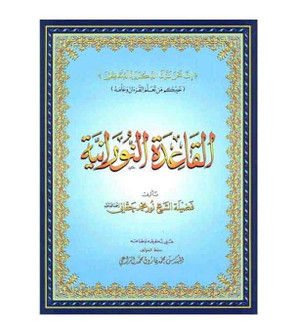
So start with a reading book. Madinah Media carries Al-Qaidah An-Noraniah, the widely used primer for reading the Qur’an with tajweed, and a whole Learn to Read Arabic Letters section. For adults starting from nothing, there’s a newer title called Arabic Up Close: Introduction to Arabic Sounds and Script, which is pitched at new learners and anyone who needs extra practice with letters and sounds. For children, My Arabic Letters Book is a gentle choice.
Give this a few weeks. It’s worth every one of them.
Fatima told me she was embarrassed to go back to letters. She’d been reciting for years. Then she realized she recited from memory and couldn’t read an unfamiliar line smoothly. “Three weeks of reading practice changed everything,” she said. “Grammar examples stopped feeling like puzzles.”
Four questions to find your starting point
Answer these honestly.
- Can I read short Arabic sentences with vowels, slowly but on my own?
- Do I know what a noun, a verb, and a particle are?
- Can I explain why a word ends in a damma, fatha, or kasra?
- Am I learning for myself, or choosing for a child?
If the first answer is no, go back to step zero. If you said yes to the first but no to the second and third, you’re a true grammar beginner, and the rest of this is for you. If you said yes to all three, skip down to the section on classical texts.
For children and teens
Madinah Media’s Arabic Grammar category has several series written for school-age learners. They work well for homeschool families and for teens starting from scratch.
Grammar Step by Step (النحو خطوة بخطوة).
Six books, each with a companion exercise booklet. Madinah Media lists the textbooks and workbooks separately, and many of them cost under ten dollars at the time of writing. The series says it wants children to master grammar with clarity and confidence, with every book building on the last. Book Six is the final level.
One line in the exercise booklet descriptions stuck with me. It says people complain about grammar constantly, and that the direct cause is that many students never understood it from the start, because nobody taught it properly when they were small. I find that oddly hopeful. If the problem is the teaching and not the subject, then a good sequence can fix it.
Best for: children and young teens, families who want a clear level-by-level path, and parents who want cheap workbooks for daily practice.
Grammar Level One, Two, and Three (قواعد النحو).
Shorter and simpler, and priced low. A good fit if you want a structured introduction without committing to a long series.
Best for: younger students, or a quick foundation before moving up.
Clear Grammar for the Elementary Stage (النحو الواضح).
An-Nahw Al-Wadih, by Ali Al-Jarim and Mustafa Amin, has taught generations of students. The method is simple: lots of examples first, then the rule, then practice. Madinah Media stocks the elementary edition. It costs more than the workbook series, so think of it as your core text rather than a casual extra.
Best for: students ready for a full, traditional-style beginner course in Arabic.
Integrated courses.
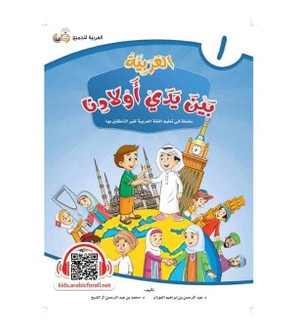
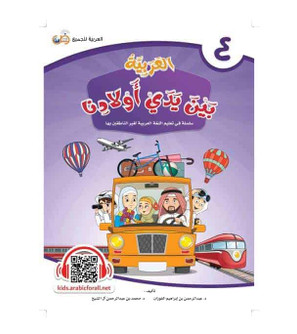
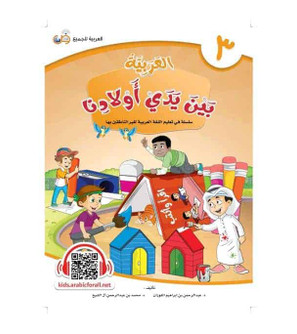
Some families would rather have grammar inside a full Arabic program than as a separate subject. Madinah Media carries Noor Al-Arabiyyah, which runs from Pre-KG through Grade 6, and Arabic Between Our Children’s Hands, a five-level series by Dr. Abdul Rahman Al-Fuzan and Dr. Muhammad Abdul Rahman Al Sheikh. In both, grammar shows up gradually alongside reading, vocabulary, and conversation.
Best for: families who want one coherent curriculum.
Zaynab tried teaching her nine-year-old son grammar as its own subject. “It felt like medicine,” she said. Then they switched to a full course where the rules appeared inside stories he already liked. “He stopped complaining. Same rules. Different packaging.”
For adult beginners who read English
Adults have the opposite problem. A child’s workbook feels wrong, but a classical text is miles out of reach. Two series fill that gap.
Madinah Arabic Reader.
Madinah Media has a dedicated section for it. The series is by Dr. V. Abdur Rahim, follows the teaching method of the Islamic University of Madinah, and was written for English speakers. (Quick note so you don’t get tangled: Madinah Arabic Reader is the textbook series, and Madinah Media is the bookstore. The shared word is a coincidence of geography.) Lessons are short, each one brings in vocabulary and a few grammar points, and the explanations are in English. The pace is steady, which is why independent learners like it.
Best for: adults and older teens studying alone or in a small class.
Arabic Between Your Hands (العربية بين يديك).
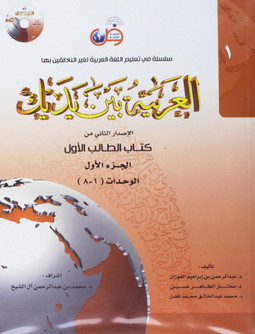
This belongs to a program called Arabic for All, and Madinah Media carries the student books, including Level 1, Part 1. It teaches mostly in Arabic, with pictures and context, and brings in grammar slowly once you’ve built some vocabulary. A lot of students love it because they start thinking in Arabic early. Others find it hard without English explanations. If that’s you, pair it with a teacher or a grammar companion.
Best for: students who want immersion, ideally with a teacher.
Omar began with Madinah Arabic Reader because he needed English explanations. A year in, he added Arabic Between Your Hands for reading practice in pure Arabic. “One built my understanding,” he told me. “The other built my comfort.”
Books that help it stick
A few titles aren’t textbooks but earn their place on the shelf.
Atlas for Arabic Grammar (أطلس النحو العربي), by Abbas Manasra. The author compares it to a geographic atlas: you see the whole map first, then zoom in. Visual learners tend to get a lot from it.
Arabic Reading Lessons. A collection of passages, old and new, split into six sections. This is where grammar stops being theory and turns into a skill.
Dictionaries. Madinah Media has Arabic, English-Arabic, and picture dictionaries. Any grammar student needs one.
A caution about colloquial books. The same category lists Masrawy, a book on Egyptian colloquial Arabic. It’s a fine book for what it does, but dialect isn’t the language of the Qur’an. If your goal is Qur’anic and classical Arabic, set the dialect books aside for now.
Bridging to the classical texts
Once you’ve finished a beginner series, the classical tradition opens up.
Qatr al-Nada wa Ball al-Sada, by Ibn Hisham al-Ansari. Madinah Media carries an explanation of it and calls it a classic, important intermediate text on grammar and morphology. Traditionally, this is the step between a beginner primer and the Alfiyyah.
Ibn Malik’s Alfiyyah. Also listed. It’s the thousand-line poem scholars have memorized and taught for centuries, and it’s a wonderful thing to work toward. It is not a first book. Come to it after the stages above, ideally with a teacher and a commentary.
Remember Ibrahim. The poem was never the problem. The timing was.
A path you can actually follow
- Stage 1, reading (2 to 6 weeks). Letters, short vowels, simple words, from a reading primer.
- Stage 2, first grammar (6 to 12 months). One beginner series that suits your age and style. Children can use Grammar Step by Step or an integrated course. Adults can use Madinah Arabic Reader.
- Stage 3, reinforcement (ongoing). Reading passages, an atlas for review, and daily practice with Qur’anic examples.
- Stage 4, intermediate (1 to 2 years). A text like Qatr al-Nada, with an explanation.
- Stage 5, advanced. The Alfiyyah, with a commentary and a teacher.
That schedule is rough. Yours will be dictated by the amount of time you have to devote daily, the availability of a teacher for help and consistency on your part. What counts is the order of events.
Twenty minutes a day
That’s enough. Spend five minutes saying yesterday’s rule out loud. Spend ten learning one new point and doing the matching exercises. Use the last five to find that rule in a verse you already know.
That last step is the one that works. Once you spot a grammar point sitting inside Al-Fatiha or a short surah, it stops being abstract. It becomes part of how you read what you already recite every day.
Ahmed used to study grammar in the evening and lose it by morning. Then he started hunting for each new rule in a surah he’d memorized. “The rules stayed,” he said. “The Qur’an gave them a home.”
Mistakes to avoid
Skipping the script. Without reading fluency, every example becomes a burden.
Starting with a classical text. Respect the sequence. A poem or a dense commentary can’t be your first book.
Buying many books and finishing none. One book finished beats five books sampled.
Memorizing rules without using them. Tie every rule to real Arabic, preferably Qur’anic.
Studying alone forever. Self-study works for a while. A teacher catches the errors you can’t see.
Treating mistakes as failure. Everyone makes them. Correct it, move on.
The right book is the next book
Ibrahim didn’t fail. He just chose three books for three different stages. If he’d picked one for his own stage, he’d have finished it and felt good about it.
The best Arabic grammar book for beginners isn’t the most famous one. It’s the one that fits where you are today.
If you can’t read yet, start with a primer. If you’re a child or teen, begin with a graded series. If you’re an adult who reads English, try a structured course with clear explanations. If the classical tradition is your goal, build toward it a step at a time. Madinah Media’s Arabic Grammar and Arabic Curriculum sections have books for every one of those stages, so browse them with your starting point in mind, not your ambition.
And keep the reason in front of you. You’re learning the language of the Qur’an so that one day you’ll read Allah’s words and understand them.
Pick one book. Open it tomorrow. Do twenty minutes.
Bismillah. Begin.