
Arabic Curriculum for Preschoolers
Picture a three year old called Yusuf at the breakfast table.
He's got an apple. Mum says "tuffaha" and waits. He grins and squashes the apple against his cheek and says "tuffa!" She laughs. He says it again. By Friday he's shouting it at the cat.
Nobody sat him down. There was no worksheet, no flashcard, no quiz. Just a word, a smile and an apple.
That's the best of preschool Arabic. That's what a good curriculum for that age should do. It shouldn't turn a 3 year old into a tiny student. It should turn the house into a place where Arabic is warm, normal and fun.
This is a straightforward plan for the 3-5 age group. What to teach, what to skip, how to structure the day and how to select from the Madinah Media Arabic curriculum range are all covered. It's from the mainstream Sunni tradition where Arabic is important because it's the language of the Qur'an, the salah and the Sunnah.
What Preschool Arabic Really Is
Right. Let's start with what it isn't.
It's not grammar. It's not long writing practice. It's not forty minutes at a desk. A four year old's body wants to move and her attention is in bursts. You're fighting a losing battle.
So what is it? Primarily listening, then speaking, then play with the letters and sounds. Reading and formal writing come later.
The Qur'an actually gives us a clue as to the order of things. Allah says: "We created you from the wombs of your mothers, knowing nothing, and gave you hearing, sight and hearts so that you might give thanks." (An-Nahl 16:78) Hearing is the first of these. A child acquires hearing long before they can possibly be expected to name a letter.
The Prophet (peace be upon him) also said that every child is born upon the fitrah. (Bukhari and Muslim) A young child comes with an open heart. Your job is to put the good things in front of it, gently.
Gentleness matters. When the Prophet kissed his grandson Al-Hasan, a man came forward and said "I have ten children and have never kissed one". The Prophet said "Whosoever shows no mercy will be shown none". (Bukhari and Muslim) Keep that story close when your child gets the 10th letter wrong.
Five Goals for the Preschool Years
A preschool Arabic programme can be based on five simple aims.
Listening. Your child is exposed to a lot of clear Arabic in short, happy bursts.
Speaking. She says words and short phrases (even if they come out completely wrong).
Letters and sounds. She gets to the alphabet via songs, art and play. Knowing a handful of letters is more than enough.
Pre-writing. Her hands get ready. Tracing, drawing lines, circles, curves. That's where a pencil grip starts.
Faith words. Bismillah, alhamdulillah, subhanallah. A few short surahs and some simple du'as. Those become part of the everyday vernacular.
Notice what's missing. There's no spelling test and no grammar chart. You can add those in later when she's ready.
What to Expect at Each Age
Every child moves at her own pace. A rather crude picture is still useful.
Age 3. Lots of listening. Short songs. Naming things in the house. Ten to twenty new words over a few months. Pointing and acting out count as answers.
Age four. Longer phrases. Simple Q&A's. Colours, numbers, body parts, family. Some kids will start to recognise the first letter of their own name.
Age 5. Short sentences. Letter shapes and sounds. Tracing and early copying. Good time to meet the Qaidah if she's ready.
If your child is behind on this picture, don't panic. If she's ahead, don't push. Preschool is a long runway.
A Year in Three Terms
Here's a simple way to organize the year around themes. Themes keep vocabulary meaningful, because children learn words that connect.
|
Term |
Themes |
Letters and sounds |
Faith words |
|
One |
Me and my family, my body, my home |
Sounds of a few letters through songs |
Bismillah before eating, alhamdulillah after |
|
Two |
Food, colors, animals |
More letters through art and play |
Short surahs, du'a for sleeping and waking |
|
Three |
Clothes, weather, the masjid |
Review letters, tracing |
Wudu words, salah words, simple adhkar |
Stay on a theme for several weeks. Let it return in songs, stories, and play. Repetition isn't boring to a preschooler. It's how she learns.
A Daily Rhythm That Fits a Small Child
Twenty minutes is more than sufficient. Ten minutes is quite enough. Here's one way of structuring it, you're free to rework it as you like.
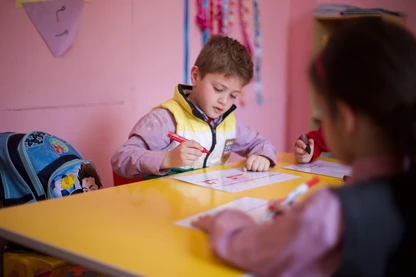
Start with a song or a rhyme (2 minutes). Then a short story or a picture book (5 minutes). Then a game using the week's words (e.g. find the objects in the room, a matching game) (5 minutes). Then something with her hands (e.g. colouring, tracing, playdough letters) (5 minutes). End with a du'a or a short surah that she knows.
Keep it light. If she's tired then stop. If she's absolutely thrilled then go a bit further. The next day matters more than today's perfection.
And you mix it up. A wooden spoon becomes a mil'aqa. A walk becomes a hunt for blue things. Learning sticks when it's life.
Turn Your Home Into an Arabic Place
Curriculum books are of some assistance but the home does the vast majority of the work.
Say it in Arabic. Pick a few everyday moments and say it in Arabic each time. "Ta'ala" when it's time to come. "Shukran" when she gives you something. "Bismillah" before every meal.
Label things. Put a couple of Arabic labels on the domestic items. Door. Window. Table. Keep it simple and just let them blend into the background.
Play the audio. Short surahs and simple Arabic songs can be played whilst you're cooking or driving. Use good clear voices as the little ears will just copy what they hear.
Read them together. Picture books in Arabic, even if you only read the titles and describe the pictures.
Be patient with your own Arabic. You don't need to be fluent at all. Just learn one word with her. Look it up together. She'll see that learning is a family thing.
Some families will go for the one parent one language approach (one parent speaks Arabic, one parent speaks English). That can work very well if it's consistent. If it feels forced then a few Arabic hours or a few Arabic activities a day is sufficient.
Choosing Materials at Madinah Media
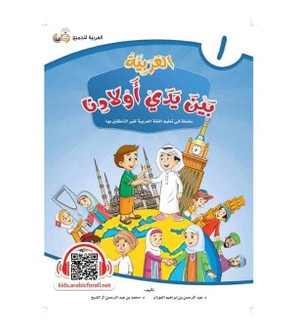
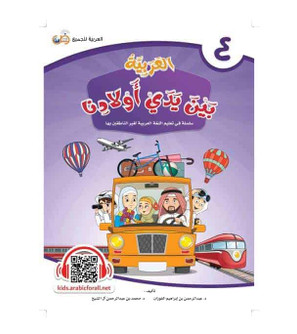
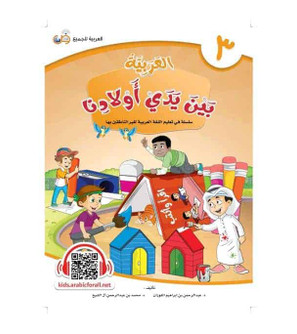
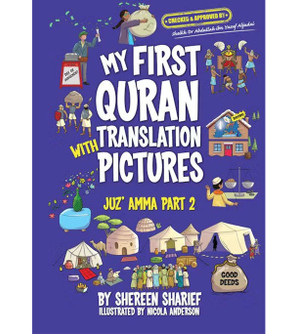
Madinah Media's Arabic Curriculum section has loads of programmes for young kids. Here's what I found when I went through it. All of the following are as per their product listings so check the individual product pages for the age range and format.
A Main Series: Noor Al-Arabiyyah
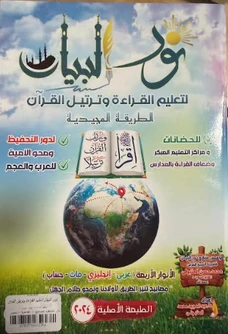
Noor Al-Arabiyyah runs from Pre-KG through to the elementary grades with Pre-KG, KG-1 and KG-2 at the beginning. Madinah Media describe it as a series for teaching Arabic to non-native speakers based on international standards (ACTFL and CEFR) and with an integrated approach to form and content. The listing states that activities and workbooks are included in the textbook. The category page I saw had the Pre-KG and KG-1 books listed at $18.00 each.
It's for a family who want one clear path rather than a whole heap of separate books.
Another Option: Arabic Without Tears
Arabic Without Tears by Imran H. is a colourful series for younger learners. Madinah Media's listings describe Book 1 as "A First Book for Younger Learners', Book 2 as "The Second Book for Younger Learners' and the series as lively and interactive.
If your child needs a bit more colour and play then this might be the one for her.
For Letters
Sanabel Letters is described as a way of teaching the Arabic alphabet via colouring in activities. My Arabic Letters Book is described as a book for learning the letters, produced by a team of experts in the teaching of Arabic. Both can be positioned alongside your main series as light, hands-on extras.
For Pre-Writing
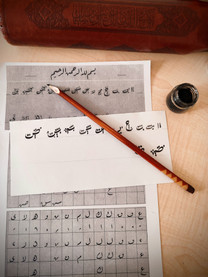
Madinah Media have the Guide to Writing in Arabic PRE-K as part of their Arabic Writing Workbooks from Studio Arabiya's Arabic Learning Series. They also have sections for the Arabic Writing Workbooks and the Sanabel handwriting series. These are for gentle tracing really, not for any long sessions.
For Faith Content
Madinah Media have Noor Al-Islam Pre-KG listed alongside the Arabic series. The KG-1 is described as having five units: "I Love My Lord", "Let's Make Wudu'", "The Prophet Loves Us" and two others. They're a very natural companion to the Arabic series as the faith based words are in both.
Other Programs
The same menu also has Al Asas, the Arabic Sanabel curriculum, Bidaya, I Start Arabic, ICO Learn Arabic and the Goodword Pre-K curricula listed amongst others. I haven't gone through those in any detail. If you're interested then have a browse through them and compare the ages and formats.
One Rule for Buying
Pick one main series. Add in one or two very light extras at most. A preschooler doesn't need a shelf full of books. She needs a few good ones that she actually uses.
When to Add the Qaidah and Reading
Parents will often feel the pressure to start reading as early as possible. Try and resist that.
Look for the signs of readiness. She recognises a few letters. She can sit for a few minutes with you. She'll ask what the letters say. Her hands can follow a line without too much frustration.
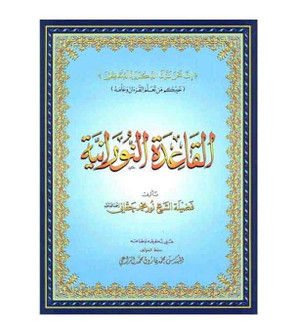
When you see those signs you can introduce Al-Qaidah An-Noraniah or a similar primer (Madinah Media lists it under their Journey with Al-Qaidah An-Noraniah and Learn to Read Arabic Letters sections). Go slowly. One short page, a few minutes and then play.
If she's not ready then just wait a few months. Nothing is lost. A child who waits often learns better.
How to Know It's Working
Skip the tests. Just watch.
Does she invent a new Arabic word? Does she hum a song from the week? Does she point at a letter and say the sound of it? Does she ask for a story in Arabic? Does she say 'bismillah' without being prompted?
Jot a few lines down in a notebook each week. After a few months you'll have a trail of little wins that no test could possibly capture.
If You Don't Speak Arabic
Many parents are concerned about this and it's quite legitimate.
You can learn with your child. Start off with the same words that she's learning. Use the audio to check your own pronunciation. If you can, get a teacher for yourself so that you're also on the learning curve.
Studio Arabiya for instance have one to one online courses for adults and teens and their Arabic Grammar and Classical Arabic courses could be worth a look if you're looking to build up your own base. But start where you are. A parent who says "I'm learning too" is teaching humility as well as vocabulary.
For Schools and Co-ops
Running a preschool class or a weekend programme? Pick a single spine for the whole programme and keep the supplements minimal. The teachers should all be following the same scope and sequence so that the children move seamlessly from one class to the next.
A Few Pitfalls
Parents will inevitably trip up in a number of fairly predictable spots. The first is to be too formal. A worksheet approach will have a three year old dreading Arabic before she's ever learned a hundred words. The second is to compare her to other children. The third is to correct every single mistake. Try to model the correct form instead: if she says "tuffa" you smile and say "Yes, tuffaha!" The final one is to give up after a bad week. Kids have bad weeks. Come back tomorrow.
A Closing Thought
Go back to Yusuf and his apple.
A year from now he may know 60 words, a few songs, three or four short surahs and the shape of a handful of letters. That doesn't sound like much at all, but it's a good foundation and it's all done in the context of joy.
Your aim is not to produce a fluent four year old. It's to get her to love the sound of Arabic, to feel at home in it and to take that with her into the years when she's actually going to be reading, writing and understanding the Qur'an.
So pick one series. Set aside a small happy window each day. Fill your home with a bit of Arabic. Keep your tone as gentle as the Prophet was with the children around him.
Bismillah. Start with one word today.