
How to Choose the Right Arabic Curriculum
A father came into a small Islamic bookstore with three kids and a tired face.
They were five, nine and fifteen, and he wanted all three to learn Arabic. He'd already bought books. Three sets, from three different places, and they were sitting on a shelf at home with the spines barely cracked.
"I need one curriculum," he told the shopkeeper. "One. For everyone. Whatever the best one is."
The shopkeeper was an older man with reading glasses hanging from a string. He didn't reach for a book. He asked a question.
"What do you want Arabic for?"
The father blinked. "For Arabic. So they can learn it."
"Learn it to do what?"
The father stood there. Five-year-old had already started to climb on the display rack while his fifteen-year-old son looked up at the ceiling as if ignoring everything.
"I have never really thought about it," he said finally. "It has to be something like the Quran. They should understand it. Also, to be able to converse with their grandparents. My oldest one needs to learn another language in school anyway."
The shopkeeper smiled. "Then you don't need one best book. You need to know what job each book is for."
That's really all this article is about. There's no single best Arabic curriculum. There's the one that fits a particular learner with a particular goal at a particular stage, and you find it by answering a few honest questions before you spend any money.
Start with why
The Prophet ﷺ said: "Actions are judged by intentions, and every person will have what they intended." (Al-Bukhari and Muslim) Learning Arabic is an action, so it's worth having an intention for it.
Most families land on one of three goals, and some want more than one.
Understanding the Quran and prayer. Allah says: "Indeed, We have sent it down as an Arabic Quran that you might understand." (12:2) If this is your goal, you want vocabulary that shows up in the Quran, enough grammar to make sense of its sentences, and reading skills good enough to follow a verse. It's the most common goal I hear from families.
Speaking and listening. Maybe your grandparents live overseas, or you travel a lot. Then you need conversation practice, listening, and everyday vocabulary. Spoken Arabic changes from country to country, so decide which kind you're after.
Reading classical sources. Some people want tafsir, hadith and fiqh in the language they were written in. That takes solid grammar, careful attention to word forms, and a teacher. It also takes years. Plenty of people say it was worth every one of them.
None of these is better than the others, but a curriculum built for one will feel wrong if you wanted another. A conversation course won't get you to the Quran. A classical grammar text won't help you at a family dinner.
Write your goal in one sentence. It'll save you months.
Know who's learning
Once you have the goal, look at the learner.
Age. A five-year-old needs songs, pictures and very short lessons. A fifteen-year-old can handle charts and grammar rules. An adult can add self-study. One book can't serve all three.
First language. If your family speaks English at home, your child is a non-native learner, and that matters a lot. Books written for Arabic-speaking kids assume a spoken base your child doesn't have.
Starting level. Be honest here. A twelve-year-old who has never seen Arabic belongs at the beginning, not in a "Grade 6" book because of their age. Starting at the real beginning is faster than starting too high and backing up.
Time and support. How many minutes a day can you actually give? Can a parent sit with them? Is there a teacher? Fifteen minutes a day with a simple book beats an ambitious plan that falls apart in two weeks.
Ustadha Nour has been helping families pick Arabic materials for more than ten years. She starts every consultation the same way: "I ask three things. What's the goal? How old is the child? How many minutes a day will you honestly protect? Once I have those, ninety percent of the choice is made. The book is almost the easy part."
Seven questions to ask about any curriculum
When you know the goal and the learner, run each candidate through these.
- Is it made for non-native learners? If page one has full sentences, it was probably written for native speakers.
- What's its approach? Some programs are structural and classical, teaching through grammar and Quranic vocabulary. Others are communicative and modern, built around listening, speaking and everyday situations. Neither is wrong. They just point at different goals.
- Which skills does it cover? Listening, speaking, reading, writing. If a program only does one, you'll need to fill in the rest.
- Is the sequence clear? Look for levels that build on each other. Gaps between levels mean either repeated work or missing pieces.
- What comes with it? Audio, workbooks, teacher's guides, writing practice. A parent who doesn't speak Arabic needs audio and guidance more than anyone.
- Is the Islamic content sound? The stories, examples and vocabulary should fit your family's values and suit the learner's age.
- Can you stick with it? The best curriculum is the one you're still using in six months. Pick something you can follow without dreading it.
What Madinah Media offers
Madinah Media carries a wide range of Arabic materials, sorted by purpose. Here's how the main ones line up with the goals above.
Young beginners who need letters first.
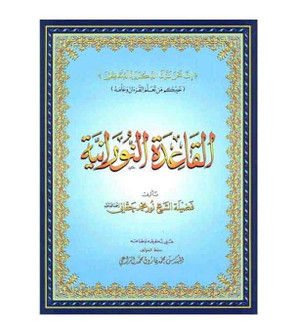
My Arabic Letters Book was made by a team of Arabic teaching specialists and is a gentle place to start for small children. Madinah Media also has resources for learning to read the letters, plus the Noorani Qaida path for Quran reading.
Children who need a full second-language path.
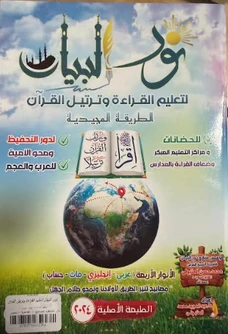
The Noor Al-Arabiyyah series from Manarah Publishing teaches Arabic as a second language to non-native learners. It draws on the American Council on the Teaching of Foreign Languages guidelines, the Common European Framework of Reference for Languages, and a standardized levels document from an Arabic language education center in the Gulf. It runs from Pre-K through Grade 6, so a child can stay with one series for years. If your main goal is Quranic understanding on a solid base, this suits younger learners well.
Children who need a modern, communicative approach.
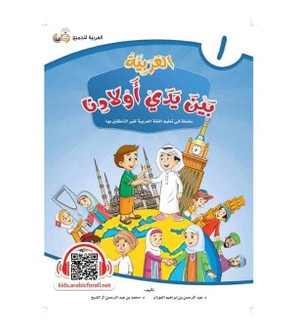
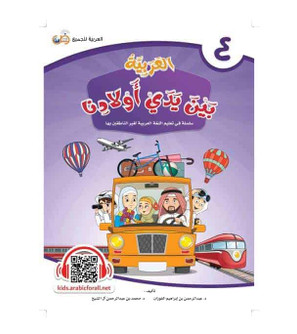
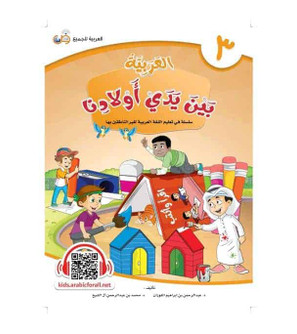
Madinah Media is an official partner of Arabic for All, the publisher of the widely used Arabiya Bayna Yadayk series. Arabic for All has also added a children's series, Arabic Between Our Children's Hands, designed to help kids master the language. It fits families who care more about speaking and listening.
Teens and adults who want classical, Quran-oriented Arabic.
The Madinah Arabic Reader series by Professor V. Abdur Rahim has been a favorite for a long time. He's a former professor of Arabic at the Islamic University of Madinah and was director of the Translation Centre at the King Fahd Quran Printing Complex. The series teaches classical Arabic through applied grammar, with vocabulary that runs from Quranic and classical words to ones used in modern Arabic. Some schools use it to prepare students for the University of London GCE O-Level and A-Level exams. It works well for older learners who want to read the Quran with understanding and don't mind studying grammar.
Adults and older students who want a modern four-skill program.
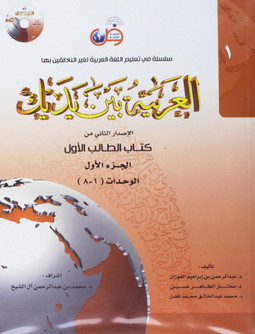
Arabic Between Your Hands, from the Arabiya Bayna Yadayk series, is used by Arabic students all over the world and adopted by universities. It's for people who want to speak, listen, read and write Modern Standard Arabic.
Grammar practice.
There's an Arabic Grammar section for learners ready for the rules. After a solid foundation, students often move on to classical primers like Al-Ajrumiyyah. Madinah Media's own learning roadmap says it becomes accessible once a student has finished the Noor Al-Arabiyyah foundation.
Handwriting.
The Guide to Writing in Arabic series, from the Arabic Learning Series, has writing workbooks at several levels for kids who need steady practice forming letters.
Reference.
The Arabic dictionary section helps older learners work more independently.
Madinah Media also lists Al Asas, Arabic Sanabel, I Start Arabic and Ultimate Arabic. If you have a specific reason to look at those, run them through the seven questions too.
Back to the father and his three kids
With his goals sorted out, the shopkeeper helped him go through the children one at a time.
The five-year-old needed an easy introduction. The shopkeeper suggested My Arabic Letters Book for play and early familiarity, then Noor Al-Arabiyyah Pre-K and KG after that. Short, happy sessions. No pressure.
The nine-year-old had never learned any Arabic. He needed a structured second-language series with a clear path, so the shopkeeper pointed to Noor Al-Arabiyyah and said to place him wherever his actual knowledge was. That meant starting near the beginning, even at nine. Once the foundation was down, he'd catch up fast.
The fifteen-year-old wanted to read the Quran with understanding, and he was old enough for grammar. The shopkeeper recommended the Madinah Arabic Reader, with a teacher or a patient parent helping through the first lessons.
Three kids, three goals, three books. On top of that, one shared habit: ten minutes of Arabic together after Maghrib, each child working at their own level.
The father looked at the three books on the counter. For the first time that morning he didn't feel overwhelmed. He had a plan.
Mistakes I'd steer you away from
Choosing by the cover. Colorful books are nice, but nice isn't the same as right. Open it and read the first lesson.
Switching all the time. Every curriculum has weak spots. Give one a few months before you judge it. Jumping between methods burns the energy you need for the Arabic itself.
Starting too high. Placing a child by age instead of knowledge just produces frustration. Go back a level if you have to. That's not failing.
Skipping audio. Arabic is a spoken language. A learner who never hears it from a clear voice will struggle with the sounds, and a parent who doesn't speak Arabic needs the audio even more.
Expecting the book to do it alone. A good curriculum does a lot, but a parent sitting nearby makes a difference even without any Arabic. So does a teacher once the work gets harder.
Forgetting the reason. When motivation dips, go back to the goal. "We're learning Arabic so you can understand the words you say to Allah in prayer."
Try before you commit
A one-week trial can save you a lot of regret.
Open the first lesson with your learner. Can you follow the instructions? Can your child finish a session in twenty minutes without tears? Can they repeat a few sounds or words afterward? Do they want to come back tomorrow?
If the answers are mostly yes, you've got a good fit. If they're mostly no, put it aside without guilt and try another one from the list.
Start each session with Bismillah, and make a short du'a that Allah makes the language of His Book easy for your family. The Prophet ﷺ said: "Whoever travels a path seeking knowledge, Allah will make easy for him a path to Paradise." (Muslim) A family opening an Arabic book together is on that path.
Six months later
The father came back to the bookstore half a year on.
The shopkeeper was behind the counter, glasses still on their string. He looked up and smiled.
"How are the books?"
"Open," the father said. "All three. Every night."
His five-year-old now pointed at letters on street signs. His nine-year-old read short words out loud with a huge grin. His fifteen-year-old, the one who'd pretended not to listen, had finished the first book and asked for the next.
The shopkeeper nodded. He'd heard stories like this plenty of times.
"You didn't find the best curriculum," he said. "You found the right ones."
Know why you're doing it, know who's learning, ask the questions, start small and keep going. Bismillah.