Where to Start Learning the Seerah: Your Honest Beginner's Guide
You want to know the Prophet.
Not just know about him. Not just know the five pillars he brought and the Qur'an he received. Know him. The man. His character. His relationships. The way he smiled. The way he grieved. The decisions he made under impossible pressure. The quality of mercy that poured out of him so consistently that even his enemies testified to it.
You want to know the person whose way of living — his sunnah — Muslims have been following for fourteen centuries.
And you have no idea where to start.
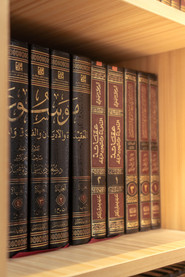
The seerah section of any good Islamic bookstore — including Madinah Media's excellent selection — confronts you with dozens of options. Some are one volume. Some are three. Some are thin and accessible. Others are serious scholarly works that could anchor a graduate seminar. Some look like they're for children. Some look like they're for academics.
Do you know all the important events from his early life, the tribulations he faced after declaring prophethood, the circumstances that led to his migration?
If the honest answer is "not really" — this article is for you.
I'll walk you through the right starting points, in the right order, with honest descriptions of what each book actually is and who it's actually for.
Why the Seerah Matters Before You Choose a Book
Not Just Interesting History:
The seerah is not supplementary background information for a Muslim. It is the living explanation of the Qur'an.
When you read "And obey Allah and obey the Messenger" — the seerah is what shows you what obeying the Messenger actually looks like in specific, real situations.
When you read about tawakkul (reliance on Allah) — the seerah is where you see a man practice perfect tawakkul while simultaneously making every reasonable human effort. Both sides of the balance, visible in a real life.
When you struggle with patient endurance in difficulty — the seerah is where you read about a man who lost his father before birth, his mother at six, his grandfather at eight, his beloved wife of twenty-five years after a decade of persecution. And who, through all of it, never lost his connection to Allah or his care for the people around him.
The seerah is not what makes Islam academically interesting. The seerah is what makes Islam emotionally real.
The Famous Hadith:
The Prophet said: "None of you truly believes until I am more beloved to him than his father, his child, and all of mankind." (Sahih Bukhari)
You cannot love someone you don't know. The seerah is how you come to know him.
Dr. Ahmed told me: "I ask every student who tells me they're struggling with Islamic motivation the same question: 'Tell me about the Prophet.' Not his rulings, not his hadith — tell me about him, the person. Almost always, they struggle. And almost always, that's the diagnosis. You cannot love and follow someone you barely know. Seerah study is love-building study. Start there before everything else."
The Most Important Starting Principle
If you are new, do not start with the biggest book. Start with a simple timeline, then move deeper. The Best Seerah books are not always the thickest books. The best book for you is the one you will actually finish and understand.
This principle — start with the book you will finish — is the most important thing to understand before choosing anything.
A beginner who reads a slim, readable introduction completely will know infinitely more than a beginner who buys the three-volume scholarly masterwork and never gets past chapter four.
Completion matters more than comprehensiveness, especially at the beginning.
Level 1: The Perfect Starting Point — "When the Moon Split"
The Book:
When the Moon Split by Safi-ur-Rahman Al-Mubarakpuri, published by Darussalam.
The Author:
Al-Mubarakpuri is the same scholar who wrote The Sealed Nectar — the most acclaimed English-language seerah of recent centuries, winner of a major international seerah competition. When the Moon Split is his more accessible, shorter work — designed specifically for readers who want a solid, authentic narrative without the scholarly density of the full Sealed Nectar.
What It Is:
A complete chronological account of the Prophet's life, from birth to death. Every major event covered. Authentic. Clear. Readable. Illustrated with photographs of relevant locations in Arabia.
What It Is Not:
A deep scholarly analysis. An exploration of the political or military contexts in depth. A collection of lessons drawn from events.
It tells you what happened. Clearly and faithfully. For a beginner, that's exactly what's needed.
Who It's For:
Any Muslim who has never read a complete seerah. Adult converts and reverts. Teenage students beginning serious Islamic study. Parents who want to read seerah alongside their children.
Honest Pacing:
Most adults reading consistently can complete When the Moon Split in four to six weeks. It should be the first seerah you finish, not the only one you attempt.
A good path is: When the Moon Split first, The Sealed Nectar second, then In the Footsteps of the Prophet for lessons.
Fatima shared: "I bought When the Moon Split for my thirteen-year-old and accidentally read it myself first. I finished it in two weeks. I cried three times — and I'm not someone who cries easily. I knew the general story before. But reading it as one complete narrative, from beginning to end, for the first time in my adult life — it was completely different. I understood why Muslims love this man the way they do. That understanding changed my salah. I stood in prayer differently after finishing it."
Level 2: The Modern Classic — "The Sealed Nectar"
The Book:
The Sealed Nectar (Ar-Raheeq Al-Makhtum) by Safi-ur-Rahman Al-Mubarakpuri, Available at Madinah Media.
The Background:
Safiur Rahman al-Mubarakpuri, The Sealed Nectar, Darussalam.
This book won first place in a worldwide competition on the Prophet's biography organized by the Muslim World League in the 1970s — competing against hundreds of submissions from scholars globally. That distinction tells you everything about its scholarly standing.
What It Is:
The most comprehensive single-volume English-language seerah currently available. Covers the Prophet's life in full chronological detail, with authentic hadith evidence for each event, historical context, and scholarly analysis.
More detailed than When the Moon Split. More demanding. More rewarding.
What's Different From Level 1:
The Sealed Nectar goes deeper into the historical and political context of each event. It explains WHY decisions were made, not just WHAT happened. It engages more seriously with the military campaigns, the treaty negotiations, the tribal politics of Arabia. It treats you as a serious reader capable of engaging with complexity.
Who It's For:
Someone who has already read one complete seerah and wants real depth. A student of Islamic studies. Anyone who found Level 1 satisfying but knows they've only scratched the surface.
Honest Note on Martin Lings:
Muhammad: His Life Based on the Earliest Sources by Martin Lings is a beautifully written, widely recommended seerah. Its literary quality is genuinely remarkable.
Fair warning, Martin Lings isn't a scholar however, so unfortunately, he mistakenly added 3-4 stories that are known fabrications — the details of which you can find online.
For this reason, while Martin Lings' work has value as literature, The Sealed Nectar is the stronger recommendation for someone seeking an authoritative, scholastically reliable primary seerah text. If you do read Martin Lings, read it alongside The Sealed Nectar rather than as a standalone primary source.
Level 3: Lessons From the Seerah — "In the Footsteps of the Prophet"
The Book:
In the Footsteps of the Prophet: Lessons from the Life of Muhammad by Tariq Ramadan, published by Oxford University Press.
What Makes This Different:
This is not primarily a narrative biography. It is a reflective work — drawing spiritual, ethical, and personal lessons from the events of the Prophet's life and asking: what does this mean for how we live today?
Each chapter takes a period or aspect of the Prophet's life and extracts its deeper implications — for how we treat adversity, how we relate to the poor, how we handle power, how we grieve, how we love.
Who It's For:
Someone who knows the basic narrative of the seerah and wants to think about what it means. A reader who asks "so what?" after the events — who wants the seerah to change not just their knowledge but their character.
How It Fits in the Reading Path:
A good path is: When the Moon Split first, The Sealed Nectar second, then In the Footsteps of the Prophet for lessons.
This sequence makes perfect sense. Know what happened (Level 1). Know it in depth (Level 2). Then ask what it means for how you live (Level 3).
Ahmed told me: "I read In the Footsteps after finishing The Sealed Nectar and it felt like a completely different kind of encounter with the same man. The Sealed Nectar gave me the events. Tariq Ramadan gave me the interior — the spiritual and moral meaning of those events for a Muslim trying to live them out now. Both are necessary. Neither replaces the other."
Level 4: Scholarly Depth — "The Noble Life of the Prophet"
The Book:
The Noble Life of the Prophet (3-volume set) by Dr. Ali Muhammad As-Sallaabi.
Noble Life of the Prophet: 3 volume set (Dr. Ali Muhammad As-Sallaabee)
What It Is:
A multi-volume scholarly treatment of the Prophet's life — the most thorough English-language seerah set currently available. Each volume covers a specific period in exhaustive detail, with extensive hadith citation, scholarly analysis, and theological reflection.
Who It's For:
Serious students of Islamic studies who have already read multiple seerah works and want the deepest available English-language treatment. Parents home-educating older teenagers with genuine Islamic academic goals. Anyone who has asked "but what do the scholars actually say about this specific event?" and found other books lacking.
Honest Expectation:
This is not a casual read. Three volumes. Dense. Rewarding in proportion to the effort invested. Don't start here. Arrive here after Levels 1, 2, and 3 have established the foundation.
The Visual Supplement: "Atlas of the Prophet's Biography"
The Book:
Atlas of the Prophet's Biography by Dr. Shawqi Abu Khalil.
Atlas on the Prophet's Biography (Dr. Shawqi Abu Khalil)
What It Is:
Maps, routes, tribal locations, battle sites, migration paths, geographical context for every major event in the seerah.
Why Every Seerah Reader Needs This:
One of the consistent challenges in reading the seerah is spatial understanding. Makkah, Madinah, Badr, Uhud, the Khaybar fortresses, the route of the Hijrah — without a visual sense of where these places are relative to each other, significant portions of the narrative remain abstract.
Best for: visual learners. This book helps readers see places, routes, tribes, battles, and journeys through maps and location notes. Many people read Seerah but cannot imagine the distance between Makkah, Madinah, Badr, Uhud, Tabuk, and other places. Why read it: Use it beside another Seerah book. When your main book mentions a journey or battle, check the map. This makes the story clearer and easier to remember.
Don't read this independently. Use it as a companion alongside whichever primary seerah you're reading. When a journey is mentioned, check the map. When a battle location is named, find it. This single habit transforms abstract place-names into real geography and real geography into real history.
Zaynab shared: "I bought the Atlas partway through my first reading of The Sealed Nectar because I kept getting confused about distances. Once I had the maps, I understood for the first time how genuinely difficult the journey to Badr was. How exposed the early Muslim community was in Madinah, with enemies on multiple sides. The geography explained the strategy. The strategy explained the decisions. The Atlas made the whole seerah make sense in a way it hadn't before."
Madinah Media's Seerah Section
Madinah Media's English Books Seerah section connects readers to trusted seerah resources.
Madinah Media maintains a dedicated seerah section in their English books catalog. Their selection includes the titles discussed in this article and additional works at various levels of depth and accessibility.
For families with children, their children's seerah section — with age-appropriate narrative retellings for different age groups — provides the starting points for younger readers before they're ready for the adult-level works above.
The advantage of Madinah Media's curation: their seerah selections have been vetted for authenticity and scholarly reliability — an important consideration in a subject where popular but problematic works circulate alongside genuinely excellent ones.
The Complete Reading Path
Start simple, finish one book, then build your reading step by step. Do not collect titles only. Read, reflect, and practice one Sunnah at a time. A small daily habit with sincerity can bring more benefit than a big plan that never begins.
The Recommended Sequence:
Start: When the Moon Split — Complete this first. Every time.
Then: The Sealed Nectar — The full depth of the most acclaimed modern seerah.
Alongside both: Atlas of the Prophet's Biography — Maps as a companion to every chapter.
After the narrative: In the Footsteps of the Prophet — Lessons and spiritual meaning.
For serious students: The Noble Life of the Prophet (3 volumes) — Scholarly depth.
Realistic Pacing:
When the Moon Split: 4-6 weeks of daily reading
The Sealed Nectar: 3-5 months of consistent reading
In the Footsteps: 2-3 months of reflective reading
The complete path: 1-2 years if pursued seriously alongside life's other obligations.
That timeline should not discourage you. It should orient you.
You're not reading to finish. You're reading to know a person. The greatest human being who ever lived. A person whose character was described by Allah Himself as "of magnificent moral nature" (Qur'an 68:4).
That person deserves more than a weekend's reading. He deserves your consistent, sustained, loving attention for as long as it takes to actually know him.
Conclusion: Begin With One Book This Week
The Best Seerah books help you know the Prophet Muhammad with love, trust, and clear action. Start simple, finish one book, then build your reading step by step.
You don't need to plan the entire reading path before you begin. You need to begin.
By the time you finish it, you will know things about the Prophet that will change how you understand your prayers, your salah, your deen. You will love him more than you do right now. And that increased love will make everything else in Islam more alive.
That's the purpose. That's the starting point.
The Prophet (peace be upon him) is waiting to be known.
Open the first page.
Bismillah.