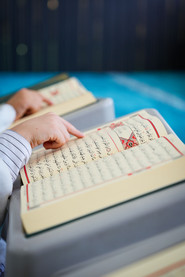
Alfiyyat Ibn Malik for Qur'an Students
Imagine a young woman named Zaynab.
She is a hafidhah. She has memorized the whole Qur'an with tajweed. Her recitation is beautiful. Her review routine is steady. People ask her to lead taraweeh.
One evening she joins a tafsir class. The teacher pauses at a verse and says, "Notice the lam on this word. It tells us something about the structure."
Zaynab nods. Inside, she is lost.
She knows every word of the verse by heart. She can recite it with her eyes closed. But she cannot say why the lam is there, or what it changes. She walks home with a quiet question in her heart.
"I carry the Qur'an in my chest," she thinks. "Why can't I read how it is built?"
That question brings many Qur'an students to Arabic grammar, and from there to one famous text: Alfiyyat Ibn Malik.
This article asks a simple question. Should a Qur'an student study the Alfiyyah? It gives an honest answer, a clear plan, and a list of books to begin with from Madinah Media. It is written from the mainstream Sunni tradition, where the Qur'an comes first and grammar serves it.
Three Layers of Qur'an Study
A Qur'an student grows in layers.
Layer 1: Recite. Tajweed, makharij, and hifz. This is where most students begin, and rightly so.
Layer 2: Understand. Vocabulary and grammar. This layer lets you follow what you recite.
Layer 3: Explain. Tafsir. This layer draws on the Qur'an, the Sunnah, the Companions, and the scholars.
The Alfiyyah sits in Layer 2, and it supports Layer 3.
It is important to say what the Alfiyyah is not. It is not a book of tajweed. It is not a replacement for hifz or for review. It is not a tafsir. It is a poem of about one thousand verses that organizes Arabic grammar and morphology.
But if you want to move from reciting the Qur'an to reading it with understanding, it is one of the finest tools the tradition has given us.
The Prophet, peace be upon him, said: "The best of you are those who learn the Qur'an and teach it." (Bukhari) Learning includes understanding. And Allah teaches us to ask: "My Lord, increase me in knowledge." (Ta-Ha 20:114)
Who Was Ibn Malik?
Ibn Malik was born in Jaen in Muslim Spain and settled in Damascus. He died there in 672 AH. He was not a grammarian. Scholarly biographies describe him as a master of sciences. They mention the seven readings of the Qur'an, hadith, language, grammar, morphology, poetry and fiqh. They also describe his piety and sincerity.
That matters for a Qur'an student. This is a scholar who knew the recitation traditions and the hadith, and who wrote his grammar with the Book of Allah and the words of His Messenger in view.
He also wrote a work on the language of difficult passages in Sahih al-Bukhari. He is known for treating hadith as valid evidence in grammar.
The Alfiyyah is also called Al-Khulasa, which means the essence or summary. It condenses his longer grammatical work into a thousand verses of rajaz meter, so it can be memorized.
Scholars loved it. Nearly one hundred commentaries and glosses have been written on it. Among those who explained it are Ibn al-Nazim, Ibn Hisham, Ibn 'Aqil, Al-Makudi, and Al-Ashmuni.
What the Alfiyyah Gives a Qur'an Student
Let us look at four verses to see the payoff.
1. A Lam That Changes the Structure
"Inna fi dhalika la-'ibratan li-uli al-absar." (Aal 'Imran 3:13)
This is the sentence that confused our imaginary Zaynab.
The word inna usually puts the first noun in nasb and the predicate in raf'. But here, the predicate is a prepositional phrase: "fi dhalika." It comes first. The noun "'ibratan" is delayed. And the lam attaches to that delayed noun.
The Alfiyyah has a chapter on inna and its sisters. It explains when the lam can join the predicate, and when it joins a delayed noun. Once you know this rule, the verse opens up. You see why the lam is there, why "'ibratan" is in nasb, and what the sentence is built to say: in that is surely a lesson.
2. Two Objects
"Wa laqad ataynaka sab'an mina al-mathani." (Al-Hijr 15:87)
The verb "ataynaka" takes two objects. The first is the pronoun ka. The second is sab'an. The Alfiyyah has sections on verbs that take more than one object, and it explains how they work.
For a Qur'an student, this is not trivia. It tells you who received what.
3. A Wonder Pattern
"Fa-ma asbarahum 'ala al-nar." (Al-Baqarah 2:175)
The form "ma asbarahum" matches the pattern the Alfiyyah teaches in its chapter on wonder, ma af'alahu. Scholars of tafsir discuss how to understand its meaning in this verse. Knowing the grammatical pattern lets you follow their discussion instead of nodding along.
4. A Condition and Its Answer
"Wa in tubdu ma fi anfusikum aw tukhfuhu yuhasibkum bihi Allah." (Al-Baqarah 2:284)
This is a conditional sentence. The particle in puts the verbs in jazm. The nun of the plural drops from tubdu. The answer, yuhasibkum, is also in jazm.
The Alfiyyah covers the particles that cause jazm, how conditions work, and how the verbs change. You see the whole mechanism at once.
The Qira'at Connection
Many Qur'an students also study qira'at. Here the Alfiyyah helps in a quiet way.
Some differences between recitations touch grammar. A different vowel on a word can change its case, and that can change how the sentence parses. If you can parse the sentence, you can understand why scholars discuss the variants.
The Alfiyyah's later chapters also treat topics such as imalah, idgham, ibdal, and stopping. These are grammar and morphology topics in the poem. They are not the same thing as the rules of tajweed or qira'at, and you should not mix them up. But a Qur'an student will recognize the terms, and seeing them from the grammar side adds depth.
A teacher of qira'at can show you where the two sciences meet, and where they differ.
Where Qur'an Students Get the Most Benefit
The Alfiyyah is a complete course. You can and should study all of it in time. But Qur'an students will feel the payoff soonest in certain areas.
Priority 1: The foundations. Speech and its parts. Why endings change. The cases and their signs.
Priority 2: The core sentence. The subject and predicate. Kana and inna and their sisters. The doer. The passive doer.
Priority 3: The extra words in a sentence. The direct object, the state, the specification, the exception, the adverbs.
Priority 4: Conditions and verbs. The particles that cause jazm and nasb on verbs.
Priority 5: The followers. Adjectives, conjunctions, emphasis, and substitutes.
Later: The rest. Morphology and the phonetic chapters at the end, including the ones that connect to the recitation sciences.
Do not skip the order of the poem. It builds step by step. But you can use this list to see where your Qur'an reading will improve first.
Before You Begin: The Prerequisites
Do not start with the Alfiyyah. Start with these.
Reading. You must read vowelled Arabic comfortably. If you are a hafidh, you likely do already.
A beginner grammar base. A graded course gives you vocabulary and practice.
Al-Ajrumiyyah. The classic short primer. It gives the frame.
An intermediate text. Qatr al-Nada is the traditional bridge.
Then the Alfiyyah, with a commentary and ideally a teacher.
Books at Madinah Media for Each Step
Madinah Media's Arabic Grammar section holds titles for each stage. These are the ones I saw listed, with prices at the time of writing.
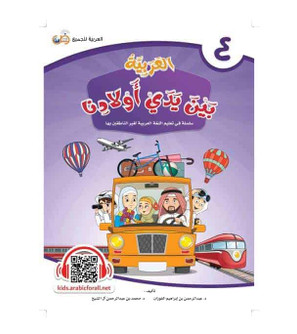
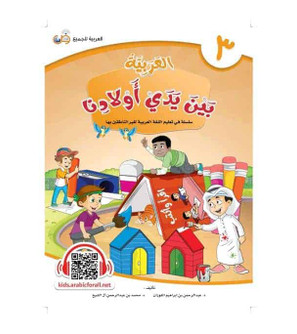
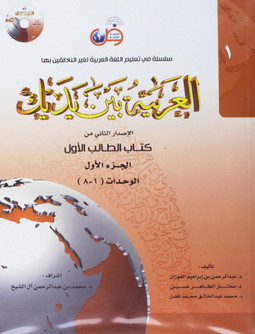
Beginner series. Grammar Step by Step, a series with companion exercise booklets, with most items priced between $4.99 and $7.99. Grammar Level One, Two, and Three, at $9.00 each. Clear Grammar for the Elementary Stage, the classic An-Nahw Al-Wadih, at $66.00.
Reading practice. Arabic Reading Lessons, a collection of ancient and modern passages in six sections, at $5.45.
The primer. The Text of Al-Ajrumiyyah, a short classical matn. Pair it with a teacher or a commentary.
The intermediate bridge. An explanation of Qatr al-Nada wa Ball al-Sada, described as a classic intermediate-level textbook on Arabic grammar and morphology, at $47.99.
The Alfiyyah. Ibn Maliks Alfiyya on Grammar and Morphology, at $14.99. The listing I saw gave a title and price. No description. So I cannot say which edition it is, whether the text is fully vowelled or whether it includes a commentary. Check the product page. Plan to pair it with a commentary or a teacher.
Review. Atlas of Arabic Grammar by Abbas Manasra, which maps out the entire field. In its Arabic description, the book is compared to a world map that enables you to go from the general to the particular.
For the Qur'an itself. Madinah Media also has a Tafseer section, a Quranic Arabic Textbooks section, and Mushaf sections. Keep a Mushaf open beside every lesson.
If you need a commentary that you cannot find, use their Request Books or Products page.
A Qur'an-First Study Method
Here is a method that keeps the Qur'an in the center. Give it thirty minutes a day.
Step 1: Read. Read the day's verses of the Alfiyyah aloud.
Step 2: Understand. Read the commentary. Ask what each line means. Write it in your own words.
Step 3: Memorize. A few verses a day. Memory makes the rules available while you read.
Step 4: Qur'an hunt. Find three to five verses that use the rule. Mark them in your Mushaf.
Step 5: Review. Go over last week's verses and last week's Qur'an examples.
Step 4 is the heart of it. It is what makes this a Qur'an student's study and not a purely academic one.
Protect Your Hifz
This point is for hafidhs and those memorizing.
Your review of the Qur'an comes first. Grammar study must not push it aside.
Plan your day so that murajaa'a has its own protected time. Put the Alfiyyah in a separate slot. If a hard week arrives, keep the review and shrink the grammar.
Grammar is the servant of the Qur'an. It should never become its rival.
How Long Will It Take?
These are numbers.
Memorizing the verses: Five to ten verses each day can complete the poem in three to six months.
Studying it with understanding: One and a half to three years with a commentary and consistent practice.
Start small. Benefits come before the end. Many students see a change, in how they read the Qur'an after the first few chapters.
Common Mistakes
Treating grammar as tajweed. They are different sciences.
Treating grammar as tafsir. Tafsir begins with the Qur'an, the Sunnah, and the understanding of the Salaf. Grammar serves that.
Starting too early. Build the foundation first.
Memorizing without a commentary. Sounds are not knowledge.
Skipping the Qur'an hunt. Rules that never meet a verse fade.
Neglecting review. Both your hifz and your grammar need it.
Studying alone for too long. A teacher saves months.
Conclusion: From Carrying to Reading
Imagine Zaynab a year later.
She has finished a beginner grammar course, the Ajrumiyyah, and half of Qatr al-Nada. She begins the Alfiyyah with a teacher. Every week, she hunts for verses.
One evening she returns to the tafsir class. The teacher pauses again. "Notice the lam on this word."
This time, Zaynab smiles. She sees the delayed noun. She sees the predicate that came first. She sees why the lam is there.
She still carries the Qur'an in her chest. Now she can also read how it is built.
That is what the Alfiyyah offers a Qur'an student. It does not replace hifz, tajweed, or tafsir. It joins them. It helps the one who carries the Book to understand it with care.
Begin with the foundations. Choose a teacher. Keep your review sacred. Hunt for the rules in the Qur'an.
Bismillah. Take the first step.