Step-by-Step Islamic Studies Curriculum
You want to give your child a solid Islamic education. Not scattered lessons. Not random topics covered when you remember. A real, coherent, building-block education that makes each year deeper than the last.
But where do you start?
If you've looked at available curricula, you already know the problem. Most options are either too simple to feel like real education, or too scattered to feel like a coherent path, or structured for Islamic school classrooms rather than home learning, or focused on ritual compliance without building genuine understanding.
What you want is something that grows with your child. Something where what they learn this year prepares them for what they'll learn next year. Something where by the time they're teenagers, they have actual Islamic knowledge — not just facts, but a framework for understanding their faith and living it.
That's what this article builds.
Not a product recommendation. A step-by-step curriculum framework you can implement with whatever resources you choose, adapted to your child's age, pace, and specific learning needs.
The Foundational Philosophy: Build Roots Before Branches
The Most Common Curriculum Mistake:
Covering too many topics superficially rather than fewer topics deeply. A child who has "learned" the five pillars, the six articles of faith, twenty prophets' stories, basic fiqh rules, the Qur'an, Arabic, hadith, and Islamic history — all at a basic level, with no real depth in any of them — has a thin, brittle knowledge base.
A child who deeply understands the five pillars — their spiritual meaning, their history, their place in Islamic theology, and how to perform them correctly — has a root that will nourish everything else.
The Tree Metaphor:
Think of Islamic knowledge as a tree. Roots go deep before branches spread wide. A tree with no roots and many branches falls in the first storm. A tree with deep roots can grow wide, strong, and enduring.
Build roots first.
The Realistic Timeline:
A well-structured Islamic studies curriculum from age five through seventeen — twelve years of serious learning — can produce genuinely knowledgeable young adults. Not scholars. But Muslims who understand what they believe, can articulate it, can defend it thoughtfully, and can live it with genuine conviction.
Twelve years. Managed systematically. That's the realistic timeline.
Dr. Ahmed told me: "Parents often feel panic that their children aren't learning fast enough. But a fourteen-year-old who deeply understands tawheed, has working knowledge of Nahw, can recite with tajweed, and reads hadith regularly is not behind. That child is exceptionally well-formed. The panic comes from comparing to what's possible in the best Islamic schools — without accounting for the fact that those schools have six hours a day. You have sixty minutes. Plan accordingly."
Stage 1: The Foundation Years (Ages 5-8)
Curriculum Goal for This Stage:
Love for Allah, love for the Prophet, love for Islamic practice, and basic literacy skills in both Arabic and Islamic content.
Not comprehension of complex theology. Not detailed fiqh. Love and familiarity.
Subject 1: Aqeedah (Islamic Belief) — At This Stage: WHO Is Allah?
Simple, clear, emotionally warm answers to the most fundamental question.
"Allah created everything. Allah knows everything. Allah sees everything. Allah loves those who love Him and do good."
No complex theological language. No discussion of deviant beliefs to refute. Just: who is Allah, how do we know He's there, and what does He want from us.
Specific Topics for Ages 5-8:
- Allah is One — nothing is like Him
- Allah created me and loves me
- The Prophet Muhammad is our teacher and example
- Angels exist and they help Allah's world run
- The Qur'an is Allah's words, sent to guide us
- Good deeds are rewarded and bad deeds have consequences
Subject 2: Ibadah (Worship) — At This Stage: Prayer and Basic Practices
Begin salah instruction at seven (the prophetic guidance). Before seven, observe and participate — not formal obligation instruction.
By eight: child can perform wudu correctly, knows the physical positions of salah, is beginning to learn Al-Fatiha and basic prayer phrases with understanding.
Subject 3: Qur'an — At This Stage: Letters and Short Surahs
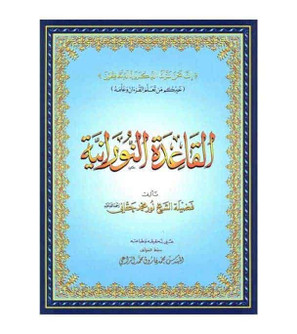
Arabic letter recognition, simple reading through a Qaida, first surahs memorized with basic meaning understood.
By eight: reading Arabic script, five to ten surahs memorized, basic meaning of Al-Fatiha and the short surahs known.
Subject 4: Seerah — At This Stage: Story-Based Prophet Introduction
The Prophet as a character the child knows and loves. Simple, vivid stories from his life — his gentleness, his honesty, his love for children, key moments like the first revelation and the Hijrah.
No complex political history. Stories.
Subject 5: Akhlaq (Character) — At This Stage: One Virtue at a Time
Monthly virtue focus: honesty this month, generosity next month, patience after that. Simple hadith connecting each virtue to the Prophet's example.
Daily Time Investment:
30-45 minutes total, broken into small sessions. Qur'an 15 minutes, Islamic studies 15-20 minutes. Keep it joyful and light.
Fatima shared: "My biggest regret from my oldest child's early years is that I treated Islamic studies like school — too serious, too much sitting, too much 'tell me what I just said.' With my second child I changed: we sang, we acted out stories, we drew pictures. She learned twice as much in half the time and never once complained about Islamic studies time. The content should be serious. The delivery at this age must be playful."
Stage 2: The Building Years (Ages 9-12)
Curriculum Goal for This Stage:
Real understanding. Not just knowing what, but knowing why. Beginning to internalize Islamic values as personal, not just as parental rules.
Subject 1: Aqeedah — At This Stage: The Six Pillars of Iman in Depth
Belief in Allah (tawheed at a meaningful level), angels, scriptures, prophets, the Last Day, and divine decree.
Each pillar gets real attention — not just "we believe in angels" but what angels are, what they do, what the Qur'an says about them, why this belief matters.
Specific Topics:
- Tawheed and its three categories (rububiyyah, uluhiyyah, al-asma' was-sifat) — introduced simply but genuinely
- The 99 Names — not just memorized but understood and applied
- The Last Day — what happens, why it matters for daily choices
- Qadar — basic understanding of divine decree without the complex theological debates
Subject 2: Ibadah (Worship) — At This Stage: Full Salah Plus Supporting Practices
Salah fully learned and practiced with understanding — what each phrase means, why each movement exists. Wudu completely mastered. Beginning instruction on fasting (full Ramadan fasting from around 10-12 depending on physical readiness).
Zakat introduced conceptually — understanding the obligation, the wisdom, the calculation method. Not yet performing it (no independent wealth) but understanding it.
Hajj studied conceptually — every ritual, every meaning, its connection to Ibrahim's story.
Subject 3: Qur'an — At This Stage: Reading With Tajweed + Expanding Memorization + Beginning Comprehension
By twelve: reading Qur'an fluently with basic tajweed, 10-15 surahs memorized solidly, beginning word-by-word comprehension of memorized surahs, basic Arabic vocabulary building (top 100-200 Quranic words).
Subject 4: Seerah — At This Stage: Full Narrative Chronology
Complete Prophet's life, beginning to end, with historical context. Not just stories but events — the Makkan period, the Hijrah, the early battles, the treaties, the Conquest of Makkah, the Farewell Hajj.
The companions introduced as real people with real characters and real contributions.
Subject 5: Hadith — At This Stage: Core Hadith Collection
Systematic introduction of the 40 Hadith of Imam Nawawi — memorization of selected hadith, discussion of their implications, application to current situations.
One hadith per week, discussed genuinely, is 40+ hadith by the end of the stage.
Subject 6: Akhlaq — At This Stage: Character in Real Scenarios
Moving beyond simple virtue introduction to real ethical reasoning. "What does Islam say about...?" applied to actual situations the child faces — peer pressure, social media (if applicable), academic integrity, conflict with siblings or friends.
Daily Time Investment:
45-60 minutes, five days per week. More structured. Mix of reading, discussion, and Qur'an practice.
Ahmed told me: "The seerah chronology at this age was the most transformative subject for my daughter. When she understood the Makkan persecution — that real people suffered real things for this faith — it stopped being 'my parents' religion' and started being 'my faith that people sacrificed for.' That shift happened around age ten. The chronological seerah was what produced it."
Stage 3: The Deepening Years (Ages 13-16)
Curriculum Goal for This Stage:
Real Islamic literacy. Not just knowing Islamic facts but being able to think Islamically — to reason from evidence, follow scholarly argument, and engage serious questions about the faith with knowledge and confidence.
Subject 1: Aqeedah — At This Stage: Classical Texts and Theological Reasoning
Introduction to classical Sunni aqeedah texts, starting with accessible summaries of works like Aqeedah Al-Wasitiyah of Ibn Taymiyyah or Al-Aqeedah Al-Tahawiyyah — not full independent study, but guided introduction to how classical scholars systematized belief.
Engaging seriously with: Why does Islam say what it says? What are the proofs? How do we know? What did scholars argue and why?
This is also the stage for respectfully engaging with questions and doubts — not dismissing them, but addressing them with real knowledge.
Subject 2: Fiqh — At This Stage: The Why of Islamic Law
Moving beyond "what do we do" to "how do scholars derive what we do." Introduction to usul al-fiqh basics — how Qur'an, Sunnah, ijma', and qiyas work as sources of law. Introduction to the four madhabs and how they differ and why.
Specific fiqh topics developed deeply: purification, prayer, fasting, halal/haram in daily life, interactions with non-Muslims, family relationships.
Subject 3: Qur'an — At This Stage: Tafsir and Grammar
Regular tafsir study — working through shorter surahs with classical commentary. Beginning formal Arabic grammar study (Nahw basics). Word-by-word analysis of Quranic passages becoming a regular practice.
By sixteen: 20+ surahs memorized solidly, able to read and understand simple Quranic passages without translation, basic Nahw concepts operational.
Subject 4: Hadith Sciences — At This Stage: Introduction to Hadith Methodology
How do we know a hadith is authentic? Introduction to the sciences of hadith — isnad (chain of transmission), rijal (narrator evaluation), hadith classifications (sahih, hasan, da'if, mawdu'). Not becoming a hadith scholar but understanding why the methodology matters.
Subject 5: Islamic History — At This Stage: Post-Prophetic History
The four rightly-guided caliphs in detail. The early fitna (trials). The Umayyad and Abbasid periods. The Islamic Golden Age. Muslim Spain. The Ottoman Empire. Modern Islamic history including colonialism and its effects.
Real history — including internal conflicts — approached honestly and with the tools to understand complexity.
Subject 6: Contemporary Issues — At This Stage: Applying Faith to Modern Reality
What does Islam say about topics teens actually encounter? Evolution. Secular humanism. Interfaith relationships. Social justice. Technology and halal/haram applications. The relationship between science and faith.
These aren't threats to deflect. They're questions to engage with real Islamic knowledge.
Zaynab shared: "My fifteen-year-old came to me with a friend's challenge about Islam and science. Two years earlier I would have had to deflect or give a superficial answer. At fifteen, after our Stage 3 aqeedah work, he handled it himself — with actual knowledge, not just defensive emotion. That moment was when I realized the curriculum was working."
Stage 4: The Independent Years (Ages 16-18+)
Curriculum Goal for This Stage:
Moving from guided student to independent learner. Beginning to engage with primary Islamic sources directly, with teacher support rather than teacher-dependent learning.
What This Looks Like:
Reading classical texts in Arabic (with dictionary and teacher support). Enrolling in structured online courses from qualified scholars (SeekersGuidance, Bayyinah, Al-Maghrib) in specific areas of interest. Independent hadith study. Beginning-level tafsir in Arabic.
The Shift:
At this stage, you're no longer the primary teacher. You're the support structure for your child's independent pursuit of knowledge. They should be driving the curriculum by now — asking questions you can't fully answer, pursuing topics that fascinate them.
That's the goal. A seventeen-year-old with genuine intellectual curiosity about Islamic knowledge and real tools to pursue it.
The Non-Negotiables: What Must Be In Every Stage
- Qur'an time, every day.
Not negotiable. Not "when we have time." Daily. Even five minutes on busy days. This is the practice that most clearly signals to children that the Qur'an has a different status than other subjects.
- Daily salah, together.
If possible, pray at least one salah daily as a family. Shared practice is more formative than any lesson about the importance of prayer.
- Hadith in daily conversation.
Not formal lessons every time — but making the Prophet's words part of normal family speech. "The Prophet said..." should be heard regularly in your home.
- Connection to the real community.
No curriculum substitutes for jumu'ah, for Islamic events, for meeting practicing Muslims at different life stages. Community is part of the curriculum.
- Your own continued learning.
Nothing communicates the value of Islamic knowledge to children more powerfully than seeing their parents still actively learning. If your children never see you reading Islamic books, attending classes, or asking scholars questions, they'll absorb that Islamic learning stops in adulthood.
Ibrahim told me: "I started learning Arabic alongside my kids when my oldest was twelve. I was terrible at first. He was better than me within six months. But what that showed him — that his father, at forty-two, was still a student of Islam — changed his relationship to Islamic learning entirely. It stopped being something you do as a child and stop as an adult. It became something you do for life."
Realistic Assessment: Where Are You Starting?
Before you plan forward, assess honestly:
Where is your child right now? Can they read Arabic? Do they know the five pillars? Do they understand what they're saying in salah? Have they memorized any surahs with meaning?
The stages above assume specific starting points. If your twelve-year-old is at Stage 1 level — no judgment — start with Stage 1 content delivered in age-appropriate ways and accelerate through the foundation before building up.
A child who starts late but builds properly will outperform a child who was rushed through content without real foundation.
The One-Year Assessment:
At the end of every year, assess three things:
- What can they recite? (Qur'an, hadith, duas)
- What can they explain? (Aqeedah, fiqh reasoning, seerah events)
- What do they practice? (Prayer quality, character, Islamic habits)
Knowledge, articulation, and practice. All three. The curriculum fails if any one of them is chronically absent.
Conclusion: Plant Now, Harvest for a Lifetime
A step-by-step Islamic curriculum doesn't produce results in weeks. It produces them in years.
The five-year-old who learns to love Allah and the Prophet will, at twelve, be ready to understand tawheed deeply. The twelve-year-old who understands tawheed deeply will, at sixteen, engage serious theological questions with confidence. The sixteen-year-old with genuine aqeedah will, as an adult, pass that knowledge to their own children.
That's the compounding return on structured Islamic education.
Plant the roots. Water them consistently. Trust the timeline.
And remember: the goal was never to produce a child who performs well at Islamic studies lessons. The goal is to produce an adult whose Islam is genuinely theirs — understood, internalized, practiced, and passed on.
That adult is built day by day, lesson by lesson, year by year, in your home.
Bismillah. Map out your first year today.