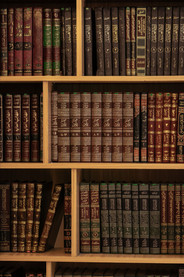
Building an Islamic Library: A Practical Guide for Muslim Homes
I grew up in a house with one Islamic book.
It was a translation of the Quran. Thick. Green cover. Sat on a high shelf in the living room. We touched it with clean hands. We never read it together as a family. It was honored. It was not used.
That was our entire Islamic library.
I did not understand what I was missing until I was in my mid-twenties and walked into the home of a Muslim scholar for the first time. Every wall had shelves. The shelves had sections. Aqeedah here. Seerah there. Children's books within reach of the floor. Hadith collections at eye level for adults. A worn copy of a biography of the Prophet ﷺ on the coffee table, face-down, mid-read.
The house felt different. It felt inhabited by knowledge. It felt like Islam was not stored there — it lived there.
I drove home and looked at my own shelves. And I made a decision.
A home Islamic library is not a luxury. It is not a project for scholars or for the especially religious. It is one of the most practical acts of Islamic parenting and Islamic self-development available to any Muslim family — regardless of how many books they currently own, regardless of how much they currently know.
This guide is about how to build one. Deliberately. Category by category. For every member of the family. With books that are authentically grounded in Sunni scholarship and curated to actually work.
Why a Physical Library Is Different From Searching Online
Before we talk about which books to choose, we need to talk about why books matter at all in an age when every answer is theoretically a search away.
The internet gives you information on demand. That sounds like an advantage. Often it is a problem.
When you search for an Islamic topic online, what you receive is a mixture of everything — authentic scholarship, deviant opinions, politically motivated content, oversimplifications, and outright fabrications — with no reliable way to distinguish between them unless you already know enough to do so. The search engine does not know the difference between a scholar of Ahl al-Sunnah wal-Jama'ah and someone who rejects the Sunnah entirely. The algorithm does not weigh authenticity. It weighs clicks.
A physical library built from curated, trustworthy sources does something the internet cannot do. It removes that layer of risk. When your child reaches for a book from the shelf and asks you a question it raised, you already know that book's content is sound. You do not need to vet it in real time while a child is waiting for an answer.
There is also something the physical book does that a screen cannot replicate. It is present. It sits on the shelf when you are not actively reading it. It signals to every person who enters your home — and to your own children every day — that this knowledge is worth having on hand. That Islam is not something you look up when you need it. It is something you live with.
Dr. Hamza, a Muslim educator who has worked with families and Islamic schools for over eighteen years, described what he notices when he visits Muslim homes: "The single most reliable predictor of a child's sustained engagement with Islam into adulthood is not which Islamic school they attended or how many hifz classes they went to. It is whether Islamic books were present and visibly used in their home. Not displayed. Used. That combination — present and used — is what normalizes Islam as a living intellectual and spiritual tradition rather than an obligation performed elsewhere."
The Principle That Must Come Before the Book List
An Islamic library is not a collection of every Islamic book you can find. It is a curated selection of books that serve specific needs — for specific readers, at specific stages, on specific topics.
Curation is not elitism. It is care.
The Islamic book market contains thousands of titles. Many of them are excellent. Some of them contain theological errors subtle enough to go unnoticed by a casual reader but significant enough to plant confusion that takes years to correct. Some are written from perspectives that deviate from the Sunni mainstream — presenting fringe positions as if they were consensus, or consensus positions as if they were debatable.
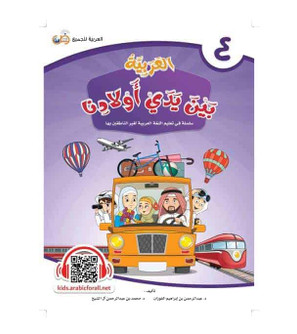
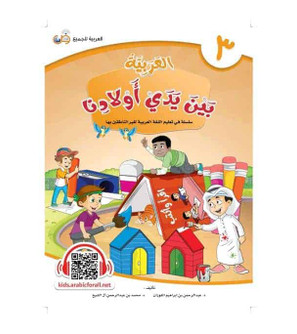
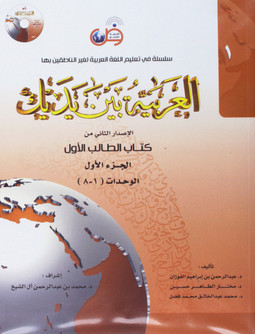
A Muslim family building their home library needs a source they can trust. Not to do their thinking for them — but to do the initial vetting that most families cannot do on their own. Madinah Media exists precisely for this purpose. Madinah Media is an independent Islamic publishing company and distributor committed to offering high-quality Islamic books and media, meticulously devoting time and effort to selecting the finest materials in Islamic education, Prophet stories, Arabic language learning, and Quranic studies — ensuring only the best resources reach the community.
That commitment to quality is not a tagline. It is a functional protection for Sunni Muslim families who want books they can hand to their children, their spouses, their parents, or their non-Muslim neighbors with confidence.
Start there. Build from there.
The First Shelf: Quran
Every Islamic library begins with the Quran. This is not only obvious — it is theological. The Quran is the primary source of everything. Every other book in the library is, in some way, a commentary on it, a development from it, or an application of it.
For a Muslim home, the Quran shelf needs at minimum two things.
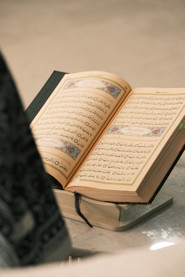
A reliable Arabic Mushaf. One you can read from. One with clear script, clean layout, and a size that is comfortable to hold during regular recitation. Not a decorative Mushaf that stays on the highest shelf. A working Mushaf that gets opened every day.
A trustworthy English translation. For English-speaking Muslim families, a translation that renders the meaning in clear, accurate, modern English is not a concession — it is a necessity. Many Muslims recite the Quran without understanding it. Keeping an accurate translation alongside the Arabic Mushaf means that no member of the family needs to remain in that position.
Madinah Media carries several Quran translations carefully selected for both accuracy and readability. Al-Qur'an: The Guidance for Mankind — a unique translation in contemporary American English that includes the biography of the Prophet ﷺ — is one of the most practically useful options for English-speaking Muslim families. It brings the text close to the reader's actual spoken language without sacrificing fidelity to the Arabic meaning.
Beyond these two basics, a Tafsir resource — an explanation of the Quran's meaning by a qualified scholar — belongs on every serious Islamic library shelf. Even a single-volume accessible Tafsir, engaged slowly and consistently over years, produces a qualitatively different relationship with the Quran than recitation alone ever can.
The Second Shelf: Seerah
The life of the Prophet Muhammad ﷺ is the second most important subject in an Islamic library. Not because of scholarly convention but because of what the Seerah actually is.
The Prophet ﷺ is not only the founder of a religious tradition. He is, for every Muslim, the living demonstration of Islam. His choices, his character, his treatment of people, his response to hardship, his leadership, his worship — all of it is guidance. The Quran tells us: "Indeed in the Messenger of Allah you have an excellent example." (33:21) That example requires knowing his life.
Knowledge about the Prophet Muhammad's biography is known as Seerah — and it is among the most essential subjects a Muslim must study to fully understand their religion.
A home Seerah library should serve different ages simultaneously. Adults need a full, detailed biography that covers the historical context, the political realities, the military campaigns, and the personal dimensions of the Prophet's ﷺ life with scholarly accuracy. Children need accessible, illustrated, narratively engaging accounts that make the Prophet ﷺ feel close and real.
Madinah Media's Seerah section — including titles like "Life of the Prophet Muhammad" and the "Prophet Muhammad for Little Hearts" series — covers both ends of this range. The adult titles address the questions that intelligent, curious Muslims actually have about the Seerah, including the most commonly misrepresented episodes. The children's titles build love before building knowledge — which is the right sequence at the right age.
One Seerah book for adults. One for each child in the age range you are serving. These are the minimum starting points.
The Third Shelf: Aqeedah
Aqeedah is Islamic theology — the foundational beliefs that constitute iman. What a Muslim believes about Allah, about the Prophets, about the Books, about the Angels, about the Last Day, about Qadar. These are not abstract academic questions. They are the framework through which a Muslim understands everything that happens to them and around them.
The word Aqeedah is derived from the word 'aqada, which linguistically means to tie a knot, to fasten or hold firmly. According to scholars, it is the firm religious belief that the heart is fixed on without doubt.
A home aqeedah library serves a specific purpose that no other section can serve: it gives the family a shared theological vocabulary. When a child asks why bad things happen to good people, the parent who has engaged seriously with Islamic aqeedah — with what the scholars have said about Qadar, about trials, about Allah's wisdom — can give a real answer rather than a deflection.
Madinah Media's aqeedah section carries titles grounded in the classical Sunni tradition — Ahl al-Sunnah wal-Jama'ah aqeedah, not the various deviations from it. For a family with no aqeedah books at all, starting with one accessible introduction to Islamic belief and one more developed treatment of a specific aspect — the Names and Attributes of Allah, the Last Day, the reality of the unseen — is enough to begin. The catalog at madinahmedia.com/c/adult-islamic-books organizes these clearly.
The Fourth Shelf: Fiqh
Fiqh is Islamic jurisprudence — the practical rulings that govern how a Muslim acts. Salah. Fasting. Zakat. Marriage. Business dealings. Purification. The daily and yearly rhythms of Islamic practice.
Fiqh is Islamic jurisprudence — knowledge about legal Islamic rulings.
Every Muslim home needs at least one comprehensive, reliable fiqh resource. Not because every family member will read it cover to cover — but because questions arise. A woman wants to know the fiqh of fasting during pregnancy. A teenager wants to understand the conditions of valid wudu. A father is asked by his child whether a particular transaction is halal. These questions deserve real answers from qualified scholarship — not a quick internet search that might return a fringe opinion.
A single well-chosen fiqh manual — selected from a recognized Sunni madhab, clearly written, comprehensively organized — is one of the highest-value additions to any Muslim home library. Madinah Media's fiqh section at madinahmedia.com/c/adult-islamic-books/fiqh-books carries options across madhabs and levels of complexity.
The Fifth Shelf: Hadith
The Hadith literature — the collected sayings, actions, and approvals of the Prophet ﷺ — is the second source of Islamic guidance after the Quran. Every aspect of Islamic practice that is not specified in the Quran is specified through Hadith. Every detail of how the Prophet ﷺ prayed, fasted, treated his family, conducted business, and faced difficulty is preserved in the Hadith collections.
An Islamic home library without Hadith resources is a library missing its second source.
The Hadith catalog at Madinah Media — includes accessible English-language collections and explanations that allow a Muslim family to engage the Prophetic tradition directly. The goal at the home library level is not comprehensive hadith scholarship. It is regular encounter with the Prophet's ﷺ own words — the texture of his character, the specificity of his guidance, the warmth of his humanity.
A collection of forty hadiths. An accessible selection from Sahih Al-Bukhari or Sahih Muslim. A book organized around the Prophet's ﷺ character and manners. Any of these, read and discussed regularly, produces a family that knows the Sunnah not as a list of rules but as a living example.
The Children's Section: The Most Important Investment You Will Make
Here is something most parents underestimate.
The books a child reads between ages four and twelve do not just entertain them. They build the interior world from which that child will understand everything that follows — including their own faith, their own identity, and their own relationship with Islam.
A child who has read engaging, accurate, authentically grounded Islamic books in those years carries something into adolescence that no amount of Sunday school instruction can fully replace. They have a relationship with the Prophet ﷺ built through stories. They know the Companions as real people they have met on pages. They have encountered Islamic values in situations that felt like their own.
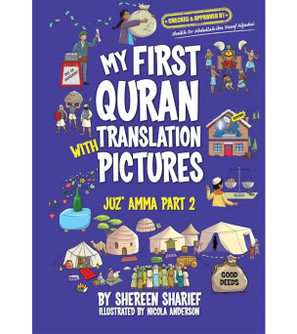
Madinah Media's children's catalog spans Islamic values, Quran stories, Seerah activity books, and illustrated Prophet stories — resources designed to introduce children to Islamic history and values through narratives that engage young readers and build a genuine love for the tradition.
For the youngest children, the "Quran Stories for Little Hearts" series places the Quranic narratives — the stories of the Prophets, the lessons of the ayahs — in a format that four and five-year-olds can receive and love. These are not simplified to meaninglessness. They are simplified to accessibility. The theology is intact. The story is real.
For older children, the "Islamic Values for Children" series draws on the Quran, Hadith, and the life of the Prophet ﷺ to address the values that children actually encounter in their daily lives — honesty, generosity, patience, kindness, courage. Not abstract virtues. Lived ones.
For families who want a structured children's Islamic curriculum alongside the library, Madinah Media's kindergarten curriculum — spanning four volumes covering Islamic History, Seerah of the Prophet ﷺ, Quranic Studies, and Fiqh and Ibadah — gives the children's section of the home library a spine that develops year by year.
Fatima, a mother of three who began building her children's Islamic library when her eldest was two, described what happened over the following decade: "By the time my daughter was ten, she had read so many Seerah stories, so many Companion stories, so many stories about Islamic values — that when she started formal Islamic studies, everything clicked into place. She already had the people in her mind. She already had the feelings. The formal study just gave structure to something that was already there. The books built it. I just kept them coming."
The Women's Section: Not an Afterthought
A Sunni Muslim home library that does not include books written for and about Muslim women is a library with a gap.
Not because women need a separate and lesser category. Because the questions Muslim women face — about their faith, their role, their rights, their spirituality, their specific Islamic obligations — deserve books that engage those questions directly, from the full depth of the Sunni scholarly tradition.
The women's section at Madinah Media — holds resources that approach these questions authentically. Not defensively. Not in reaction to criticism from outside. From the confidence of a tradition that has, across fourteen centuries, produced extraordinary Muslim women scholars, teachers, leaders, and figures of immense spiritual authority.
Every Muslim home library should have at least one book in this section. Not only for the women in the house. For everyone.
How to Actually Build It: The Practical Path
The Islamic library is not built in a weekend. It is built over years — one book at a time, one section at a time, following the needs of the family as it grows.
Start with what is missing most urgently. If the children have no Islamic books, start there. If the adults have never engaged seriously with aqeedah, start there. If there is no reliable Seerah book in the house, that is the first purchase.
Set a rhythm. One new Islamic book per month is twelve books per year. In five years, that is sixty books — enough to build a genuinely substantial library across all the major sections. One book per month is not an overwhelming commitment. It is a sustainable one.
Use the library together. Read aloud at bedtime. Discuss what a family member read at dinner. Ask a child what they learned from their latest book. Make the library a living part of the household rather than a display on a shelf.
And use a trusted source. Madinah Media's full catalog — organized by subject, age, and level — is a reliable starting point for every section described in this guide. The curation has already been done. The vetting has already been done. What remains is your choice of where to begin.
Umm Abdullah, who built her family's Islamic library over eight years from a single Quran translation to well over a hundred volumes, described what the process taught her: "The library grew with us. When my children were young, we needed children's books. When they became teenagers, we needed books that answered harder questions. When I went through a difficult period, I needed books on trials and patience. The library was always slightly ahead of where we were — always had something we hadn't read yet. That is what a library is for. It is not a record of what you know. It is a map of where you are going."
That map is worth building.
Begin today. Begin with one shelf. Begin with one book.
Bismillah.