
Best Islamic Homeschool Curriculum
You decided to homeschool. You believed in it. You knew it would let you raise your children close to the deen, close to you, close to the Qur'an.
Then you opened your laptop to find a curriculum.
Forty browser tabs later, you're more confused than when you started.
One curriculum only covers ages 4-7. Another is $350 with no physical books. Another is "comprehensive" but the Arabic section is an afterthought — a few worksheets bolted onto a secular framework. Another looks beautiful on Instagram but has no real teacher's guide, no sequencing, no way to know if your child is actually on track.
I went through exactly this search two years ago. I remember sitting at my kitchen table at midnight, comparing PDFs, getting angrier by the hour.
"Why is this so hard?" I asked my husband. "We just want something that teaches our kids Qur'an, Arabic, and Islamic studies properly. Together. In order. Without me reinventing the wheel every semester."
A friend who'd been homeschooling for six years longer than me said one sentence that ended my search:
"Stop looking for ten different things. Look for one publisher who built it as a system, not as separate products."
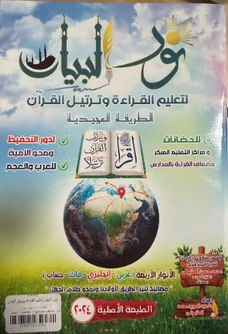
That's when she introduced me to Madinah Media and the Noor Series, published by Manarah Publishing.
Let me walk you through what I found. Honestly. Including what makes it different from the scattered options most of us start with.
The Real Problem With Most Islamic Homeschool Options
The Scattered Approach:
Most families end up with:
- A secular math and English curriculum (Christian-based, often, because that's what's available)
- A separate Qur'an memorization app
- A separate Arabic workbook bought on a whim
- A separate Islamic studies series, maybe from a different country, maybe in a different methodology
- Random YouTube videos to fill gaps
None of these talk to each other. None build on each other. Your child learns Arabic vocabulary in one book that never appears in their Qur'an lessons. Their Islamic studies curriculum references stories they haven't covered yet.
The Hidden Cost:
Every time you switch curricula or patch together resources, your child has to readjust. New methodology. New vocabulary presentation. New pacing. New expectations.
That readjustment costs time. It costs momentum. And over years of homeschooling, it adds up to real learning loss.
Dr. Ahmed, who has advised homeschool families for over a decade, put it simply: "Parents think more resources mean more thoroughness. Usually it means more confusion. A child learning from one coherent system for five years outperforms a child bounced between seven different programs every single time."
Why the Noor Series Changed My Approach
One System. Three Pillars.
What stood out to me about Manarah Publishing's Noor Series — distributed through Madinah Media — is that it isn't one subject pretending to be comprehensive. It's three connected lines, built to work together:
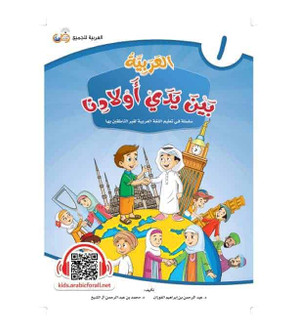
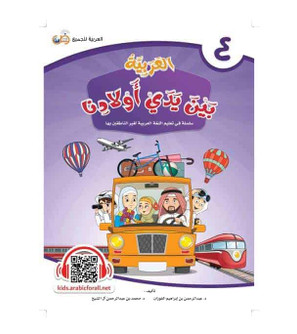
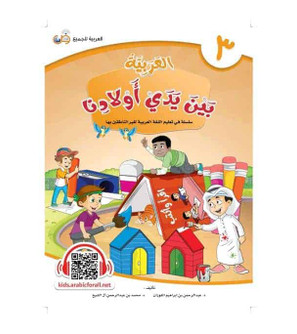
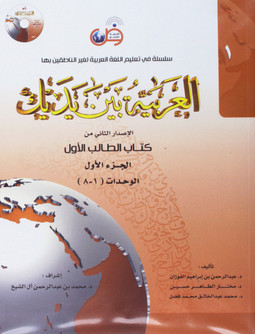
- Noor Al-Arabiyyah (نور العربية) — The Arabic language curriculum.
- Noor Al-Islam (نور الإسلام) — The Islamic studies curriculum.
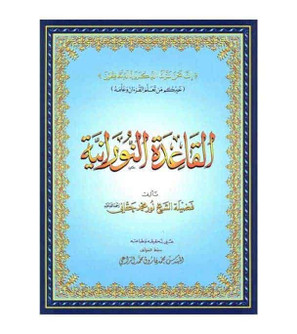
- Noor Al-Quran (نور القرآن) — The Qur'an and tajweed curriculum.
Same publisher. Same age-banding. Same pedagogical philosophy across all three. Your child's Arabic vocabulary connects to their Qur'an reading. Their Islamic studies stories connect to verses they're learning to recite. It's designed as one coherent education, not three unrelated subjects sharing a shelf.
That's the difference between assembling furniture from five different brands and buying a matching set.
Fatima, a mother of three who switched her family to the Noor Series last year, told me: "I used to dread Mondays because Monday meant figuring out which book covered what. Now my kids open Noor Al-Islam and I know exactly where it connects to their Noor Al-Arabiyyah lesson that same week. The planning time I got back was honestly the biggest gift."
A Closer Look at Each Pillar
Noor Al-Arabiyyah: Arabic Built on Real Standards
Not Just "Some Arabic Worksheets":
This is what initially convinced me. Noor Al-Arabiyyah isn't a homemade workbook. It's built with reference to recognized international frameworks for language acquisition — the kind of standards used in serious second-language programs — while staying rooted in Arab and Islamic culture throughout.
That matters because Arabic for a non-native speaker's child is genuinely difficult to sequence well. Too many homeschool Arabic resources either move too fast (overwhelming a five-year-old with grammar) or stay too shallow (years of "alphabet songs" with no real progression toward reading the Qur'an independently).
The Progression:
Noor Al-Arabiyyah moves your child from absolute beginner — letter recognition, simple words — through reading, writing, vocabulary, and comprehension, integrated together rather than taught as separate disconnected skills.
That integration is the part most other Arabic curricula get wrong. They'll drill vocabulary one day, grammar the next, with no thread connecting them. Noor Al-Arabiyyah keeps the threads woven from day one.
Realistic Long-Term View:
If you're starting young, here's roughly what the journey looks like:
Year 1: Letters, foundational vocabulary, reading basics, simple Islamic phrases.
Years 2-3: Simple sentences, foundational grammar, vocabulary growing toward 300-500 words, increasing exposure to Qur'anic vocabulary specifically.
Years 4-5: More complex grammar, exposure to classical-style texts, vocabulary toward 600-1,000 words.
Year 6 and beyond: Increasing independence — reading with less support, deeper Qur'anic analysis, a foundation strong enough to eventually approach classical texts.
It's a long build. It is not a 30-day promise. But it's a build that actually arrives somewhere solid.
Ahmed, whose eight-year-old has used the series for over a year, shared: "She does her Arabic lesson for about thirty minutes, five days a week. By the end of the year she was reading Arabic text fluently and recognized well over 300 words. It wasn't the length of each session. It was that we never skipped a day for more than a week at a time. Consistency did the work."
Noor Al-Islam: Islamic Studies That Builds Year Over Year
Starting From KG-1:
Noor Al-Islam begins at the earliest stages — Kindergarten level — and continues building grade by grade. This isn't a single workbook you outgrow in a semester. It's a multi-year sequence designed the way a real school subject is designed: concepts that return, deepen, and build on what came before.
What It Actually Covers:
Across the grades, Noor Al-Islam works through the core of Islamic studies a child needs: aqeedah basics appropriate for their age, the pillars of Islam and Iman, stories of the prophets, character and akhlaq, and foundational fiqh — all presented in a structured, grade-appropriate textbook format rather than scattered worksheets.
Why Grade-Leveling Matters Here:
A five-year-old and a ten-year-old need fundamentally different explanations of the same concept. Tawakkul explained to a kindergartner looks nothing like tawakkul explained to a sixth grader capable of real reflection.
Because Noor Al-Islam is leveled by grade from KG-1 onward, you're not stuck improvising that adjustment yourself every single year. The curriculum has already done that work.
Zaynab, homeschooling two children four years apart in age, told me: "My older one is doing the upper-grade Noor Al-Islam book and my younger one is on the Kindergarten level. Same series, same values, same voice — but each one is actually speaking to where my child is developmentally. I'm not rewriting lessons to dumb them down or build them up. The grade-leveling already did that."
Noor Al-Quran: Reading the Qur'an With Real Tajweed Foundations
Built Alongside the Other Two:
Noor Al-Quran handles what so many families struggle to find well-sequenced: a structured path into reading the Qur'an correctly, with tajweed rules introduced progressively rather than dumped on a child all at once.
The Sequencing Problem It Solves:
Plenty of Qur'an-reading resources jump straight into long surahs with complex tajweed rules before a child has the foundational reading fluency to handle them. The result is frustration, slow progress, and kids who associate Qur'an time with struggle instead of connection.
Noor Al-Quran, organized in levels, builds reading ability first and folds in tajweed rules — including topics like madd (elongation) — at a pace that matches what the student can actually absorb.
Why This Connects Back to the Other Two:
Because your child is simultaneously building Arabic literacy through Noor Al-Arabiyyah, the letters and sounds they're decoding in Qur'an class aren't foreign — they're reinforcing what's happening in their Arabic lesson the same week. That overlap is what makes a "system" actually function as a system, instead of three subjects that happen to share a shelf.
Ibrahim, a father using all three Noor lines with his children, explained it this way: "My son was sounding out Arabic letters in his Noor Al-Arabiyyah workbook on Tuesday, and by Thursday's Noor Al-Quran lesson, those same letters showed up in the surah he was learning. He looked up and said, 'I know this one!' That cross-connection is the entire reason we stuck with one publisher instead of three different ones."
Who Madinah Media's Noor Series Is Actually For
Homeschool Families Who Want Coherence:
If you're tired of stitching together five sources and want one structured pathway from KG through the upper grades, this is built for exactly that situation.
Schools and Islamic Centers Too:
It's worth knowing this isn't homeschool-only material repurposed. Manarah Publishing also supplies Islamic schools and Islamic centers directly, with school program discounts available through Madinah Media for institutions adopting the curriculum at scale. That's a meaningful signal — material designed and tested for classroom delivery tends to have more rigorous internal sequencing than material built only for casual home use.
Families With Multiple Children at Different Levels:
Because each line is graded from the earliest years upward, families with children spanning several grades can stay on one coherent system instead of needing an entirely different curriculum per child's age bracket.
Not a Perfect Fit For Everyone:
If your family is purely focused on a specific dialect for daily conversational Arabic rather than Qur'anic and classical Fusha, you may want a supplementary dialect resource alongside Noor Al-Arabiyyah, since its foundation — appropriately for Islamic studies purposes — centers on Modern Standard and Qur'anic-oriented Arabic.
Practical Tips for Starting With the Noor Series
- Start at the Right Level, Not the "Correct" Age:
Don't assume your eight-year-old must start at the eight-year-old's typical grade level. If they're new to Arabic entirely, starting from the foundational level — even if it feels "behind" — builds the base that makes everything afterward easier.
- Keep the Three Lines Moving Together:
The biggest advantage of this system disappears if you do Noor Al-Islam three days a week and only touch Noor Al-Quran once a month. Try to give each pillar regular, even if brief, weekly time so the natural overlaps between them actually happen.
- Don't Rush the Early Grades:
The KG and early grade levels in Noor Al-Islam and the foundational books in Noor Al-Arabiyyah are intentionally gentle. That's not wasted time — it's the base the later, harder material depends on.
- Use the Teacher's Guides:
Manarah Publishing provides teacher's guides alongside the student materials. Even as a homeschooling parent without formal teaching training, leaning on these guides removes a huge amount of guesswork about pacing and assessment.
- Check In With the School Program Even as a Homeschooler:
Madinah Media's school program discounts are generally aimed at institutions, but it's worth reaching out if you're part of a homeschool co-op — co-ops sometimes qualify for the same bulk arrangements as small schools.
What This Means for the "Best Curriculum" Question
There's No Single Universally "Best" Curriculum:
Every family's situation differs — language background, the children's ages, how many hours you realistically have each day, your own comfort teaching Arabic or fiqh.
But There Is a Best Approach:
Coherence beats fragmentation. A curriculum built as one connected system — where Arabic vocabulary, Islamic studies content, and Qur'an reading reinforce each other — will almost always outperform five disconnected resources purchased separately, no matter how good each individual piece looks on its own.
That's the case for the Noor Series from Manarah Publishing, available through Madinah Media: not because it's flawless or because every family needs exactly this, but because it solves the actual problem most Islamic homeschoolers run into first — the absence of one coherent pathway from the earliest years onward.
Omar summed it up after switching his family over: "I'm not claiming this fixed everything. Homeschooling is still hard. My kids still have off days. But I stopped lying awake wondering if the pieces I'd cobbled together were actually adding up to something. Now I know they're moving through one built pathway. That peace of mind was worth more than I expected."
Conclusion: Build the System, Don't Just Collect the Pieces
The families who thrive in Islamic homeschooling long-term aren't the ones with the most resources. They're the ones with the clearest pathway.
What to Look For, Whatever You Choose:
- Does it connect Arabic, Qur'an, and Islamic studies, or are they isolated?
- Does it grow with your child across multiple years, or will you outgrow it in months?
- Is it built with real pedagogical structure, or assembled from whatever was available?
- Does it come with guidance for you as the teacher, not just content for the student?
The Noor Series — Noor Al-Arabiyyah, Noor Al-Islam, and Noor Al-Quran, from Manarah Publishing, available through Madinah Media — was built to answer all four of those questions at once. That's what made it the end of my own midnight search two years ago.
Your children deserve an education that builds on itself year after year. Not five disconnected subjects sharing a shelf, but one coherent path toward loving the Qur'an, understanding its language, and living its values.
That's worth the search.
Bismillah. Start building.