Tajweed Rules for Kids
Your eight-year-old reads a verse. Fast. Choppy. Skipping the elongations. Merging letters that should stay separate.
You correct her. Again. For the fourth time that lesson.
Her shoulders drop. Her voice gets quieter. The next verse comes out even more hesitant than before — she's now more worried about getting it wrong than actually reading.
You recognize the moment. You've been here before, with your older son too. Tajweed lessons that started with excitement and slowly turned into tension, correction after correction, until Qur'an time felt less like connection and more like a test neither of you was enjoying.
I lived this exact cycle for almost two years before something shifted.
A Qur'an teacher who'd taught children for over twenty years watched me correct my daughter mid-lesson and gently stopped me. "You're teaching the rule. You're not teaching her to love the rule. Those are different jobs, and you can't skip straight to the first one."
That sentence rearranged how I approached tajweed with my kids entirely.
Let me share what actually changed — both the specific rules kids need to learn, and the approach that makes those rules stick without crushing their love for reciting in the first place.
Why Tajweed Matters — Even for Young Children
It's Not Just "Extra" Correctness:
Tajweed isn't decorative polish added onto correct Qur'an reading. It IS correct Qur'an reading. Mispronouncing certain letters, skipping elongations, or merging sounds that should stay distinct can genuinely change a word's meaning in some cases.
The Prophet's Own Standard:
The Qur'an itself commands: "And recite the Qur'an with measured, beautiful recitation." (Qur'an 73:4) Tajweed isn't a later scholarly addition — its core principles trace directly back to how the Prophet himself recited, as preserved and transmitted by his companions.
Why Start Young:
Children's mouths, tongues, and ears are remarkably adaptable at young ages — they pick up correct articulation faster and more naturally than adults relearning old habits later. A child who learns correct tajweed habits early rarely needs to "unlearn" anything as they grow.
Dr. Ahmed told me: "I've taught both children and adults. Adults often spend months trying to retrain a tongue that's spent decades pronouncing a letter incorrectly. Children, taught correctly from the start, simply never develop the wrong habit in the first place. That's the real argument for starting tajweed early — not pressure, just opportunity."
The Core Rules, Explained the Way Kids Actually Understand Them
A Different Teaching Order Than Adult Textbooks:
Adult tajweed books often move systematically through every rule in technical sequence. For children, a more intuitive, story-and-sound-based order works better — starting with what their ears can already distinguish, then building vocabulary for what they're already sensing.
Rule 1: Makharij Al-Huruf (Where Letters Come From)
The Kid-Friendly Explanation:
"Every letter has its own special home in your mouth or throat. Some live way back near your throat. Some live right at your lips. Some live on the tip of your tongue."
How to Teach It Playfully:
Turn it into a game. "Touch your throat — that's where 'qaf' and 'kha' live. Touch your lips — that's where 'ba' and 'meem' live." Physical, tactile learning works far better for young children than abstract description.
The Letters That Need Special Attention:
Arabic has several letters with no equivalent sound in English — 'ayn (ع), ha (ح), qaf (ق), dhad (ض) among them. These deserve extra playful practice time, since children won't have heard these sounds anywhere else in their daily language.
A Simple Practice Game:
"Animal sounds" — assign each tricky letter an animal or object sound it resembles, helping children's mouths find the right position through imitation rather than technical instruction alone.
Fatima shared: "My son could not get 'ayn right for months. Then his teacher told him to imagine he was a goat — that deep, throaty 'eh' sound goats make is shockingly close to 'ayn.' He giggled every time, made the goat sound, and somehow his mouth found the right position. Sometimes silly works better than serious."
Rule 2: Madd (Elongation)
The Kid-Friendly Explanation:
"Some letters get stretched out, like pulling on a rubber band, while others stay short and quick."
The Basic Counts to Start With:
- Natural madd (madd tabi'i): stretched for 2 counts — the most fundamental, appearing constantly
- Connected madd (madd muttasil) and separated madd (madd munfasil): stretched longer, typically 4-5 counts
- Necessary madd (madd lazim): stretched the longest, 6 counts
How to Teach Counting:
Use claps or finger taps. "Two claps for this one. Six claps for this one." The physical counting rhythm helps children internalize duration far better than verbal explanation of "counts" as an abstract concept.
Why This Matters Practically:
Rushing through elongations is one of the most common mistakes children make, especially as their reading speed increases with confidence. Catching this early prevents a habit that becomes much harder to correct once a child reads quickly and fluently but incorrectly.
Rule 3: Noon Sakinah and Tanween Rules
The Kid-Friendly Explanation:
"When you see a quiet 'noon' or those two little marks at the end of a word, what happens next depends entirely on which letter comes right after it. Sometimes it stays clear. Sometimes it hides. Sometimes it changes into a different letter completely. Sometimes it blends in."
The Four Categories, Simplified:
Izhar (clarity): The noon sound stays fully clear and pronounced — happens before throat letters.
Idgham (merging): The noon sound disappears, blending completely into the next letter — happens before specific letters like "ya," "noon," "meem," "waw," "lam," "ra."
Iqlab (flipping): The noon sound actually changes into a "meem" sound — happens specifically before the letter "ba."
Ikhfa (hiding): The noon sound becomes soft and nasal, partially hidden — happens before most remaining letters.
How to Teach This Without Overwhelming:
Don't introduce all four categories in one sitting. Spread this across weeks, mastering one category fully — with lots of practice examples — before introducing the next. Trying to teach all four rules in a single lesson is one of the most common ways this topic becomes overwhelming for young learners.
A Memory Trick That Works:
Create or find existing mnemonic songs for each category's trigger letters. Many tajweed teachers have developed simple melodies listing exactly which letters trigger izhar, idgham, iqlab, and ikhfa — children memorize these letter groups far more easily through song than through memorized lists.
Ahmed told me: "We spent an entire month on just izhar before moving to idgham. My daughter's teacher insisted on this pacing even though I worried we were moving too slowly. By the time we got to ikhfa, the previous three rules were so automatic that the fourth one clicked almost immediately. Slow and solid beat fast and shaky every time."
Rule 4: Qalqalah (The Bouncing Letters)
The Kid-Friendly Explanation:
"Five special letters — qaf, ta, ba, jeem, dal — have a little bounce or echo to them when they appear without a vowel, especially at the end of a word."
A Helpful Memory Phrase:
The Arabic phrase "Qutb Jad" contains exactly these five letters (ق ط ب ج د), serving as a quick memory anchor children can recall instantly.
How to Teach the Bounce:
Physically demonstrate it — bounce a small ball on the syllable while pronouncing it, letting children feel the rhythmic "echo" quality through a physical action paired with the sound.
Why Kids Often Miss This Rule:
Qalqalah is subtle — it's a quality added to a letter rather than a completely new sound, making it easy for children (and honestly, many adults) to recite the letter flatly without it. Regular, gentle reminders work better than frustration when this one doesn't stick immediately.
Rule 5: Basic Stopping Rules (Waqf)
The Kid-Friendly Explanation:
"The little marks and symbols scattered through the Qur'an's pages tell you where it's okay to pause for a breath, where you really should pause, and where you should definitely keep going without stopping."
The Most Common Symbols to Start With:
- A small circle-like mark: generally okay to stop here if needed
- "La" written small: don't stop here — this connects to what comes next
- "Meem" symbol: a required, necessary stop
Why This Matters for Young Readers:
Children naturally need to pause for breath more often than adult reciters. Teaching them WHERE it's acceptable to pause prevents both incorrect mid-word stopping (which can distort meaning) and unnecessary anxiety about needing to finish an entire long verse in one breath.
Zaynab shared: "My son used to panic when he ran out of breath mid-verse, because he thought stopping anywhere was 'wrong.' Once his teacher showed him the stopping symbols and explained which spots were safe pause points, his whole relationship with longer verses relaxed. He wasn't holding his breath with anxiety anymore — he knew exactly where he was allowed to breathe."
The Teaching Philosophy That Actually Works
Lesson 1: Correct With Warmth, Not Just Accuracy
The Old Approach (What Doesn't Work):
"No, that's wrong. Say it again." Repeated flatly, focused purely on the error, creates exactly the anxious hesitation I described at the start of this article.
The Better Approach:
"Almost! Let's find where that letter lives in your mouth together." Framing correction as a shared discovery rather than a failure announcement keeps children engaged rather than defensive.
Lesson 2: Celebrate Effort, Not Just Perfect Recitation
Praise the attempt at a difficult letter even when it's not yet perfect: "I can hear you really trying to get that 'ayn' from deep in your throat — that's exactly the right place to try, even though it's not quite there yet."
Lesson 3: Short, Frequent Practice Beats Long, Rare Sessions
Ten focused minutes daily builds tajweed habits far more effectively than one exhausting hour-long session once a week. Children's attention spans simply cannot sustain the intense, repetitive practice tajweed correction requires for longer stretches without diminishing returns.
Lesson 4: Use Recordings as a Patient Teacher That Never Gets Frustrated
Recordings of qualified reciters — particularly those specifically produced for children's learning, with slower, clearer pacing — let children hear correct pronunciation as many times as needed without a parent's patience wearing thin through repeated correction.
Lesson 5: Separate "Reading Time" From "Tajweed Correction Time" Sometimes
Not every single Qur'an reading session needs to become a tajweed lesson. Occasionally, let your child simply read for the joy of reading — connection without correction — preserving their love for the activity itself alongside the more technical correction sessions.
Ibrahim told me: "I started doing two different kinds of sessions with my kids. Three days a week: focused tajweed practice, slow, lots of correction, very deliberate. Two days a week: just reading together, no correction at all, just enjoying the recitation. That balance saved our Qur'an time. They stopped dreading it, because they knew not every session was going to be a correction marathon."
Age-Appropriate Pacing
Ages 4-6:
Focus almost entirely on listening and basic letter sounds. Formal tajweed rules (madd counting, noon sakinah categories) are typically too abstract for this age. Build the ear first — correct pronunciation modeling through constant exposure — before introducing rule terminology.
Ages 7-9:
Begin introducing basic rules explicitly — makharij, simple madd, qalqalah — using the playful, physical teaching methods described above. This is also a strong age to begin Iqra' or Qaida-based reading instruction alongside basic tajweed concepts.
Ages 10-12:
Move into the more complex categories — full noon sakinah and tanween rules, meem sakinah rules, the various madd types with their specific counts. Children at this stage can handle the terminology and the logical categorization these rules require.
Ages 13+:
Refine and deepen — working toward genuinely fluent, correct recitation across longer passages, potentially working toward formal ijazah certification if the child shows interest and aptitude, with a qualified teacher guiding that more rigorous path.
Resources That Actually Help
For Younger Children (4-8):
Children's tajweed apps and games designed specifically for early learners, often gamifying letter recognition and basic sound practice through interactive, reward-based formats that hold young attention spans far better than static textbooks.
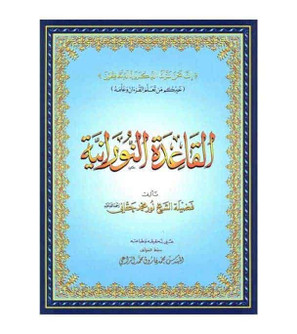
Noorani Qaida or Qaida Baghdadiya:
Still the foundational starting point for reading instruction itself, with basic tajweed concepts introduced naturally within the reading progression.
For Middle Years (9-12):
"Tajweed Rules of the Qur'an" by Kareema Czerepinski — written clearly enough that capable readers in this age range can often follow it directly, particularly with parent or teacher support for the more technical sections.
Color-Coded Mushafs:
Qur'an copies using color-coding to visually mark different tajweed rules (different colors for different madd types, noon sakinah categories, qalqalah letters) give visual learners an immediate, ongoing reference built directly into their daily reading text.
For All Ages:
Recorded recitation specifically by reciters known for clear, measured, beginner-friendly pacing — rather than the faster, more melodically complex styles some professional reciters use — gives children an achievable model to imitate rather than an intimidating one.
Omar shared: "We switched to a color-coded mushaf about a year ago. My daughter started noticing the colors herself, asking 'why is this part green?' before I'd even explained the system fully. The visual cue did half the teaching work for me, just by being consistently present every time she opened the book."
Common Mistakes Parents Make
Mistake 1: Introducing All the Rules at Once
Overwhelm kills motivation faster than almost anything else in tajweed instruction. One rule, mastered thoroughly, before moving to the next.
Mistake 2: Correcting Every Single Error in Real Time
Constant interruption during recitation breaks flow and builds anxiety. Let children finish a verse or passage, then address the two or three most important corrections — not every single imperfection — afterward.
Mistake 3: Treating Tajweed as Separate From Loving the Qur'an
If tajweed practice consistently feels like punishment or tedious technical drilling, divorced from the beauty and meaning of what's being recited, children eventually associate that negative feeling with the Qur'an itself. Keep love and accuracy growing together, not love sacrificed for the sake of accuracy.
Mistake 4: Comparing Siblings or Classmates
"Your sister already mastered this rule" creates resentment and anxiety rather than motivation. Each child's mouth, ear, and pace are different.
Mistake 5: Giving Up on a Difficult Letter Too Quickly
Some letters — particularly 'ayn, ha, dhad — genuinely take longer for certain children to master. Patient, playful, repeated practice over months, not days, is normal and expected, not a sign of failure.
Conclusion: Rules That Serve Love, Not Replace It
Tajweed rules exist to help your child recite the Qur'an the way it was meant to be recited — preserving meaning, honoring the way the Prophet himself recited, connecting your child to fourteen centuries of careful, deliberate transmission.
But the rules only matter if your child still wants to open the Qur'an tomorrow.
The Balance to Hold:
Teach makharij playfully, through physical games and silly sounds. Teach madd through clapping and counting. Teach noon sakinah rules slowly, one category at a time, with songs to help memory. Teach qalqalah through bouncing and rhythm. Teach waqf to relieve breathing anxiety, not create it.
And alongside every single rule: protect the joy. Celebrate effort. Separate pure connection time from technical correction time. Use recordings as patient teachers. Never let the pursuit of perfect tajweed accidentally teach your child that the Qur'an is a source of stress rather than comfort.
The Prophet himself was described as having a recitation "with measured, beautiful tone" — precise, yes, but also beautiful, also moving, also clearly an act of love and connection with Allah, not mechanical technical performance.
That's the standard worth aiming for with your children too. Not perfection overnight. Precision growing steadily, wrapped in patience, protected by joy.
Bismillah. Start with one rule. Make it playful. Let love lead the way.