Hadith Lessons for Kids: Teaching Children to Love the Prophet's Words
Your nine-year-old comes to the dinner table and says something unkind to his younger sister.
You could say: "Be nice to your sister."
Or you could say: "Do you know what the Prophet said? He said: 'None of you truly believes until he loves for his brother what he loves for himself.' How would you want your sister to treat you?"
Same message. Completely different weight.
The first is your instruction. The second is the Prophet's instruction. For a Muslim child who has grown up knowing and loving the Prophet, those are not equal.
That's the power of teaching hadith to children. Not as information to memorize. But as a living guide that speaks directly into the actual moments of their real lives.
I discovered this difference gradually. I had been teaching my son Islamic values through direct instruction — be kind, be honest, be patient — for years with limited lasting effect. He knew the values abstractly. He didn't always live them.
Then we started a simple daily hadith habit. One hadith, most mornings, with a brief conversation about what it meant for him that day. Within weeks, he was quoting hadith to his younger siblings during arguments, at school, and — most surprisingly — to himself when I wasn't in the room.
The Prophet's words had a reach my instructions couldn't match.
Let me show you how to build this into your children's lives — practically, age-appropriately, without it feeling like another homework assignment.
Why Hadith Is So Powerful for Children
The Prophet Is Already Real to Them:
Children who've grown up hearing seerah stories already have an emotional relationship with the Prophet (peace be upon him). They know him. They love him. They cheer for him in battle stories. They feel sad when they hear about his grief.
When a child loves someone, their words carry authority that rules never quite achieve.
Hadith Provide Specific Guidance for Specific Moments:
Hadith are extraordinarily practical. They address eating, sleeping, greeting others, handling anger, treating parents, behaving with siblings, relating to neighbors, studying, spending money.
They don't only address general virtues. They speak to specific, everyday situations that your children navigate right now.
Hadith Form Identity:
A child who memorizes and understands a core set of hadith doesn't just know facts about Islam. They have a framework — a set of reference points — that helps them make decisions independently. "What would the Prophet want me to do here?" becomes a question they can actually answer.
The Prophet Said:
"Leave me with what I've left you. The people before you were destroyed because of their excessive questioning and their disagreement with their prophets. When I command you to do something, do as much of it as you can. When I forbid something for you, stay away from it."
Clarity. Practicality. Directness. These qualities make hadith remarkable teaching material for children at every age.
Dr. Ahmed told me: "Parents sometimes wait until children are older to introduce hadith formally, thinking it's too advanced. But I've seen four-year-olds spontaneously repeat hadith their parents shared at breakfast, two weeks later, in an entirely different situation. Young children are remarkable at absorbing language that carries emotional weight. The Prophet's words carry that weight naturally."
Choosing the Right Hadith by Age
Not All Hadith Are Equal for Teaching Children:
Some hadith are theologically complex — appropriate for advanced study but not for young children's daily formation. Others are so practical and vivid that a five-year-old can grasp them immediately.
Here's how to think about selection by age group:
Ages 3-6: Simple, Sensory, Action-Based
What Works:
Hadith that describe a specific, concrete action with a simple value attached. No abstraction. No multi-part reasoning.
Examples That Work Well:
"Say Bismillah before you eat." — Immediately actionable. Connected to a daily activity.
"The strong person is not the one who wins a wrestling match. The strong person is the one who controls himself when he is angry." — Vivid image (wrestling), simple comparison.
"Smiling at your brother is charity." — Single sentence. Concrete action. Accessible to even young children.
How to Teach Them:
Tell the hadith as a short story. "The Prophet once said something interesting. He said that smiling at someone is sadaqah — it's like giving charity! So every time you smile at your sister or your neighbor, you're doing something good that Allah rewards."
No quiz. No memorization pressure. Just planting the seed.
Fatima shared: "My four-year-old caught me in a bad mood one afternoon and said, 'Mama, smiling is sadaqah.' I had no idea she'd been listening. But I had mentioned that hadith at breakfast once, three weeks earlier. Something planted itself in her. Moments like that are why I started our morning hadith habit in the first place."
Ages 7-10: Values + Reasoning
What Works:
Hadith that connect a value to a reason — where a child can start to understand not just what the Prophet said but why. Still concrete, but beginning to require some explanation.
Examples That Work Well:
"Actions are by their intentions, and every person will have what they intended." — A seven-year-old can understand that Allah cares about why you do things, not just what you do.
"The best of you are those who are best to their families." — Direct, specific, connected to their daily life.
"Make things easy, not difficult. Give good news, not bad news." — Practical guidance that applies to how they interact with siblings, friends, and classmates right now.
How to Teach Them:
Share the hadith. Then ask one question: "What do you think this means?" Let them answer first. Then build on their answer rather than replacing it.
This age group loves being taken seriously. Asking their opinion before giving yours signals: your thinking matters here.
Ahmed told me: "My son had a disagreement with a classmate and came home upset. Instead of immediately giving advice, I shared the hadith about making things easy and asked what he thought it meant for his situation. He worked most of it out himself. The hadith gave him the framework; the conversation let him apply it. I said almost nothing."
Ages 11-14: Ethical Complexity
What Works:
Hadith that address ethical questions your child is actually navigating — peer pressure, honesty when it's costly, fairness, how to treat people who treat you badly.
Examples That Work Well:
"Verily, what is lawful is clear and what is unlawful is clear, and between the two are ambiguous matters..." — This age is encountering genuinely ambiguous situations and benefits from the Prophet's framework for navigating them.
"One of the signs of the Hour is that dishonesty will be taken lightly." — Older children connect to prophetic warnings about their own era in ways younger children can't yet grasp.
"Whoever believes in Allah and the Last Day, let him speak good or remain silent." — Directly applicable to the social media landscape many children this age are beginning to navigate.
How to Teach Them:
Present the hadith as a discussion prompt rather than a lesson to receive. "The Prophet said this. What do you think it means? Where does it apply in your life right now? What would change if you actually lived by this?"
This age does not respond well to top-down instruction but responds powerfully to being treated as thinking people whose conclusions matter.
Zaynab shared: "My twelve-year-old was struggling with a group chat at school where friends were making fun of a classmate. I didn't tell her what to do. I shared the hadith about speaking good or staying silent and asked what she thought it meant for her situation. She stayed up an hour past her bedtime thinking about it and came to her own decision. She left the chat. Her own reasoning, grounded in the Prophet's words, landed more firmly than any instruction from me could have."
Ages 15+: Depth and Nuance
What Works:
Longer hadith, hadith with complex chains of reasoning, hadith that address adult responsibilities and ethical nuance — including the difficult realities of life.
Examples That Work Well:
The 40 Hadith of Imam Nawawi as a complete set — at this age, working through this classic collection systematically produces remarkable results.
Hadith addressing justice, leadership, accountability, and the relationship between knowledge and action.
Building a Daily Hadith Habit
The Simple Daily Model:
One hadith, once a day, briefly discussed. That's it.
Not a lecture. Not a memorization drill. Not a test. Just: share the hadith, discuss it for two to five minutes, move on.
When to Do It:
Morning (best): At breakfast, before school, the hadith settles into the day's activities.
Mealtime: Natural gathering point; relaxed, conversational atmosphere.
Bedtime: Quieter, more reflective; works especially well for older children.
The Conversation Structure:
- Share the hadith in Arabic (even if they don't understand Arabic yet — hearing the original matters).
- Share the translation.
- Ask: "What do you think this means?"
- Ask: "Where could this apply today?"
- Close — briefly, without excessive elaboration.
Total time: three to five minutes. That's all you need for daily hadith habits to build genuine change over months.
What NOT to Do:
Don't turn it into a lecture. Don't make it the setup for a correction about something they did wrong. Don't demand they memorize it on the spot. Don't keep it so abstract that it never lands in their actual day.
The Memorization Layer (Optional But Valuable):
For children who are ready, formal memorization of a small set of hadith is a worthwhile investment. The 40 Hadith of Imam Nawawi represents centuries of scholarly consensus on the most foundational hadith for a Muslim to know — forty hadith covering core aspects of faith, practice, ethics, and intention.
But memorization is a separate activity from the daily habit, not a replacement for it.
Ibrahim told me: "We memorized the first ten hadith of the Nawawi collection over one year with my kids — slowly, one at a time, properly retained. Now, years later, those ten hadith come up in conversation constantly. They're not just memorized information — they're woven into how my kids think. The daily discussion habit planted them. The memorization made them permanent."
The Best Source Collections for Children
Riyadh al-Salihin (Gardens of the Righteous) by Imam Nawawi:
Imam Nawawi's full hadith collection organized by theme — honesty, kindness, family relationships, worship, social ethics. An incredibly accessible resource because the thematic organization lets you find hadith relevant to whatever your child is currently experiencing.
Bulugh al-Maram by Ibn Hajar Al-Asqalani:
More fiqh-oriented, but extremely useful for older children beginning to connect hadith to practical Islamic rulings.
Al-Adab Al-Mufrad by Imam Bukhari:
Entirely dedicated to hadith on manners and conduct — the Prophet's guidance on daily behavior in extraordinary detail. Remarkable for how concretely it addresses the interpersonal situations children navigate daily.
Children's Hadith Books (Various Publishers):
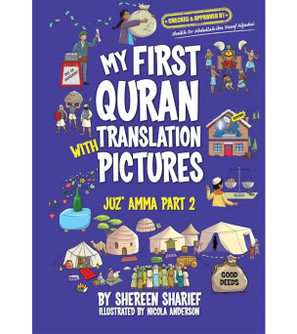
Several publishers have produced illustrated, age-appropriate hadith collections for young children — typically selecting forty or so foundational hadith with clear translation, brief explanation, and child-friendly formatting. These are excellent starting points for families who want a curated, immediately usable resource.
For Digital Learners:
Several authenticated hadith databases (Sunnah.com being the most widely used) allow you to search by theme or keyword, making it practical to find hadith relevant to whatever your child is navigating that week — peer pressure, loss, anger, gratitude, any topic.
Thematic Teaching: Hadith for Real Life Situations
A Different Approach:
Rather than teaching hadith sequentially through a collection, teach them thematically — introducing specific hadith when they're immediately relevant to something your child is experiencing.
Examples:
When your child is angry: "The Prophet was asked: 'Give me advice.' He said: 'Don't become angry.' The man asked several more times and each time the Prophet said: 'Don't become angry.'"
When your child is struggling with dishonesty: "Make sure to be truthful. Truthfulness leads to righteousness and righteousness leads to Paradise."
When your child feels left out or socially excluded: "The likeness of the believers in their mutual love, mercy, and compassion is like a body. When one part of it complains, the rest of the body responds with sleeplessness and fever."
When your child performs a good deed but others don't notice: "Allah does not look at your bodies and your forms, but He looks at your hearts and your deeds."
When your child faces something frightening: "Amazing is the affair of the believer. All of his affair is good. If good comes to him, he is grateful and that is good for him. If harm comes to him, he is patient and that is good for him."
Why This Works So Well:
A hadith encountered at the exact moment it's relevant lands differently than a hadith studied in advance. The emotional context creates a memory hook that lasts. Your child doesn't just know the hadith intellectually — they know it as something that helped them in a real moment.
Omar shared: "My daughter was going through a difficult period with a friend group at school. Every week something new went wrong. Over about three months, I introduced five or six hadith specifically about friendship, fairness, and patience with people. Now, two years later, she quotes those specific hadith when she faces social situations. Not because she memorized them as a lesson. Because she learned them when she needed them."
Common Mistakes to Avoid
Mistake 1: Using Hadith Only as Correction Tools
If your child only ever hears hadith when they've done something wrong, they'll associate the Prophet's words with feeling bad. Teach hadith during neutral and positive moments too — at the dinner table, on a walk, during car rides.
Mistake 2: Demanding Immediate Memorization
Most children won't memorize a hadith on first hearing. That's fine. Regular repetition over weeks, returning to the same hadith across different contexts, builds retention far better than drilling.
Mistake 3: Explaining Before They've Had a Chance to Think
Share the hadith. Then wait. Ask what they think. Let them engage before you explain. Their own processing produces deeper understanding than receiving your explanation passively.
Mistake 4: Teaching Too Many at Once
One hadith, properly understood and connected to real life, is worth more than ten hadith half-absorbed and quickly forgotten. Resist the urge to cover large collections quickly.
Mistake 5: Forgetting the Arabic
Even when children don't yet understand Arabic, hearing hadith in the original Arabic — even just the opening phrase or a key line — builds familiarity and reverence over time. It distinguishes the Prophet's words from your words.
Conclusion: The Prophet's Words in Your Child's Mouth
There is no greater gift you can give your child than the ability to answer life's hard moments with the Prophet's guidance rather than with only their own limited judgment.
That ability doesn't come from a single lesson. It comes from years of consistent, gentle, daily exposure — one hadith at a time, discussed briefly, connected honestly to whatever they're actually living through.
The Simple System:
One hadith. Most mornings. Brief conversation. Applied to the day.
The Realistic Timeline:
Start now. Expect slow, almost invisible change for the first month. Then, somewhere in the second or third month, your child will quote the Prophet back to you in a moment you didn't expect — and you'll understand exactly why this habit was worth building.
The Prophet said: "The example of the one who remembers his Lord and the one who does not is like the example of the living and the dead."
Keep the Prophet's words alive in your home.
Keep them alive in your children.
There is no better legacy you could leave in their hearts.
Bismillah. Start tomorrow morning.