
The Difference Between Tajweed and Tafsir
You're sitting in a Qur'an class. The teacher corrects your pronunciation. "Your meem isn't right. Hold it longer. That's a ghunnah."
Next week, different class. Different teacher. She opens the same verse. "The word here tells us about Allah's mercy. Let's look at what Ibn Kathir says about this..."
Same Qur'an. Two completely different approaches. Two completely different sciences.
One is Tajweed. One is Tafsir.
Many Muslims have spent years in both types of classes without ever stopping to ask: What's the difference? Why do we need both? Which comes first?
I remember being confused about this as a teenager. My Tajweed teacher would stop me mid-recitation to correct a sound. My Islamic studies teacher would read the same verse and talk about history and meaning.
I wanted to ask: Are these the same thing? Are we studying the same book differently? Or is one more important?
I never asked. I wish I had.
Because understanding what each science is — and what it isn't — clarifies your entire approach to studying the Qur'an.
Let me answer the question I never asked.
The Qur'an Has Multiple Dimensions
Before comparing the two sciences, understand this:
The Qur'an is not a one-dimensional text.
It exists on multiple levels simultaneously:
As Sound: It has rules of pronunciation. Specific ways letters are articulated. Specific qualities of sounds. This is the realm of Tajweed.
As Language: It has grammar. Vocabulary. Rhetoric. Literary structure. This is the realm of Arabic linguistics and Nahw.
As Meaning: It has messages. Rulings. Stories. Lessons. Theology. This is the realm of Tafsir.
As Law: It has commands and prohibitions. This is the realm of Fiqh.
Tajweed and Tafsir each address a different dimension of the same text.
Neither is superior. Neither replaces the other. Both are needed.
Dr. Ahmed explained: "I tell my students to imagine the Qur'an as a precious gem. Tajweed teaches you how to hold it — carefully, correctly, reverently. Tafsir teaches you what the gem actually is — its nature, its brilliance, its value. You need both. What good is holding a gem correctly if you don't know what it is? And what good is knowing its value if you drop it on the floor?"
What Is Tajweed?
The Word:
Tajweed (تجويد) comes from the root "j-w-d" meaning to make something good, excellent, or proficient.
Tajweed literally means: to beautify. To make excellent.
The Definition:
Tajweed is the science of reciting the Qur'an with correct pronunciation, following the rules established by the Prophet's recitation as transmitted through generations.
What Tajweed Studies:
- Makharij al-Huruf (Points of Articulation):
Where in the mouth/throat each letter is produced.
The Arabic letter "qaf" comes from deep in the throat. The "ba" is produced by the lips. The "seen" from between the teeth and tongue.
17 articulation points. Each letter has its precise place.
- Sifat al-Huruf (Characteristics of Letters):
Properties each letter carries.
- Is it heavy (tafkhim) or light (tarqiq)?
- Does it have a nasal sound (ghunnah) or not?
- Is it prolonged or stopped?
- Ahkam al-Noon al-Sakinah and Tanwin:
What happens when noon sakinah meets different letters?
- Izhar: pronounce the noon clearly
- Idgham: merge the noon into the next letter
- Iqlab: change the noon to meem
- Ikhfa: hide the noon sound
- Ahkam al-Meem al-Sakinah:
What happens with meem sakinah before different letters?
- Al-Madd (Prolongation):
How long to extend certain vowels. Two counts. Four counts. Six counts.
- Al-Waqf (Stopping):
Where to stop in recitation. How to stop. What happens to the final letter when stopping.
The Goal of Tajweed:
Recite the Qur'an exactly as it was recited by the Prophet (peace be upon him).
Preserve the sounds across generations. Accurately. Without distortion.
The Obligation of Tajweed:
Scholars say: Observing Tajweed in recitation is obligatory (fardh). Deliberate mispronunciation that changes meaning is a sin.
The Prophet said: "One who is skilled in the Qur'an will be with the noble angels, and one who recites the Qur'an and struggles with it, having difficulty, will have a double reward."
Fatima shared: "I studied Tajweed for two years before I understood why. My teacher kept correcting sounds I thought were fine. Then one day she showed me two similar words — same letters, different pronunciation — with completely different meanings. One meant mercy. One meant something shameful. I had been accidentally reciting the wrong one for years. That day Tajweed became urgent for me."
What Is Tafsir?
The Word:
Tafsir (تفسير) comes from the root "f-s-r" meaning to explain, interpret, or clarify.
Tafsir literally means: explanation. Interpretation. Clarification.
The Definition:
Tafsir is the science of interpreting and explaining the meanings of the Qur'an — understanding what Allah intended when He revealed each verse.
What Tafsir Studies:
- The Linguistic Meaning:
What do these words mean in classical Arabic?
Sometimes words have multiple possible meanings. Tafsir explores all of them.
- Asbab al-Nuzul (Reasons for Revelation):
Why was this verse revealed? What was happening?
Context changes meaning profoundly.
- Nasikh and Mansukh (Abrogation):
Does this verse abrogate an earlier ruling? Or was it itself abrogated?
- Relationship Between Verses:
How does this verse connect to what comes before and after?
- Theological Implications:
What does this verse tell us about Allah? About His attributes? About the akhirah?
- Legal Rulings:
What obligations or prohibitions does this verse establish?
- Stories and Historical Context:
If this verse refers to historical events, what are they?
The Methods of Tafsir:
Tafsir bil-Ma'thur (Narration-Based):
Explaining the Qur'an using the Qur'an itself. Or using hadith. Or companion reports.
This is the most respected method. Most classical tafsirs are primarily this type.
Tafsir bil-Ra'y (Opinion-Based):
Using scholarly reasoning, Arabic linguistics, and contextual analysis.
Acceptable when based on solid knowledge and following established principles.
The Great Tafsir Works:
- Tafsir al-Tabari (Ibn Jarir al-Tabari): The oldest comprehensive tafsir. Massive compilation of narrations.
- Tafsir Ibn Kathir: Most widely used today. Clear. Balanced. Sunni mainstream.
- Tafsir al-Baghawi: Concise. Reliable. Good for beginners.
- Tafsir al-Qurtubi: Strong legal focus. Excellent for fiqh derived from Qur'an.
- Fi Zilal al-Qur'an (Sayyid Qutb): More modern. Moving and spiritually impactful.
The Goal of Tafsir:
Understand what Allah meant. So you can implement it, live by it, and be guided by it.
Ahmed told me: "I memorized Surah Al-Baqarah as a teenager. Perfect Tajweed. But I had no idea what half of it meant. One day I opened Ibn Kathir's tafsir for the first surah. I read for six hours. I cried three times. The same words I'd been reciting for years — suddenly they were alive. They had history. Meaning. Context. Lessons for my life. That day I understood: memorization without Tafsir is like having a beautiful book you've never read."
The Key Differences
|
Tajweed |
Tafsir |
|
|
Focus |
Sound and pronunciation |
Meaning and interpretation |
|
Question it answers |
How to say it? |
What does it mean? |
|
Tools used |
Phonetics, articulation rules |
Arabic linguistics, hadith, scholarly analysis |
|
Output |
Correct recitation |
Deep understanding |
|
Relates to |
The words themselves |
The message behind the words |
|
Obligation level |
Fardh (recitation rules) |
Fardh kifayah (communal) |
|
Prerequisites |
Arabic letters, reading ability |
Tajweed, Arabic basics |
What They Share
Despite being different sciences, Tajweed and Tafsir are deeply connected.
Both:
- Serve the same book (the Qur'an)
- Require Arabic knowledge as foundation
- Were developed by Muslim scholars specifically to protect and understand revelation
- Are rooted in the Prophetic tradition
- Aim to connect the believer more deeply to Allah's speech
They Complete Each Other:
Tajweed without Tafsir: You recite beautifully but don't understand what you're saying.
Tafsir without Tajweed: You understand the meaning but recite incorrectly.
Together: You recite correctly and understand deeply. The full experience.
Which Comes First?
The Logical Sequence:
- First: Arabic letters (reading ability)
- Second: Tajweed (correct recitation)
- Third: Basic Arabic (vocabulary and grammar)
- Fourth: Tafsir (meaning and interpretation)
Why Tajweed Comes Before Tafsir:
You must be able to read and recite the Qur'an correctly before you can study its meaning in depth.
Tafsir discussions involve looking at specific words and their forms. You need to recognize those words.
But They Often Run Parallel:
You don't have to finish all Tajweed before touching Tafsir.
Most students study both simultaneously. Tajweed class in the morning. Tafsir class in the evening.
The Danger of Only One:
Only Tajweed, Never Tafsir:
Beautiful recitation. Empty prayer. You say the words without any idea what you're saying to Allah.
This is more common than people realize.
Only Tafsir, Never Tajweed:
Deep understanding. Incorrect recitation. Potentially changing meaning through mispronunciation.
This is less common but happens with people who study Islam in translation-heavy environments.
Zaynab shared: "I was the Tafsir-only person for years. I knew what every verse meant. But my recitation was terrible. A teacher listened to me once and said gently: 'You understand the Qur'an with your mind. Now let your tongue learn to honor it.' That humbled me. I spent a year on pure Tajweed. My salah changed completely."
Common Misconceptions
Misconception 1: "Tajweed is just for reciters and huffadh"
False. Every Muslim who recites Qur'an — in salah, in dua, anywhere — needs basic Tajweed.
You don't need professional-level recitation. But you need to avoid mistakes that change meaning.
Misconception 2: "Tafsir is only for scholars"
Partially true. Complete independent Tafsir requires extensive scholarly training.
But reading and studying established tafsirs (like Ibn Kathir) is accessible to every educated Muslim. Encouraged, even.
Misconception 3: "Tajweed is optional if you understand meaning"
The Prophet recited with Tajweed. Jibril taught him with specific rules of recitation. To say Tajweed is optional is to say we don't need to follow the Prophetic way of recitation.
Misconception 4: "Tafsir interpretations are all valid"
Not all interpretations are equal. Mainstream Sunni scholarship has established reliable interpretations based on proper methodology. Random personal interpretations without knowledge are dangerous.
Misconception 5: "I can do Tafsir myself using just the translation"
Translations are helpful aids. But they're not Tafsir. They don't capture the full linguistic, contextual, and scholarly analysis that proper Tafsir provides.
Ibrahim told me: "I used to read English translations and think I was 'doing Tafsir.' Then I opened an actual tafsir book for just one verse. Ten pages. Hadith. Linguistic analysis. Historical context. Scholarly debate. Connected verses. My translation had given me a one-line explanation. The actual Tafsir gave me a world. I was humbled."
How to Study Both
For Tajweed:
Beginners:
- Find a qualified teacher (online or in-person)
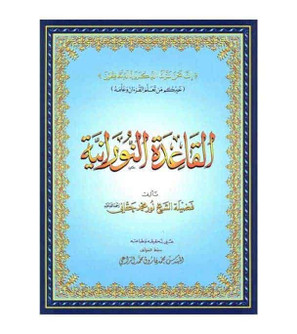
- Noorania or Qaida Baghadiya as starting books
- Record yourself reciting. Listen back. Compare.
- Daily practice (even 15 minutes) over long periods
Intermediate:
- Study the full rules with a qualified teacher
- Get an Ijazah (certification) if possible
- This validates your recitation meets scholarly standards
For Tafsir:
Beginners:
- Start with short surahs you already know
- Use "Tafsir al-Baghawi" or "Easy Tafsir" editions
- Read slowly. Don't rush through.
Intermediate:
- Tafsir Ibn Kathir (widely available in English translation)
- Study with a teacher or reading group
- Keep a notebook for key points
Advanced:
- Tafsir al-Tabari (primarily in Arabic)
- Formal enrollment in Islamic studies program
The Best Approach:
Get a teacher for both. Self-study has limits. A teacher catches errors you can't see.
Online Options:
For Tajweed: Bayyinah Institute, SeekersGuidance, local online teachers For Tafsir: SeekersGuidance, Al-Maghrib Institute, Dar al-Arqam
The Beautiful Synergy
When You Have Both:
You recite a verse in salah. Your tongue says it correctly (Tajweed). Your heart understands what it's saying (Tafsir). Your mind connects the meaning to your life.
That's the full Qur'anic experience.
The Prophet's Companions:
They had both. Naturally. Arabic was their language (so meaning came easily). And they learned proper recitation directly from the Prophet.
We have to work harder because Arabic isn't our mother tongue. But the goal is the same.
The Ultimate Purpose:
Both Tajweed and Tafsir exist for one reason: to deepen your relationship with Allah through His speech.
Tajweed: Your tongue honors His words. Tafsir: Your mind and heart receive His message.
Together: Your whole self — tongue, mind, heart — is engaged with the Qur'an.
That's Qur'anic worship as it was meant to be.
Omar told me: "I spent 20 years doing one or the other. Either beautiful recitation with no understanding. Or studying meaning but reciting poorly. The year I committed to both — Tajweed class Tuesday/Thursday, Tafsir circle Sunday — my relationship with the Qur'an transformed. I started looking forward to salah. Because I was reciting correctly AND understanding what I was saying. Both at once. That's when the Qur'an finally felt like a living conversation."
Conclusion: Two Wings of the Same Bird
Tajweed and Tafsir are two wings of the same bird.
Tajweed is the science of how to SAY the Qur'an. Tafsir is the science of how to UNDERSTAND the Qur'an.
The Differences:
Tajweed focuses on sound, pronunciation, and recitation rules. Tafsir focuses on meaning, interpretation, and explanation.
Tajweed asks: How? Tafsir asks: What does this mean?
The Connection:
Both serve the Qur'an. Both protect its integrity. Both bring you closer to Allah.
The Advice:
Study both. Don't neglect either.
Let your tongue learn to honor Allah's words. Let your mind learn to understand them. Let your heart receive them.
That is the complete Qur'anic experience.
The Prophet recited with perfect Tajweed. He understood perfect meaning. He lived by that understanding.
That's the standard. We follow his footsteps.
One verse at a time. One rule of pronunciation. One page of tafsir.
The Qur'an is a lifetime of study.
Begin.
Bismillah.