
Complete Arabic Learning Roadmap
Most families who want their children to learn Arabic never really start.
They think about it. They intend to. They buy a book or two. They try for a few weeks. Then life takes over and the books sit on the shelf gathering dust.
Or they do start — but without a map. They choose materials randomly. They switch curricula every year when the current one stops producing visible progress. They cover the same ground repeatedly, spinning in place rather than advancing.
Both problems have the same root cause: the absence of a complete roadmap.
A roadmap that shows you where you're starting, where you're going, what the milestones look like along the way, what to do when you get stuck, and how to know when you've genuinely arrived somewhere.
This article is that roadmap.
It's organized around the Noor Al-Arabiyyah series by Manarah Publishing, available through Madinah Media — a curriculum explicitly built on international language-learning standards, designed to take a complete non-Arabic-speaking beginner from their very first Arabic letter to genuine Quranic fluency. Not a patchwork of disconnected resources. One coherent, level-by-level journey.
Let me show you the whole road.
Why You Need a Complete Roadmap Before You Choose a Single Book
The Patchwork Problem:
Most families assembling an Arabic education patch together materials from multiple sources — a letter workbook here, a vocabulary app there, a grammar book from a different publisher, YouTube videos to supplement.
Each resource may be excellent on its own. Together, they often fail. They don't sequence with each other. They cover some skills redundantly and leave others entirely unaddressed. There's no clear line from where you are to where you want to be.
What a Coherent Series Solves:
The Noor Al-Arabiyyah series aims to provide an integrated curriculum that combines form and content, relying on modern teaching techniques while considering the progressive presentation of the scientific material. This helps learners feel comfortable and prepared to face the challenges of learning a new language.
"Integrated curriculum that combines form and content." That phrase captures the key advantage of a complete series over a patchwork approach. Form (grammar, reading mechanics, writing) and content (vocabulary, cultural knowledge, communication) advancing together through a planned sequence.
The Standards Foundation:
The Noor Al-Arabiyyah series is a pioneering initiative for teaching the Arabic language to non-native speakers. It aims to teach Arabic as a second language based on specialized global and Arab standards, such as the American Council on the Teaching of Foreign Languages (ACTFL), the Common European Framework of Reference for Languages (CEFR), and the Standardized Levels of Arabic Language Education document issued by the Educational Center for the Arabic Language in the Gulf countries.
ACTFL and CEFR are not marketing language. They are the international frameworks that serious language programs — university programs, government language training, bilingual schools — use to structure instruction and assess proficiency. A curriculum built to these standards is making serious, verifiable commitments about what each level produces.
Dr. Ahmed told me: "When I see a language curriculum built to ACTFL and CEFR standards, I know someone serious built it. These frameworks have decades of research behind them about how people actually acquire languages. They're not theoretical ideals — they're descriptions of what real learners at real proficiency levels can actually do. A curriculum referencing them seriously is promising something specific and measurable."
The Complete Level Map: Pre-KG Through Grade 6
The Noor Al-Arabiyyah series available through Madinah Media runs from Pre-KG through Grade 6. Here is each level and what it builds:
Pre-KG Level: The Very Beginning
Who It's For:
Absolute beginners aged approximately four to five. Children with zero prior Arabic exposure. Children who have been immersed in Arabic sounds at home but haven't had formal instruction.
What It Builds:
The Noor Al-Arabiyyah series is a pioneering initiative for teaching the Arabic language to non-native speakers. It aims to teach Arabic as a second language based on specialized global and Arab standards. The series reflects Arab and Islamic culture in an attractive and aesthetically clear framework, encouraging the overcoming of barriers to communication in Modern Standard Arabic.
At the Pre-KG level, the curriculum introduces the earliest building blocks — Arabic sounds, basic vocabulary from the immediate world (family, animals, colors, shapes, simple actions), and beginning letter awareness — all within an Arab and Islamic cultural context that makes the language feel connected to the child's identity and community.
Verified Parent Feedback:
"We've been using Noor Al-Arabiyyah Pre-KG and are impressed by its engaging approach to teaching Arabic. The curriculum is well-structured, culturally rich, and aligns with global standards, making it effective for young learners. The included activities are excellent! My 5-year-old daughter is really engaged, really nice design, personalized topics and good way to engage such an age."
These are real parent reviews from Madinah Media's product page. The engagement factor matters enormously at this age — a curriculum that doesn't hold a five-year-old's attention produces nothing regardless of how well-designed it theoretically is.
KG-1 and KG-2 Levels: Building the Foundation
Who They're For:
Children in kindergarten years, approximately ages five to seven.
What They Build:
The Noor Al-Arabiyyah series is a pioneering initiative for teaching the Arabic language to non-native speakers. The series reflects Arab and Islamic culture in an attractive and aesthetically clear framework, encouraging the overcoming of barriers to communication in Modern Standard Arabic.
At the KG levels, the curriculum moves from pre-literacy Arabic exposure into early reading and writing development — Arabic letters in their various forms, short vowels, basic word construction, simple phrases and sentences. The cultural and Islamic framework deepens as vocabulary expands.
The Progression Logic:
KG-1 establishes foundational literacy. KG-2 consolidates and extends it. By the end of KG-2, a child who has worked through the curriculum consistently can read simple Arabic text — not fluently yet, but independently recognizing letters, vowels, and short words.
Fatima shared: "We used Noor Al-Arabiyyah from KG-1 with my daughter. By the end of KG-2 she was reading short Arabic sentences independently. Not fast. Not perfectly. But independently. For a six-year-old with no Arabic-speaking family members, that was remarkable. The curriculum did something we couldn't have produced with random resources."
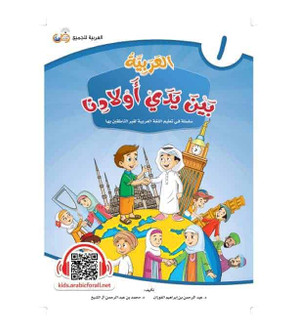
Grade 1: First Real Reading and Writing
What It Builds:
Grade 1 represents the entry into real reading and writing competence. This level addresses:
Consolidated letter recognition across all forms Short and long vowels in reading and writing Simple sentence construction in reading and writing Vocabulary expansion to everyday topics Beginning comprehension of simple Arabic text
"Great series in teaching the Arabic language for non-Arabs. My kids enjoyed the series with their teacher."
The transition from KG to Grade 1 is where the curriculum asks more of students — more reading, more writing, more retention of vocabulary. Students who've completed KG-1 and KG-2 find this transition manageable. Students jumping in at Grade 1 without the KG foundation may need supplementary support on specific letter and vowel skills.
Grade 2: Expanding Competence
What It Builds:
Grade 2 moves from basic literacy into genuine language use. Key developments:
Sentence structure becomes more complex — subject-verb-object constructions, descriptive phrases, simple questions and answers
Vocabulary expands significantly — students encounter words across more domains: school, nature, body, actions
Beginning grammar concepts introduced explicitly — gender agreement, definite/indefinite, basic verb forms
Reading passages extend beyond single sentences to short paragraphs
Ahmed told me: "Grade 2 is where the curriculum starts asking students to actually use Arabic rather than just decode it. The jump from 'I can read letters' to 'I can express simple ideas in Arabic' is the most important threshold in the whole roadmap. Grade 2 is that threshold. Students who pass through it with solid foundation never go back to feeling like Arabic is an impossible foreign system."
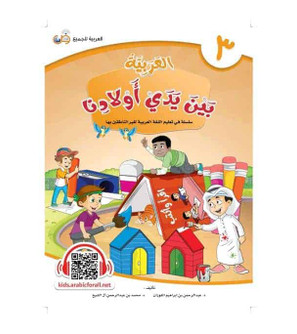
Grade 3: The Grammar Foundation
What It Builds:
The Noor Al-Arabiyyah series aims to provide an integrated curriculum that combines form and content, relying on modern teaching techniques while considering the progressive presentation of the scientific material.
Grade 3 introduces more systematic grammar instruction. The three grammatical cases (raf', nasb, jarr) begin to be addressed — not as complete Nahw science, but as patterns the student encounters in reading and writing. Verb conjugation becomes more systematic. Sentence variety expands.
Vocabulary at this level begins to include more Quranic and Islamic terms — connecting the language learning directly to its primary purpose for most Muslim families.
The Midpoint Check:
A student completing Grade 3 should be able to: read simple Arabic paragraphs, write short descriptive sentences, understand the most basic grammatical patterns, and recognize a meaningful portion of high-frequency Quranic vocabulary. If they can't, Grade 3 needs to be revisited before advancing.
Grade 4: Deepening All Skills
What It Builds:
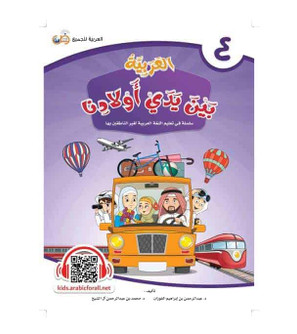
The Noor Al-Arabiyyah series is a pioneering initiative for teaching the Arabic language to non-native speakers. This particular level is the fourth in the series. Activities/Workbooks are included in the textbook.
Grade 4 deepens what Grade 3 established. Grammar becomes more explicit and more systematic. Reading passages become longer and more complex. Writing moves from sentences to short paragraphs. Vocabulary expansion continues — by the end of Grade 4, students typically have 600-800 words of active vocabulary.
The Islamic Culture Integration:
The series reflects Arab and Islamic culture in an attractive and aesthetically clear framework, encouraging the overcoming of barriers to communication in Modern Standard Arabic. This enables learners to speak Arabic fluently as if it were their native language.
The Islamic cultural framework deepens with each level — not just as decoration but as the actual content through which language is practiced. Texts about the Prophet, about Islamic values, about Quranic stories provide both language practice and Islamic formation simultaneously.
Zaynab shared: "My son finished Grade 4 last year. The thing that struck me most was that he'd stopped thinking of Arabic as a separate subject. He'd started thinking of it as the language his faith lives in. That shift happened somewhere in Grades 3 and 4 — when the Islamic content became complex enough to actually engage him intellectually, not just as simple vocabulary."
Grade 5: Approaching Classical Arabic
What It Builds:
The Noor Al-Arabiyyah series is a pioneering initiative for teaching the Arabic language to non-native speakers. This particular level is the fifth in the series. Activities/Workbooks are included in the textbook.
Grade 5 introduces exposure to more classical Arabic structures — the kind found in the Qur'an and in classical Islamic texts. This is not classical Arabic instruction in the full scholarly sense, but deliberate bridge-building from the Modern Standard Arabic of the earlier levels toward the classical register.
Grammar becomes more complete. The nominal and verbal sentence structures, the Inna family, the basic idafa constructions — all of these are deepened and consolidated. Students read longer, more complex texts. Writing moves toward multi-paragraph composition.
Vocabulary at Grade 5:
By the completion of Grade 5, students working consistently through the curriculum have typically built vocabularies of 800-1,000 words — a level at which the most frequent Quranic vocabulary is becoming significantly accessible.
Grade 6: The Arrival Point
What It Builds:
The Noor Al-Arabiyyah series is a pioneering initiative for teaching the Arabic language to non-native speakers. This particular level is the sixth in the series. Activities/Workbooks are included in the textbook.
Grade 6 represents the completion of the Noor Al-Arabiyyah journey. A student who has progressed through all levels consistently arrives here with:
Independent reading ability in Modern Standard Arabic Solid grammatical foundation covering core Nahw concepts Vocabulary of 1,000+ words with significant Quranic vocabulary coverage Ability to write coherent paragraphs in Arabic Beginning ability to approach Quranic text with genuine comprehension
What Grade 6 Completion Looks Like in Practice:
A student who completes Grade 6 can open Al-Fatiha and understand most of it without a translation. They can follow a simple Quranic verse and identify the subject, verb, and object. They can use a word-by-word Quranic reference to work through unfamiliar verses systematically.
They are not fully fluent in Classical Arabic. They have not mastered all of Nahw. But they have a genuine, solid foundation for deeper study — the kind of foundation that makes further study productive rather than confusing.
Ibrahim told me: "My daughter completed Noor Al-Arabiyyah Grade 6 at age twelve. At her first tafsir class, the teacher asked the class to identify the grammatical structure of a verse in Al-Baqarah. My daughter was the only student who could do it independently. Six years of one coherent curriculum produced something that years of scattered materials couldn't. She didn't have everything. But she had a foundation that everything else could build on."
Beyond Grade 6: Where the Road Continues
The Noor Al-Arabiyyah endpoint is a beginning, not a destination.
Grade 6 completion prepares students for:
Formal Nahw Study:
Resources like the Madinah Arabic Reader series or Al-Ajrumiyyah (the classical grammar primer) become accessible to students with the Noor Al-Arabiyyah foundation. These take the grammar to the depth needed for independent Quranic and classical text study.
Structured Quranic Arabic:
Courses and curricula specifically focused on Quranic vocabulary and grammar — building on the foundation toward complete Quranic comprehension.
Classical Text Study:
Accessible classical texts — collections of hadith, simplified seerah in Arabic, basic Islamic literature — become approachable for students with solid Grade 6 completion.
Online Courses from Qualified Scholars:
Platforms like Bayyinah, SeekersGuidance, and Al-Bayyinah TV offer structured Arabic and Quranic Arabic courses that naturally follow from the foundation Noor Al-Arabiyyah builds.
How to Use the Roadmap: Practical Implementation
Finding Your Starting Point:
Don't assume your child starts at Pre-KG just because they're young, or at Grade 1 just because they're in first grade.
Assess honestly:
Can they identify all Arabic letters in isolation? If no → Pre-KG or KG-1. Can they read short Arabic words with short vowels? If no → KG-2 or Grade 1. Can they read simple sentences? If no → Grade 1 or 2.
Start at the level where the child can succeed with effort but not where they're overwhelmed. The curriculum builds on its own previous levels — skipping a level creates gaps that surface painfully later.
The Realistic Weekly Schedule:
5 days per week of Arabic instruction, 30-45 minutes per session, produces reliable level advancement. Less than this produces slow progress that often feels like no progress, which kills motivation.
If you have less time, be honest about what that means for timeline: 3 days per week produces approximately the same learning but over a longer period. 1-2 days per week rarely produces meaningful accumulation.
The Teacher Question:
The Noor Al-Arabiyyah series is a pioneering initiative for teaching the Arabic language to non-native speakers, available through Madinah Media.
Madinah Media connects families to the Noor Al-Arabiyyah curriculum through their schools program as well as direct retail. For families without Arabic-proficient parents to teach from, online Arabic tutors familiar with the curriculum are increasingly available — many specifically trained in Noor Al-Arabiyyah instruction.
The curriculum can be used with a tutor who handles new instruction while parents support daily review and vocabulary practice. This division of labor makes the curriculum accessible to families where parents have limited Arabic proficiency.
Celebrating Real Milestones:
When your child completes a level — not "we finished the book" but "they've genuinely mastered what this level required" — make it meaningful. A completed level in a coherent curriculum is a genuine achievement. It deserves recognition.
Omar shared: "When my son completed Noor Al-Arabiyyah Grade 3, I took him to a nice dinner, just the two of us. I told him: you just crossed a real threshold. You can read Arabic independently now. Not everything — but you've crossed the threshold. He's talked about that dinner every year since. The celebration made the milestone real. Real milestones deserve real celebration."
Conclusion: The Road Is Clear. Walk It.
The complete Arabic learning roadmap runs from your child's very first Arabic letter through genuine Quranic reading comprehension. It is not a short road. It is not a road you can walk in a semester.
It is an eight-to-ten year journey, walked consistently, with a coherent curriculum that advances level by level toward a destination worth reaching.
The Noor Al-Arabiyyah series, available through Madinah Media, aims to provide an integrated curriculum that combines form and content, relying on modern teaching techniques while considering the progressive presentation of the scientific material. This helps learners feel comfortable and prepared to face the challenges of learning a new language. The series reflects Arab and Islamic culture in an attractive and aesthetically clear framework. This enables learners to speak Arabic fluently as if it were their native language.
That destination — a child who reads the Qur'an with genuine comprehension, who understands their prayers, who can access classical Islamic scholarship in the language it was written — is worth eight to ten years of consistent daily investment.
The Map:
Pre-KG → KG-1 → KG-2 → Grade 1 → Grade 2 → Grade 3 → Grade 4 → Grade 5 → Grade 6 → Advanced Quranic and classical study
The First Step:
Determine your child's current level. Order the appropriate Noor Al-Arabiyyah book from Madinah Media. Open it this week. Begin.
The road is clear. You have the map. The only question left is whether you'll start walking.
Bismillah. Start today.