
Understanding the Meaning Of the Holy Quran
The holy Quran is the primary holy book of Muslim religion. The Quran can well be said to be one among the most influential literary works ever produced. For Muslims worldwide, the holy book is not a book to be read on special occasions related to the religion but the primary source for every aspect of Muslim life—beliefs to behavior to ethics. For non-Muslims or students like me, the holy Quran can be said to be a deeply spiritual literary piece.
However, it is asked: What is the holy quran, really? In what ways is it unique from other holy scriptures? What is its message, and why is it so significant even in contemporary society?
This article presents a clear and respectful description of the holy quran, its aim and structure, and also emphasizes the significance of holy quran in the lives of Muslims as well as covers how it is studied today.
What Is the Holy Quran?
The Holy Quran is the holy word of Allah that was passed on to Prophet Muhammad ﷺ in a process that stretched out over twenty-odd years. Muslims believe that this holy book was literally handed to the Prophet through the angel Jibreel (Gabriel) in the Arabic language and that it was kept exactly as is, without a single word getting changed.
Unlike lots of other religious texts that got pieced together a long time after the people who the stories are about were dead and gone, the Quran was learned by heart, written down and shared with others all during the Prophet's lifetime and the years immediately following his death. This very deliberate way it was kept safe is what makes the Quran stand out among all the other sacred texts.
The Quran isn't about the prophet's life story, or a record of history or some kind of long philosophical essay. What it is is a really comprehensive book that tells you a whole lot about belief, morals, worship, the law, how to behave as a person and what your responsibilities are to society.
Lots of people who start out studying the Quran use things like Quran editions especially designed to make reading, reflecting and studying easier.
Why the Holy Quran Holds a Central Place in Islam
Why the Holy Quran Is Central to Islam?
In Islam, the Holy Quran is the primary source of faith. All the faith principles, such as the oneness of God, accountability, prayer, charity, and virtuous living, rely on the Quran.
It plays several critical functions:
- "A Guide for Belief and Worship"
- A moral compass for personal behavior
- A framework for justice and social ethics.
- A Framework for Justice and Social
- A Source of Spiritual Comfort and Reflection
All aspects of Muslim life, ranging from praying to making important life choices, are guided by teachings in the holy Quran.
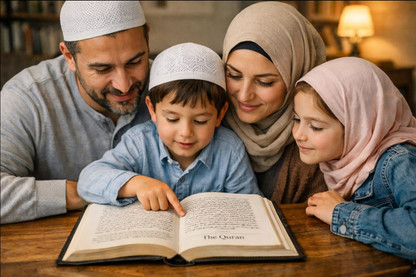
Due to its significance, Muslims around the world respond to the Quran in various ways, such as reading, memorizing, studying, or reflecting, through learning aids found in Islamic Books.
The Structure of the Holy Quran
The knowledge of the structure of the holy Quran assists one in reading with clarity. The Quran is divided into:
- 114 chapters Surah.
- Each Surah contains verses (Ayahs)
- Chapters have varying lengths and topics
The Quran is not chronologically organized. Rather, its organization is based on the flow of themes and spiritual matters such as faith, laws, stories of past prophets, and the accountability and mercy of God.
The Language of the Holy Quran
The holy Quran is authored in classic Arabic, which is renowned throughout the world as it is rich, precise, and expressive. Arabic is deemed to be part of the divine message, as Muslims respect it.
However, at the same time, a great number of people use the 'Holy Quran' translation in English for a better comprehension of its meaning. The translation is termed as an "explanation of meaning" but is no substitute for the original text written in 'Arabic'. People typically read through learning aids available from Islamic & Arabic Books.
How To Make the Message Accessible In English?
Reading the holy Quran in English helps non-Arabic speakers seek guidance through faith, morality, mercy, and accountability. Translations serve as bridges to understanding, helping readers reflect on the message more deeply.
Many learners couple the translations with study guides and explanation works available in Islamic Books.
so that clarity and context could be achieved. Again, there is no similarity between this logic and the logic underlying microeconomics.
What Is the Main Purpose of the Quran?
The Holy Quran's purpose is guidance first. It elucidates the path of life for humanity. It clearly outlines the purpose of life, moral responsibility, and the relationship between human beings and their Creator.
Its key aims include:
- Guiding them towards the belief in one God
- Encouraging more ethical and compassionate behavior
- Accountability and justice should be promoted.
- Offering hope, balance, and spiritual clarity
Instead of abstract philosophy, the Quran addresses human experiences like struggle, gratitude, fear, and reflection.
Stories and Lessons in the Quran
Stories hold a central place within the Holy Quran. Accounts of earlier prophets and communities are in place to teach lessons in patience, humility, faith, and accountability.
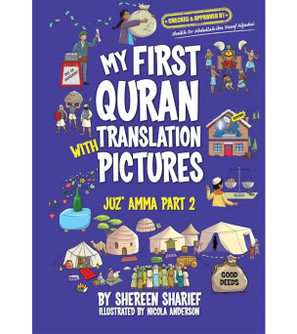
These values are normally inculcated among kids by families using simple storytelling resources found within Islamic Books for Kids. It aims to help young readers relate to Quranic teachings in an age-appropriate way.
Daily Engagement With the Quran
The holy quran has an intricate part in the daily lives of Muslims. It is channeled through prayers,studied individually, Memorization, and class sessions. This ensures a constant influence of lessons from it.
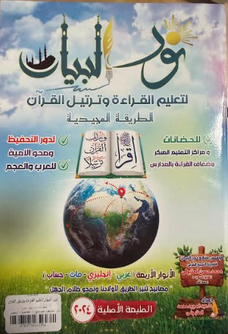
For those learning proper pronunciation and recitation, structured learning will begin with what’s available in Quran Learning materials.
Ethical Guidance and Moral Balance
In addition to spiritual teachings, the holy Quran lays down the ethical principles of individual behaviour. These teachings cover honesty, justice, compassion, reverence for human dignity, as well as caring for the weak.
It does not provide if-then directives but rather provides guidelines for individuals to make informed ethical decisions through wisdom.
Preservation and Continuity
Among the most impressive features of the holy quran is the fact that it has been preserved. This was achieved by being committed to memory by a large number of people and then being it. It was a combination of this process that ensured it was preserved accurately. This has led to the fact that the Quran is presently recited in the same way all across the globe.
Studying the Quran in the Modern World
People learn from the Holy Quran today using a variety of methods, such as translation reading, Arabic study, interpretation studies, and academic research. In fact, books are an important resource in this quest, and many people have used carefully compiled study versions available in the Holy Quran collection..
Why the Quran Still Has Relevance in Modern Times?
The holy quran remains relevant because the holy book addresses some of the universal questions that humans continue to grapple with throughout history. For instance, the holy quran gives insights into matters touching on justice.
Conclusion
The holy quran is much more than a holy book. It is a source of guidance that has provided meaning to faith, morals, and civilization over the ages. Whether one reads it in the original language or the holy quran in English translation, its message remains relevant to the human soul.
Comprehension of what the Quran is and its significance helps readers in realizing its relevance and significance not only in the religion of Islam but in the basic quest for meaning in human beings.
FAQ
What is the Holy Quran in simple words?
The Holy Quran is the holy book of Muslims. Muslims consider the Holy Quran to be the word of God and say that it is revealed to the Holy Prophet ﷺ. They say that the Holy Quran gives instructions about belief, rituals, and manners.
Who is the author of the Holy Quran?
Muslims believe the Quran is not an earthly written book. Instead, the Quran was revealed from God to Prophet Muhammad ﷺ and was written down or memorized orally during or after his prophetic period.
The main difference between the Quran and the Bible is:
The Quran is the holy book for Muslims, and the Bible is the holy book for Christians. The Quran is considered the final and unaltered word of God, and the Bible comprises various books written by different authors. There are common characters in the Quran and the Bible, but their theology and compilation are different.
Is the Holy Quran only for Muslims?
Although the Quran is very important to Muslims, the Quranic message is meant for all humanity. Many non-Muslims are readers of the Quran to understand the Islamic beliefs, values, and perspectives on life and its morality.
Can non-Muslims read the Holy Quran?
Of course, Non Muslims are free to read the Holy Quran. Reading of the Holy Quran takes place among people who wish to know more, especially through translations.