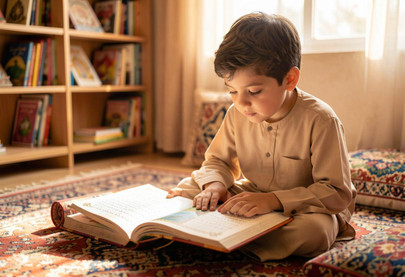
How do Islamic Books Help Children Learn Arabic Naturally?
Helping the children grasp a new language feels quite challenging, especially when the parents are worried that pressure might occur, or that it would be some kind of daunting memorization for them, or that they would not be interested in it. Learn Arabic is particularly considered to be complex. Yet to most Muslim families, Arabic is not only just another language; it is actually the door to faith, culture, and identity. Among the most effective and gentle ways to teach Arabic during a child's early childhood is by means of Islamic books.
Instead of being taught as a school subject, Arabic is introduced through Islamic books in such a way that it is emotionally and intellectually attached to the child. The use of stories, repetition, and familiar concepts will help children absorb Arabic naturally—without stress or rigid instruction.
Stories Help Kids Absorb Arabic Much Better
Kids pick up the language they are learning second or as a foreign language best while developing an emotional attachment to what they are learning. A story creates meaning, context & curiosity - all of which are essential in developing language.
When children are presented with Arabic words as part of a story they enjoy and have an emotional attachment to, their brains start identifying patterns. Eventually, as kids are exposed to Arabic words in stories over an extended period, they gradually learn vocabulary and comprehend Arabic naturally. It is for this reason that so many families begin their Arabic Language Learning journeys with story-based reading.
Books that describe Day-to-Day Life, Morality & Islamic Practices create the opportunity for children to build an association between the Arabic language and everyday experience, not simply by having to memorize the rules of how the Arabic language works.
Arabic learning - no pressure, no memorizing
One common concern parents have is whether Arabic is too difficult for their youngster. The truth is, children do not view difficulty as adults do. What seems hard to adults is merely play to children—when presented correctly.
Islamic books eliminate the pressure hitherto associated with traditional learning of languages. Instead of drills or grammar rules, through the book, children encounter Arabic through:
- Repetition of keywords
- Visual aids and illustrations
- Familiar themes such as family, kindness, and routine
This approach lets the child learn Arabic in a very gradual way, building confidence before any formal teaching of Arabic starts.
How do Islamic Books Generate Emotional Feelings Toward Arabic?
Emotions are with language. The more children connect Arabic to warmth, comfort, and positive experiences, the more receptive they will be to learning the language.
These Islamic books reflect moments children already understand: bedtime, prayer time, helping others, or family gatherings. Arabic words introduced in these contexts feel meaningful rather than forced.
Parents often report that children start repeating the Arabic words on their own after simply reading them, which is an excellent sign of language acquisition happening naturally.
Visual Learning and Arabic Recognition
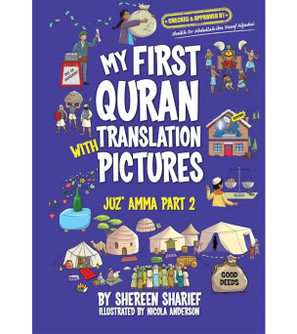
The use of images in Islamic children's books assists children in connecting the meaning of Arabic words with their associated sounds, which is an important part of early/childhood learning. Images labelled in Arabic are one way to reinforce the association between the Arabic word and the object in the child's environment.
- Repeating words/phrases from the image together with an associated image
- Consistent use of basic Arabic words
Image Support (Visual Reinforcement) means the child will be able to memorise the Arabic words and will be able to recognise Arabic words, even if they cannot read by themselves. These small exposures to Arabic support a child's ability to learn Arabic individually with confidence as they grow older.
Building Vocabulary Using Regular Reading
Consistent practice of regular reading is more efficient for building vocabulary than having a long reading session once in a while. It is more beneficial to read one short Islamic book every day than to read several long books at once.
Reading an Islamic book each day regularly allows children to:
- Recognize Arabic words that occur repeatedly
- Learn what the Arabic words mean through context
- Develop their listening skills and pronunciation
Many parents prefer to use the Islamic Books for Kids collection because the books are written at a level suitable for a child's ability to concentrate and their growth and development.
Familiar Concepts Helping to Learn a New Language
Children can learn much faster if the topics in the material are known to them. It is true for kids studying Arabic from Islamic books. In most cases, such topics in the books include known topics (e.g., prayer, kindness, relationships, and thanks).
Since the child recognizes the word in relation to an English idea, they do not have to consider the translation. The child can relate to the meaning of the word. The process is the same for learning native languages in regular education. Therefore, it is easier to teach the child Arabic in the usual manner.
How Can You Learn Arabic Alone Without Taking Classes?
Not all families can afford Arabic instruction, and not all children are suited for a classroom setting. The use of Islamic books offers a viable and more organic learning alternative in the surroundings of the home.
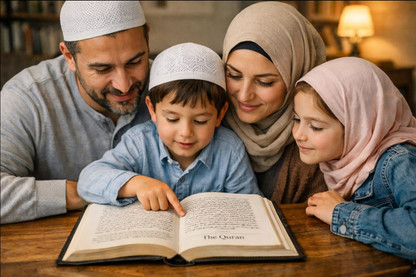
The parents need not be Arabic speakers to support this process. Reading together, pointing to pictures, and calling out words will certainly create a learning process together.
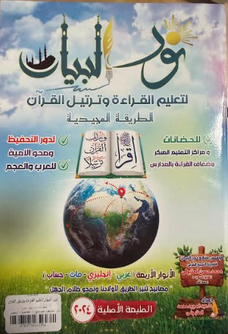
Some families supplement this with beginner-friendly materials that can be sourced from Islamic & Arabic Books. Arab Voices focuses on the discussions and ideas of Egyptians and other Arabs.
Supporting Pronunciation Through Listening and Repetition
Listening to correctly spoken Arabic is crucial to pronunciation. Although books are visually based, some Islamic books help parents read aloud to the children to expose them to the sound of correctly spoken Arabic.
Exposure to the proper pronunciation will help children’s development in the following ways:
- Audio Recognition
- Accent familiarity
- Confidence in repeating words
These help them prepare for more structured learning later, either from schooling or a guided program.
How do Islamic Books Complement Formal Arabic Education?
These books do not substitute for organized learning for an Arab student, but they make an excellent foundation. If a child is introduced to Kids' Arabic books at an early age, they feel much at ease when they start learning it formally.
They’re now familiar with words, sounds, and sentence structures, which minimizes frustrations that can lead to anxiety.” It helps that children are being exposed at an early age, which will help them in their future success in formally learning Arabic in school or programs.
Learning Arabic and Understanding the Qur'an
Many Muslim families hope for their kids to apply the Arabic knowledge they are gaining in order to support their understanding of the Qur'an. When kids learn the Arabic language, it is not expected for them to understand the meaning of the Quran right away, but knowing the Arabic language will help kids build their understanding of this language as they learn to understand the Quran.
When children read Arabic learning books with their families, it is common for families to find Qur'an learning materials where they are encouraged to link their child’s learning to their spiritual understanding of the Qur’an as they read and learn the language.
Making Your Home a Language-rich Islamic Environment
Reading Arabic language books by themselves is not as effective as getting kids actively involved in conversations where they practice using the Arabic language. For example, parents can help their children learn Arabic by:
- Using Arabic Greetings
- Repeating Words that are Found in Stories
- Praising Children for their Efforts rather than the Actual Word of the Story
By incorporating these simple practices into daily family life, over time, children will feel that Arabic is a part of their natural life and no longer just a "school subject."
Many parents develop a small collection of Arabic language books by using reputable resources.
Overcoming the Myth: “Arabic Is Too Hard”
Many parents are concerned that Arabic is too complicated for a young child. In fact, children are specifically wired to learn languages when they are young. It is usually when a child is hurriedly learning or is disconnected from the meaning that problems arise.
Islamic books solve this problem by:
- Slowing down the learning process
- A contextual setting
- Making Arabic emotionally relevant
This method gives a child the opportunity to learn Arabic naturally and in a fun way.
Long-term benefits derived from early exposure to Arabic
Children who get early exposure to Arabic through Islamic books usually develop:
- Stronger listening skills
- Better pronunciation
- Greater confidence in the language
- Positive emotional association with Arabic
These advantages then extend into later childhood and adolescence, making subsequent learning easier and more successful.
How Families Can Utilize Islamic Books to Learn Arabic?
Many families of the Muslim faith living in the United States typically homeschool their children by providing them with a multilingual education. The availability of Islamic books allows for a stable source of cultural connection to the Arabic language to assist Muslim families in building and maintaining a connection to the Arabic language, even if it isn't spoken at home.
Islamic books provide a great resource to US families who desire to facilitate second language acquisition in their children without putting undue stress on the child or creating a level of resistance towards trying to learn another language.
Conclusion
Supporting children in learning Arabic is not dependent upon the need for pressure, perfection, or detailed/complicated lessons, but rather through a gradual introduction to the language in a relaxed and enjoyable way, through Islamic books with the use of stories, illustrations, and familiar themes. It provides an excellent base for their language development and establishes their identity as Muslims.
Through support and utilization of Islamic books in the routine activities of families, they can sustain a positive foundation for maintaining their ties to the Arabic language/writing.
Frequently Asked Questions
What is the most effective method for teaching a language to children?
It is best done with consistent exposure via storytime, pictures, and repeated exposure. Learning Arabic via Islamic books is an interesting way for children to be exposed to Arabic without prior pressure.
Is the Arabic language difficult for kids to learn?
The Arabic language is not difficult for children to pick up. Children are able to easily take in the language when it is learned through story narration.
Is it possible for children to learn Arabic informally without going to school?
While most kids get formal education in Arabic, lots of kids will grow up at home studying Arabic from picture books at home (often daily) prior to attending formal education.
At what age can my child learn Arabic?
Kids can learn Arabic as early as the toddler stage using picture books and learning the language in a basic way (e.g., by saying or reading simple words) at home.
Are Islamic books helpful when learning Arabic?
Yes. There is significant context and repetition in Islamic books that is important for natural language processing.
How long does learning Arabic take for a child?
Learning a language takes time. Children are able to recognize and employ Arabic vocabulary after regular exposure to it.