
Fun Ways to Teach the Arabic Alphabet at Home
Lots of Muslim families start their kids learning Arabic by teaching them the letters first. They really see this as a key part of how a child grows up, both in school and in their faith. Kids pick up languages way differently than grown-ups, so even though Arabic might seem tougher to some, it's not the same for little ones. Learning the Arabic alphabet can be enjoyable and feel really natural right at home, especially with the right tools and a little help. This piece is all about sharing fun, easy ways to teach kids the Arabic alphabet.
We want to do it in a way that’s interesting and right for their age, without making them feel stressed or pressured. If you're trying to get your child ready for Quran studies or just want them to feel more connected to their parents' culture, these methods are good for making Arabic a regular thing in your family's daily life.
Why Start With the Arabic Alphabet Early?
When kids are little, that's a really great time to get them started with sounds and symbols. Kids are just wired to soak up language when they're little. That's why using sights, sounds, and play is a really great way to introduce them to the Arabic alphabet.
It's a good idea to let your kids get familiar with the Arabic alphabet when they're young.
That way, they'll know exactly what each letter looks like and what sound it makes before they really start learning how to read.
When Arabic letters are gradually introduced to children, they can experience several benefits:
- It will be simpler to pick out shapes later on,
- They should work on sounding more sure about how they say things.
- Don't be so scared when you begin formal learning.
So, when parents start teaching their kids Arabic from a young age, those kids usually grow up finding Arabic to be something they know well, rather than something scary.
A learning environment should be free of stress
When you're teaching your child the Arabic alphabet, the most important thing is to create a space that's free from stress. It's true that kids really learn best when they feel safe and comfortable in their environment, allowing their natural curiosity to come out freely. Instead of just teaching "lessons".
Try to get your child exposed to Arabic by:
- Quick, little chats instead of drawn-out lessons.
- Avoid correcting your child all the time when they're speaking Arabic .
- Try to encourage folks instead of only looking for perfection.
If kids find learning Arabic fun, like a game, they'll stick with it longer and grow to really like the language.
Learning Through Visual Play
Visual learning is a major tool for children in their early years. The letters of the Arabic Alphabet are clearly distinguishable from each other by visual shape and therefore ideal for learning activities using recognitional Sight. You can present the Arabic alphabet to your child using:
- Flashcards with large letters and clear illustrations.
- Wall posters positioned at your child's eye level.
- Magnetic letters on your refrigerator.
Many families use various colored items and books available at Islamic Books for Kids to help integrate the letter-identification process with storytelling and illustrations.
Using Stories to Introduce Arabic Letters
Stories provide an understanding of the meaning of the letter and its structure for children. As a result, books that have stories where Arabic Alphabet letters are included within simple stories provide context for children to learn about the letters, versus learning about the letters in isolation.
Children tend to retain the letters more effectively when they are shown with animals, characters, or objects that are familiar to them. This also creates a foundation for children to begin building their vocabulary at the same time they are learning the Alphabet Letters. Many parents use beginner books available at Kids Arabic Stories as reading routines for their children.
Learning Through Sound and Repetition
Arabic sounds are natural for children because they hear them every day. Children will learn to pronounce the Arabic letters properly without having to go through the formal training of learning the letters through writing.
There are many simple ways to become familiar with the Arabic alphabet:
- Sing songs that have the Arabic alphabet
- Repeat a letter sound each day
- Link the sound to something that they can recreate or perform
To help children become familiar with the sound/shapes of each letter, they must understand the sound and shape relationship, which is necessary for reading later.
Turning Daily Routines Into Learning Moments
There is no need to create a special time to teach children the Arabic letters; you can create several learning experiences in their daily lives and routines.
- Point out letters on the outside cover of books
- Say the Arabic letters while cleaning up after Playtime
- Repeat the letter one time just before bed
These small moments help children learn the Arabic alphabet through natural learning experiences.
Hands-On Activities That Reinforce Learning
The process of movement and physical activity enhances children's ability to learn. By providing tangible experiences with letters, the child is able to understand abstract ideas and concepts.
The following ideas are some effective ways to create a hands-on learning environment.
- Write Arabic letters in sand or flour.
- Mould Arabic letters out of clay or playdough.
- Colour the Arabic letters with crayons.
These examples strengthen the fine motor skills necessary to form Arabic letters and will assist the child in developing letter shape recognition.
Learning at the Child’s Pace
The child learns at his/her own speed. Each child learns differently; some children will want to repeat the same letter over and over again, while others will want to learn new letters. Some children will be able to identify letters immediately, while others will require more time.
The objective of teaching Arabic letters to the child is exposure and not mastery. Do not worry if the pace of learning seems slow; the child will learn to read or write Arabic when they are comfortable with it.
Parents who encourage their children to enjoy the learning process rather than worry about how fast they learn tend to see better long-term results.
Connecting Letters to Meaning
Children can learn Arabic letters better when the letters are related to something they are familiar with or can visualize. Associating Arabic letters with very basic words, proper names, or tangible objects provides a connection to aid children in learning the letters.
Examples include:
- A letter that represents a particular animal.
- A letter that represents or is associated with a child's name.
- A letter that is associated with a well-known term in Islam.
This type of connection will assist children in remembering the letters and introduce them to a greater vocabulary base at an early age.
Preparing for Quran Learning
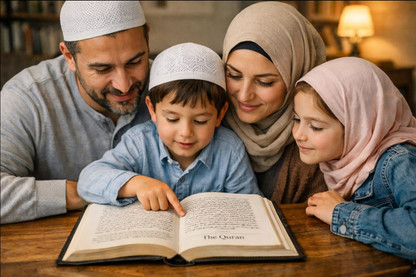
For many Muslim families, the teaching of the Arabic Alphabet forms a foundation for children to eventually be able to read the Qur'an. By being exposed to the written form of the language early on, children will have an easier time adjusting to it as they begin to read actual Qur'anic texts.
Typically, families incorporate the teaching of the Arabic Alphabet with censored versions of the Qur'an using items found on the site Quran Learning, which allow for familiarity with the material, rather than relying solely on memorizing the Qur'an.
The Role of Parents in Arabic Learning
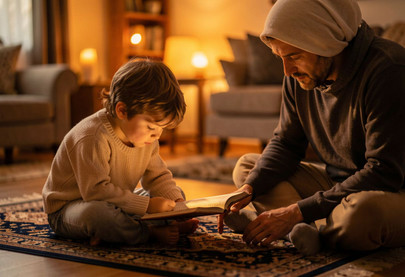
Parents can positively support their child's educational journey when they show enthusiasm, consistent participation, and no real expertise or fluency in Arabic.
Reading with your child, celebrating every little accomplishment your child achieves, and learning with your child create an experience that teaches your child self-esteem and positive reinforcement.
The use of supportive explanations within Islamic books to provide parents with additional guidance on how they should approach and understand the various stages of education for their children is also helpful to many families.
Avoiding Common Mistakes
Refrain from doing the following when introducing the Arabic letters at Home:
- Do not compare your child to other children. Each child learns at their own level.
- Do not expect your child to pronounce perfectly when they first begin learning Letter pronunciation. When introducing letters, introduce them one at a time.
- Your child should feel like they are having fun and not learning something that is going to take them time and effort to master.
Keep It Fun, Not Forcing Your Child to Learn
Children learn best through play. The fun aspect of learning has shown to be the greatest reason for children to continue learning as they progress through their schooling.
Games, Songs, and Creativity provide ways to make learning the Arabic letters enjoyable, rather than a chore.
Building Consistency Over Time
Creating consistency is far more important than how long you spend each day learning letters. Even practicing for 5 Minutes Daily, on a consistent basis, provides the maximum effects.
Once children establish a regular Routine of seeing the Letters and having an opportunity to play with them, recognition and confidence will become evident.
Why Home Learning Is Especially Effective?
At Home, children feel safe Learning and Making Mistakes, which allows children to be Creative and Experiment and explore, which are important Parts of the Language acquisition process.
Learning the Arabic Letters at Home gives parents the opportunity to tailor the learning process according to each child's Learning Style and interests.
Long-Term Benefits of Early Alphabet Exposure
The child who is introduced to the Arabic letters at an early age will usually develop:
- Stronger recognition skills
- Improved pronunciation at a later time
- Increased confidence with Arabic text
- An emotional attachment to the Arabic language
These advantages will help the child in his/her future education in school and religious studies.
Conclusion
When parents teach their child the Arabic alphabet, no formal class or rigid schedule is necessary. By using creativity, patience, and regular practice to convert life experiences into teaching moments, learning becomes an enjoyable and meaningful experience.
Through the use of storytelling, visual aids, hands-on activities, and gentle reinforcement, children will learn without difficulty. They will gain self-confidence and familiarity with the Arabic language and the Qur’an, which will continue to support their ability to learn Arabic and the Qur’an in the future.