Boosting Early Childhood Learning With Islamic Books
The child’s development is most significantly impacted during the early stages of life; these years are critical for forming habits, values, relationships, and emotional connections that will likely last a lifetime. For Muslim families, these years also provide an opportunity to introduce faith, identity, and moral development in a natural and joyful way. One of the best means to introduce these elements is through Islamic literature.
Books provide an avenue through which children can learn based on their own natural curiosity and imagination, as well as through emotional connection, whereas formal teachings do not offer as many avenues. The simple language, the stories, and the illustrations will assist young readers to gain an understanding of the values of Islam without feeling any added pressure or angst. As such, carefully selected literature supports cognitive and spiritual growth at the same time.
Why Early Childhood Learning Matters So Much?
In the first seven years of life, a child's brain develops extremely fast. At the same time, the child is developing language skills, emotional awareness, and social understanding. The more a child hears and sees something, the more it is accepted as a part of their life; this may result in developing beliefs or behaviours towards that material.
One of the essential tools for developing these skills is books. Reading books with your child will assist a child with the following:
- Increase vocabulary and reading comprehension
- Develop listening and attention
- Develop emotional intelligence
- Develop and create a positive association with learning.
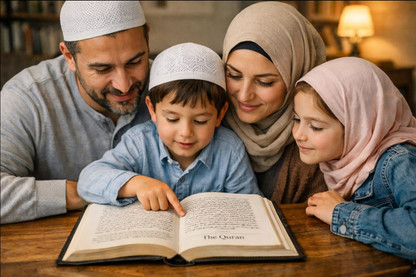
By children having the opportunity to read Islamic books at a very young age, parents are not only teaching them about their religion but also developing a positive attitude and opinion of reading, religion, and who they are as individuals.
Supporting Young Children's Islamic Faith and Identity through Books
The Islamic Book for Young Children offers simple explanations about Islamic morals, such as kindness, gratitude, honesty, love for Allah, etc These basic morals are common to all families, and will help children relate to each other through kindness, gratitude, honesty, and love for Allah.
It is also a way to give Muslim Characters in Books representation and build confidence in children, showing them that their faith is not just who they are but part of their ethnic and cultural heritage. This is very valuable for children who grow up in multi-cultural environments where they may only see examples of their faith represented in isolation.
For example, many families start their child's reading journey by selecting a well-written and organized collection of Islamic Books For Kids, which have been specifically written with the early development of young children in mind.
Choosing the Right Islamic Books for Early Learners
You need to consider what types of books are appropriate for each child's age. In particular, when purchasing Islamic books for very young children, parents and educators should pay attention to certain criteria.
-
Language and Simplicity
When selecting a book for a child, it should be written in clear, simple language that is used throughout the book, with short sentences. Many young readers become confused when they have to process too many words at once, and this can lead to them losing interest in the story before they understand it.
-
Visual Appeal
If you want your child to enjoy reading, then bright illustrations and friendly characters, along with clear, related illustrations, keep them engaged in looking at the pictures that accompany each page of the book, and this makes it easier for them to understand what the book is trying to convey.
-
Positive Messaging
All early readers respond well to positive reinforcement. When selecting stories for early learners, it is best to use positive messages rather than stories that have a negative message about breaking rules or receiving punishment.
Many families find that a great way to find an appropriate book to read for young children is to look at the selection of Islamic book collections, which also include many family-friendly titles.
Islamic Children’s Books and Cognitive Development
Reading books with Islamic themes for Children can support beyond spiritual needs and instead directly assist with cognitive development. Through repeated readings, children gain knowledge of new vocabulary words (or sentence structures), a sense of cause and effect, how they react to others emotionally, and learn empathy, as well as how to solve problems in stories based on the results within the story. By seeing Muslim characters and familiar cultural elements represented in a story, children can better relate those ideas to their own lives, thus continuing to build stronger comprehension and memory skills over time.
For this reason, Islamic-themed books are increasingly being used in both home and early learning environments through the use of Islamic schools.
Why Muslim Characters Matter in Children’s Books?
Children typically seek themselves when reading or both here in other written forms. By providing Books with Muslim characters, children are not only able to see a normalised Islamic identity, but they will also experience a reduction in “difference” from other Children or Isolation, as when reading about characters that pray, speak good words, and celebrate Islamic holidays, they are learning that Religion is a part of their everyday lives.
Additionally, Non-Muslims will be able to learn about the values of diversity, empathy, and respect for others, thus representing an inclusive learning environment, as well as supporting cross-cultural understanding.
Islamic Books for Kids at Different Early Learning Stages
The rate of development continues to change drastically during early childhood. As children change and develop at such a fast rate, so do their needs when selecting appropriate reading materials.
Toddlers (Ages 1–3)
Books appropriate for toddlers should emphasize:
- One-word or short-phrase vocabulary
- Strong illustrations
- Basic concepts of Allah creating
Preschoolers (Ages 3–5)
Books suitable for preschool children will have:
- Simple storylines
- Moral lessons demonstrated through characterised action
- Familiarity with certain activities, such as bedtime and family activities
Early Readers (Ages 5–7)
Books suitable for early readers will include:
- Short chapters.
- Definite plot lines (i.e., introduction, middle, and conclusion)
- More information on Islamic beliefs than those available for toddlers and preschoolers
Parents can establish a large home library with Islamic & Arabic Books using reputable sources for Children's Books & Islamic literature that provide a wonderful developmental progression for different ages.
The Role of Islamic Books in Early Childhood Learning
Many learning activities and experiences are done repeatedly during early childhood, so early childhood reading is not separate from these experiences. Instead, readings of Islamic books should have meaning, so children learn through reading Islamic books in their everyday routine. Examples of how this can occur include:
Bedtime stories.
- Quiet time reading (after school).
- Weekends reading together as a family.
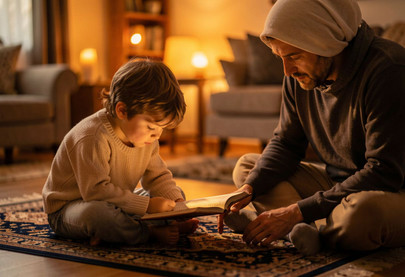
When children connect reading with their parents/caregivers by enjoying books as comfort and attention, they can associate with their parents as reading becomes pleasurable, not a chore. As these connections are nurtured, a love of reading and reflection naturally develops.
Parents and Educators Have a Key Role
When parents and educators are involved in the book-reading process, books can have a stronger impact on a child’s development. Children who are encouraged to ask questions and share their insights during the reading process develop a deeper understanding of what they are reading.
As parents and educators read with children, there are three important ways that they can support the development of children through shared reading:
- Ask open-ended questions.
- Encourage children to share their feelings about what they are reading.
- Make connections between the characters and events/behaviors that are being portrayed in the stories and the children’s everyday lives.
When parents and educators share books, it helps to develop emotional bonds between them while reinforcing the values of faith they learn through reading Islamic books.
The Use of Islamic Books in Education
In many Islamic schools and Islamic centers, the use of Islamic books is integrated into the early childhood curriculum. Many of the early childhood goals for educators include the development of language, social skills, and strong moral character.
There are often specialized collections of books available through the Islamic School Curriculum or other similar collections that educators use to assess the appropriateness of content and to develop a structured set of learning outcomes.
Blending Faith and Fun in Your Child’s Reading Experience
One of the major concerns that parents have is to make sure that their children's Islamic learning is enjoyable and light-hearted. The best Islamic books for children can provide a good balance between messages of faith and having fun and being creative.
Books that include stories filled with adventure, intrigue, and/or lightheartedness are enjoyable and encourage children to develop beliefs in an enjoyable and meaningful way.
The Long-Term Effects of Reading Islamic Literature on Children
Children raised or taught to read Islamic literature tend to:
- Align with Morality and a Stronger Belief System
- A Development of Positive Identity of Faith
- An Improvement of Vocabulary and Comprehension
- To Have Comfort with Their Beliefs and Have the Ability to Converse About Their Beliefs Freely
These benefits will last well into young adulthood, providing them with an environment to develop self-confidence and critical thinking skills.
Common Challenges and How to Overcome Them
The Purpose of Choosing Islamic Reading Materials for Children Requires Parents to Look Beyond Memorizing; The Purpose Is to Plant Seeds to Develop Over Time.
The Typical Barriers That Parents Face When Trying to Use Islamic Literature Are:
- Limited Time to Read to Their Children
- Children Losing Interest Quickly
- Finding Age-Appropriate Materials
Parents Can Overcome These Barriers by Scheduling Short Reading Times, Rotating Their Child's Reading Materials, and Allowing Their Children to Select the Books They Want to Read. Children Will Consent To Read More If Parents Provide Variation and Flexibility.
Why Islamic Books Continue to Grow in Popularity?
In The United States, There Is a Growing Demand For Quality Islamic Children's Literature. Families Are Seeking To Support Their Values Through High-Quality Islamic Children's Literature That Is In Alignment With Current Education Standards.
This Increased Demand indicates that Islamic Children's Literature Is Both An Educational Resource And A Cultural Resource That Meets The Needs Of Today's Families.
Conclusion
In conclusion, children learn, connect, and grow the most during their early years of development. Through the process of storytelling and reading, and sharing stories with their parents and caregivers about Islam, children can develop their language skills, emotional intelligence, and a strong personal identity. When selecting stories to read to your child, be sure to choose Islamic books for young learners that are appropriate for their age and are captivating and impactful. By doing this, you will nurture both the intellectual and emotional growth of your child.
When children read Islamic books with love and consistency, they will not only develop a strong mind but will also forge lifelong bonds with the stories they read.
You can also explore the carefully selected books available at Madinah Media, offering reliable and enriching resources for readers seeking authentic Islamic knowledge.